

The Best US National Parks To Visit In The Winter
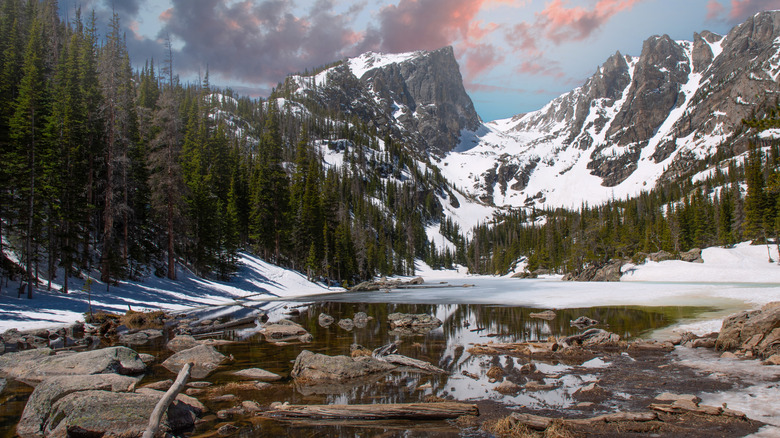
While summer is one of the best times to explore the United States' national parks, some truly come into their own in the winter. From the Carolinas to California, it's hard not to fall in love with these landscapes once they don their cold weather coats.
Some, like Grand Teton National Park, are positively teeming with winter wildlife, while others, like Acadia National Park, offer the chance for visitors to witness the rare meeting of winter wonderland and the merciless swell of the ocean. Others still are framed with ominous mountains, whose skyward snow-peaked caps remind us of our place in the grand designs of Mother Nature — designs too grand for us mere mortals to fully grasp.
Head south to California's deserts, meanwhile, and you'll find that its national parks largely go without snow. However, they are still worthy of your winter wanderings, offering a quieter crowd compared to the summer months while still yielding the chance to explore the incredible landscapes that make them so popular throughout the rest of the year.
Yosemite National Park, California
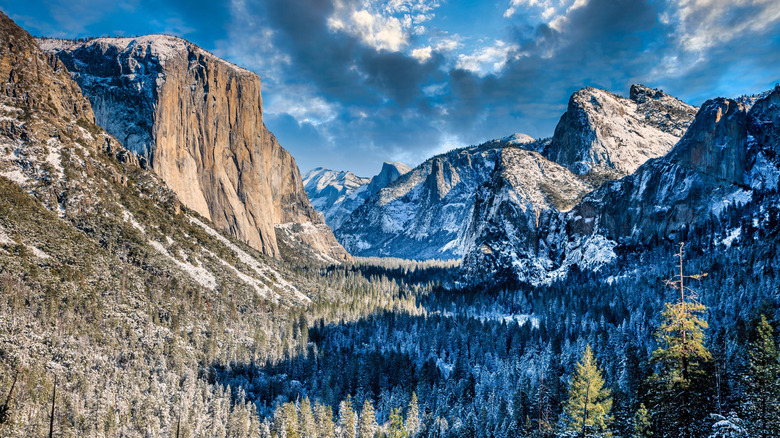
Yosemite National Park in California is the first up in this guide, and while it may not immediately scream winter wonderland, that doesn't mean it shouldn't be on your winter hit list. In fact, Yosemite is one of the West Coast national parks that you have to experience at least once. Enormous granite monoliths seem to puncture the sky, and at the right time of year, Yosemite Falls crashes with unrelenting force into the turbulent waters below, yielding excited cries of wonder from the countless visitors who take the time to make the trip.
From December through March, Yosemite settles into a quiet, snow-covered season. Yes, the falls are flowing, especially once some snow and rain has fallen. However, because of the cooler conditions, the crowds are thinner than they were in the summer. In other words, you might just find yourself with a piece of this National Park all to yourself.
You don't have to stray far from the beaten path to experience winter magic here. If you're snowshoeing, some trails remain open, and the roads to Yosemite Valley and Wawona remain accessible throughout the winter period. In the valley, you'll find opportunities to ice skate or ride down a snow-dusted slope inside a snow tube. Prefer to ski? Don't worry, Badger Pass remains open all winter.
Yellowstone National Park, Montana, Idaho, and Wyoming
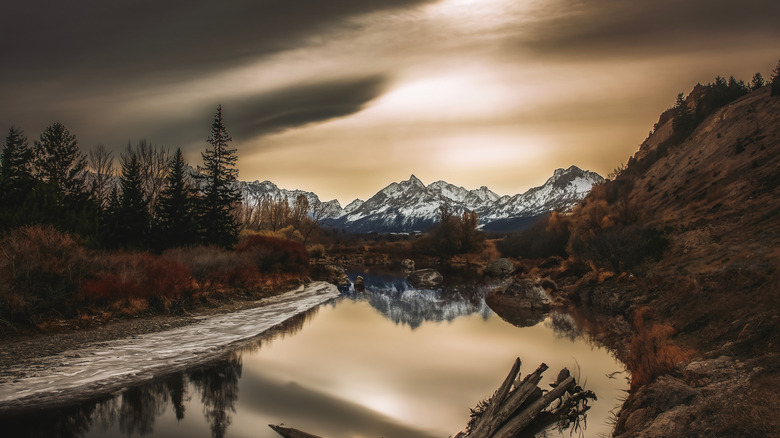
If you ever wondered why the Dutton family fought so hard to preserve their legacy in the "Yellowstone" TV series, then the only way to truly find out for yourself is to visit the national park of the same name. Spanning three states — Montana, Idaho, and Wyoming — Yellowstone was actually the park that became the cornerstone of America's National Park System, all the way back in 1872. Since then, it has been protected, loved, and cherished for the incredible diversity of landscapes and living creatures that call it home.
Before you visit, it's worth noting that, during the winter, it can become rather inhospitable to us humans in terms of the temperature — often dropping as low as 0°F at night. And it's often argued that September, October, and April are the best times to visit Yellowstone National Park. But don't think for a second that this means a winter trip is not worth the effort.
The park's daytime winter vistas are absolutely (and sometimes literally) breathtaking, which means that you won't mind packing the extra layers, especially when you're feasting your eyes on elk, moose, bison, and if you're lucky, wolves. There's lots to do, including guided snowmobile and snow coach tours, skiing and snowshoeing trips. Just make sure you know how to plan your hike safely; there isn't much in the way of phone service in Yellowstone, so make sure you download the NPS app and ensure offline content is enabled before you arrive.
Arches National Park, Utah
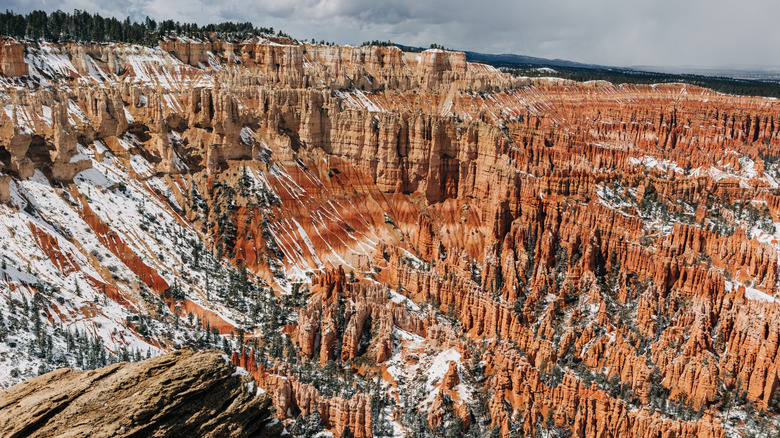
It's hard to think of a more staggering and beautiful contrast in the natural world than the purity of white snow against the russet red rocks of Arches National Park, Utah. Popular throughout the year, and especially busy during the warmer months, you can expect plenty of peace when you visit during the winter, as the trail-beating summer crowds tend to disperse quite quickly once the mercury starts to fall.
However, even a small dusting of snow can make conditions tricky around the park. This can lead to hours of road closures while the local plows work to clear them, so be sure to check the conditions ahead of your trip. Even if you have to postpone for a few days while a storm blows through, you're unlikely to mind. While there are no ranger-led hikes to sign up for in the winter, there are 25 camping sites that remain open between November and February. What's more, most trails remain open for hiking. Just make sure that you bring the appropriate gear for winter hiking, including traction devices and trekking poles. The conditions underfoot can be rather unforgiving when it's snowy or icy, so it's best to be over, rather than underprepared. For reference, temperatures here can drop as low as 20°F.
Rocky Mountain National Park, Colorado
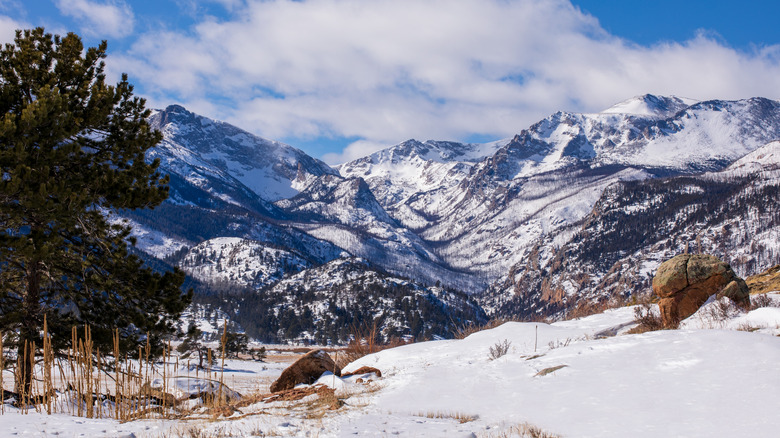
Is there any landscape that captures the imagination of nature lovers around the world more than the Rocky Mountains? With elevations among the highest in the continental U.S., Colorado is well known as a winter destination, and the Rocky Mountain National Park is perhaps the jewel in the state's crown.
Many areas of the park are covered in snow between October and May, creating a breathtaking winter scene. But more active adventurers will also find plenty of opportunities for activities like skiing, snowboarding, and even ice fishing. You can even join a ranger-led snowshoe hike, and while you're exploring, you're likely to discover why it's rated as one of the best US national parks for wildlife. An array of enigmatic species call the park home, including snowshoe hare, white-tailed ptarmigan, coyote, mule deer, and elk. Ever wanted to see a bald eagle soaring magnificently overhead? Well, there's no guarantee, but by visiting the Rocky Mountain National Park, you'll be in as good a place as any to spot one.
Great Smoky Mountains National Park, North Carolina and Tennessee
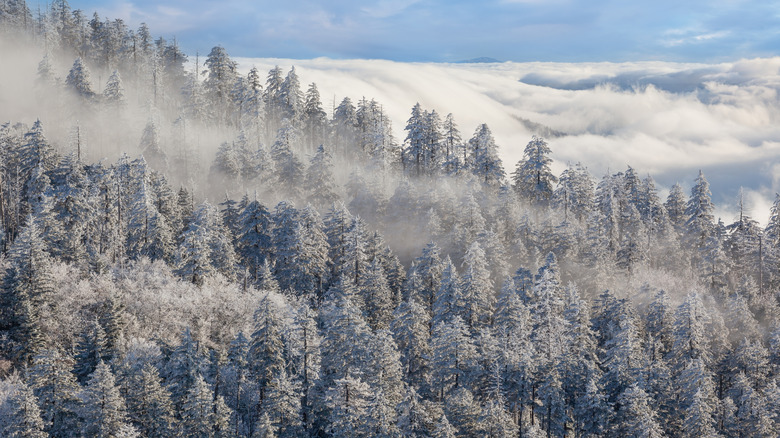
How does more than 800 miles of snow-blanketed hiking trails sound? Good? Well, that's precisely what you'll get at the Great Smoky Mountains National Park. It's really no wonder it's the United States' most-visited national park.
Straddling North Carolina and Tennessee, while you might struggle to cover all 800 miles in a single winter, that's fine. As one of the most bio-diverse parks in the country, you won't begrudge the thought of making a few return trips. As you'll see, the park boasts dense growth of over 100 species each of trees and shrubs, the emissions from which are precisely what give the mountains their "smoky" name. The whole landscape is quite a sight to behold, and that's when you're sharing the view with the crowds of summer. In the winter, when the trails are quieter and the trees are covered in a thick blanket of snow, it's difficult to find words that describe just how beautiful the park becomes.
It's an archetypal winter wonderland, and not just for the landscapes. Before you get too excited, it's important to know that the lower elevations receive, on average, 55 inches of rainfall each winter, so you'll need to pack waterproof layers. What's more, conditions get so severe that road access is often very limited. But if you plan accordingly, and with a little bit of luck, you'll find endless opportunities for downhill and cross-country skiing, plus hikes to see for yourself some of the picture-perfect waterfalls that are dotted around the park.
Mount Rainier National Park, Washington
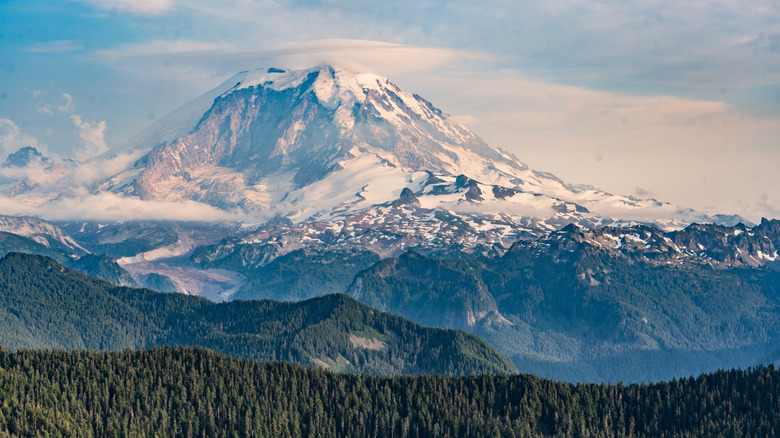
Despite what the name might suggest, Mount Rainier National Park is actually a great spot for those who love the snow. The mountain after which it is named rises to a dizzying height of 14,410 feet, making it the contiguous United States' largest volcanic peak, but that's not all. The park also boasts the largest system of alpine glaciers in the U.S. outside Alaska, and get this: it has the world's largest volcanic glacier cave system.
It also undergoes a majestic transformation in the winter, changing from lush green to pure, unadulterated white, making it one of the most devastatingly beautiful national parks to visit at this otherwise bleak time of year. As for how to make the most of it, you can choose. Skiing, snowshoeing, cross-country skiing, snowboarding, and even winter camping are all possible. The park is also home to an incredible array of wildlife species, including reptiles, amphibians, birds, and mammals. These include golden eagles, deer, red foxes, and even black bears.
Just be mindful that, depending on where you are in the park, you could be subject to winter temperatures as low as 22°F. That's not as harsh as the temperatures often recorded in other national parks around the country, but it's still pretty cold, so make sure you pack and dress accordingly.
Grand Teton National Park, Wyoming
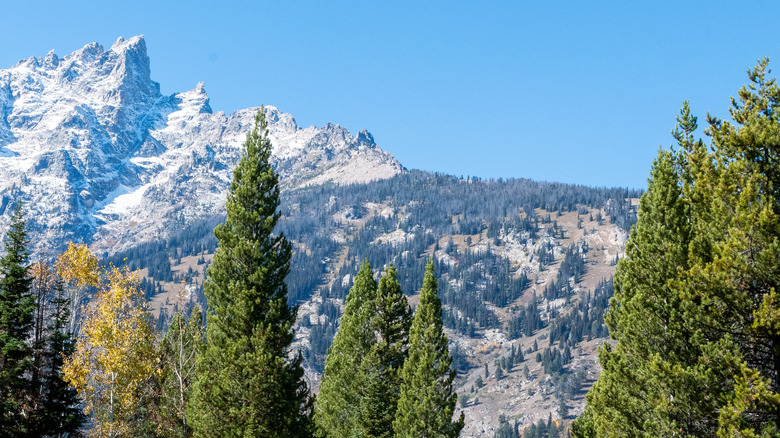
Draped in winter white, the Teton Range of mountains is a foreboding backdrop, yet the peace, quiet trails, and breathtaking scenery make it a must-visit for winter wanderers. If you're hoping to see wildlife going about its winter routine, then good news. You have a good chance of seeing an array of species, including moose, elk, bighorn sheep, and waterfowl. Just be mindful that closures are put in place around the park to protect the species living there during their winter and nesting periods. In other words, bring binoculars, as you may well only see certain creatures from afar.
Another draw here is the fact that Grand Teton is rated one of the country's best national parks for winter sports. Snowshoeing and cross-country skiing are just some of the wintry pursuits you can try during your time in the park. It's equally magnetic to photographers, who often take time out of their winter schedules to try and capture Grand Teton's dizzy peaks in their full, snow-garbed glory.
Acadia National Park, Maine
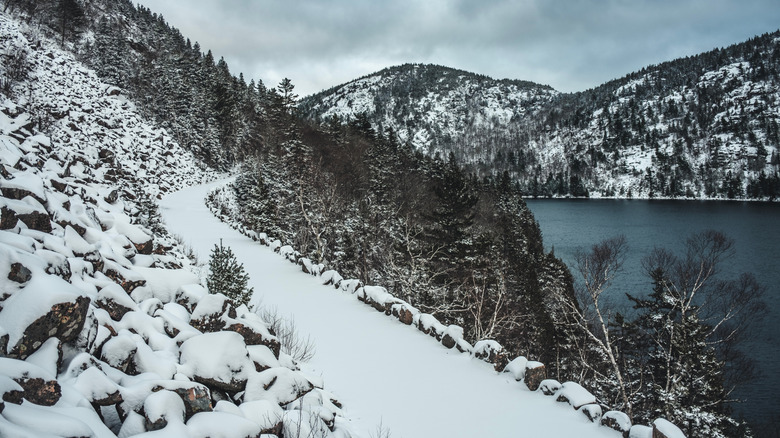
With trees stooped under the weight of heavy snowy blankets and the sound of waves crashing against the shore, a trip to Acadia National Park in Maine is a feast for the senses. Just know that the weather can change quite quickly, so keeping a close eye on the forecast — before and during your trip — is a must if you intend to spend a winter day here. Early darkness is also a factor, and you should always make sure that you're equipped with proper winter hiking gear, as the conditions underfoot are rarely favorable at Acadia during the winter months.
Despite the poor walking conditions, there are still plenty of hikes to be enjoyed for those more experienced and diligent about where they tread. You can also try your hand (or pole) at ice fishing, and if you'd like to see the rare phenomenon of snow blending into sand, then be sure to pay a visit to Sand Beach.
Finally, those with ornithological interests should definitely consider migrating here for a few days in the winter, because Acadia National Park is widely recognized as one of the best national parks for bird watching. Sightings are common of species like bald eagles, osprey, hawks, and the common loon, and in the winter, snowy owls have been spotted nesting among the park's craggy hills. But be warned. While staggering to lay your eyes on, doing so can be quite tricky as they're exceptionally well camouflaged in the winter.
Denali National Park, Alaska
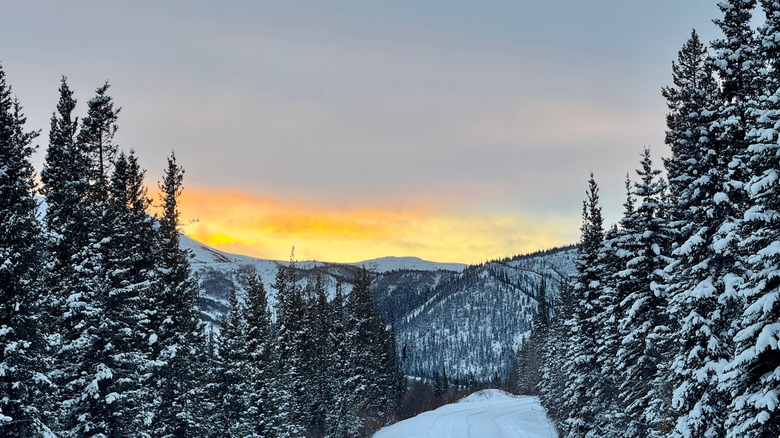
Wherever you visit in Alaska during the winter, snow is pretty much par for the course. This is especially true in Denali National Park, and perhaps nowhere more so than at the top of Denali (formerly known as Mount McKinley). Not only is this the highest peak in North America, but it's also one of the world's renowned Seven Summits.
Before you start to panic, don't. You don't actually need to climb this rocky behemoth in order to have a memorable time at Denali. There are plenty of other activities to take part in, including cross-country skiing, snowshoeing, winter biking, and even multi-day dog-sled trails. You can also go for a simple hike, and you'll find that is arguably one of the most peaceful ways to soak up the park's winter vistas. Just be mindful of the temperature. Denali National Park often sees the mercury fall as low as -40°F. In other words, dressing — and preparing — for exceptionally cold weather is essential.
Olympic National Park, Washington
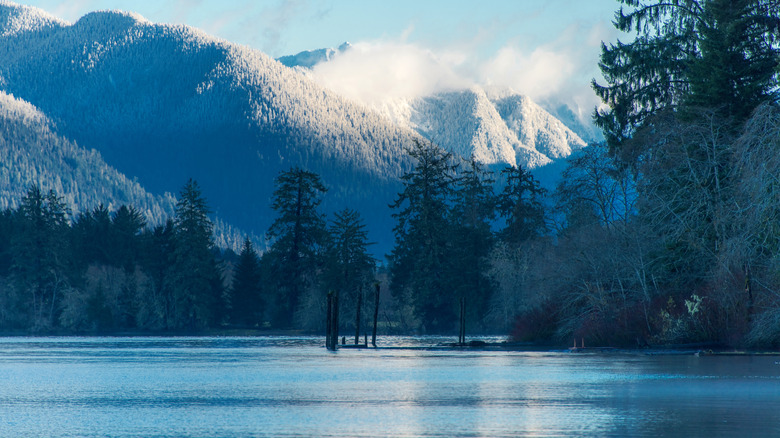
Olympic National Park is a fine example of why you should add Washington's national parks to your bucket list. For starters, if you love spending more than just an afternoon immersed in the great outdoors, you'll find 14 developed campgrounds across the park, meaning that it's easy to find yourself a home for a few days.
Another reason is that the park is home to foot-throbbing 660 miles of hiking trails, all of which offer new vantage points and unique chances to encounter the incredible wildlife that calls the park home. 56 land and marine mammals are found in the park, while 300 bird species are often seen soaring overhead.
All of this together makes it one of the most popular national parks in the country. Come winter, Olympic is home to striking contrasts: snow-dusted peaks, vibrant evergreens, restless waves along the beaches, and strangely verdant temperate rainforests.
Crater Lake National Park, Oregon
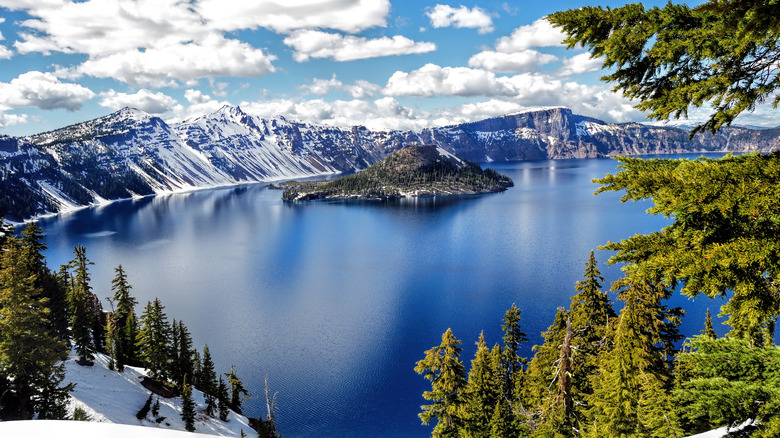
From simply playing in the snow to embarking on a cross-country skiing expedition, there's plenty to get excited about in the winter at Crater Lake. It also receives an average of 42 feet of snow each year, making it a true winter wonderland!
To make the most of it, the National Park Service suggests taking a ranger guided snowshoe walk. You'll only cover between one or two miles, however, the scenery across the park is absolutely staggering, so there's plenty on which to feast your eyes on even a short trip. What's more, if you're not used to snowshoeing, you'll almost certainly be ready for a rest by the time the tour comes to an end.
If you don't fancy snowshoeing, you could always try to catch a glimpse of the park's eponymous lake. Incidentally, it's the deepest lake in the United States. It's even more impressive thanks to the volcano rising with Bond-villain grandeur out of its center. Just be warned that, depending on where you try to view it from, winter conditions around Crater Lake aren't always conducive to good visibility.
Grand Canyon National Park, Arizona
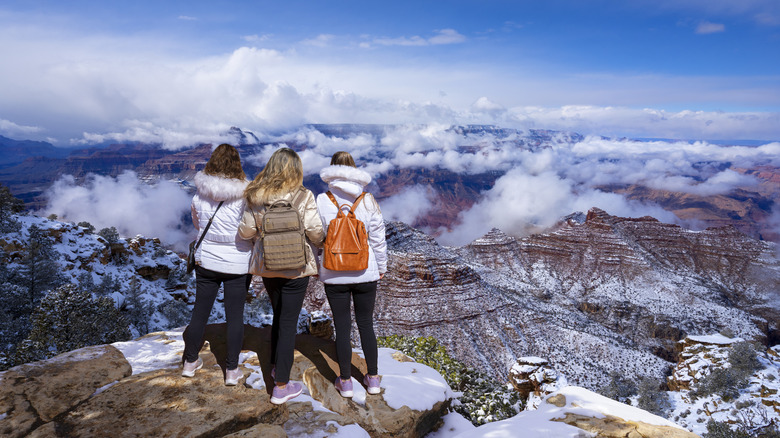
The Grand Canyon sits at the top of the United States' national parks bucket list for intrepid explorers around the world. And while it is, technically, a wonder, its popularity really isn't. Whether you're gazing into the abyss from above or exploring one of the many trails below, the canyon's red-hued ridges, gullies, and giddy peaks are absolutely breathtaking to behold.
All of this remains true during the winter — and you get the added benefit of seeing the canyon garbed in a silky blanket of snow. To experience it, you'll need to visit the South Rim, which is open year-round (the north rim closes in the fall). Whereas in the warmer months the park is teeming with visitors, the winter here marches to a different beat altogether. It's usually much less crowded, offering the chance to enjoy some quiet moments of reflection as you gaze across one of the world's most magnificent natural marvels.
The roads remain accessible (except during bad weather), and there's camping available throughout the winter season. If you head out on a hike, you may be lucky enough to spot a number of wildlife species, including rock squirrels, mule deer, elk, California condor, and even bald eagles. Even after the sun sets, you're encouraged to aim your gaze upward. There are few better places to see the Milky Way than beneath the wintry night sky of the Grand Canyon.