

A Must-Know Safety Tip To Keep In Mind When Camping In Your Car
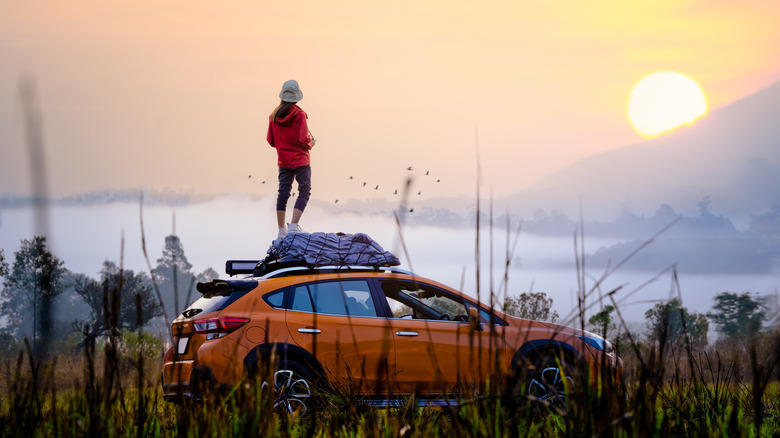
Car camping has quietly become the go-to method for outdoor lovers who want all the perks of camping — including stars, fresh air, and rustic beauty — without hauling a pack for miles. Although camping in your car may not always be the best option in certain conditions or with smaller cars, the practice can beat backpacking because it allows you to drive right up to your campsite, letting you bring coolers, comfy bedding, full cook sets, and even the five most forgotten camping essentials. State and national parks in the U.S. usually have campsites that welcome cars, which means you can slumber under the trees and listen to the frogs, while still keeping your gear and food just steps away. But, as with any outdoor adventure, you'll need to remember one must-know safety tip: always have an easy escape route.
From unpredictable critters to opportunistic thieves, the wilderness can throw curveballs at you that you may not see coming. A locked car can better protect you from bears and scorpions compared to a flimsy tent, but it isn't foolproof. Mechanical failures, sudden weather changes, or minor injuries can quickly turn a peaceful campsite into a scramble for safety. And when you're sleeping in your car, your emergency transport is at the ready. That's why knowing how to get out fast can give you peace of mind, ensuring that what started as an adventure stays memorable for all the right reasons.
Safe and smart practices for car camping
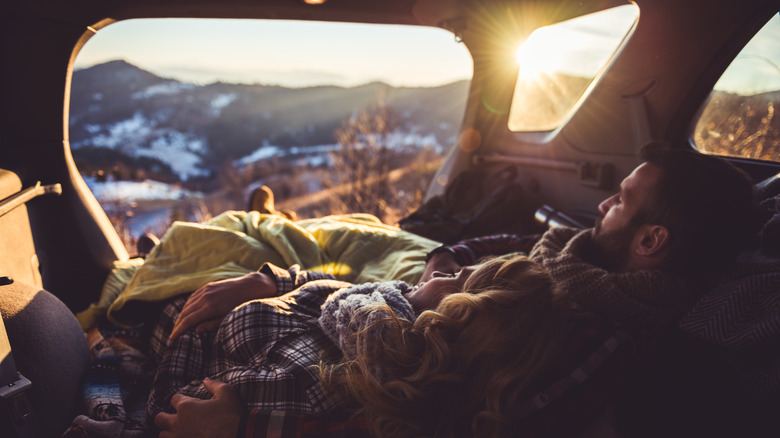
Car camping offers efficiency and flexibility, especially if you're aiming for an early start near a trailhead — but safety is paramount. First, make sure you park somewhere legal. Apps like AllStays and Hipcamp can help you find designated overnight spots, while U.S. Forest Service and Bureau of Land Management areas often allow dispersed camping if you follow posted rules. Always choose a spot that gives you a clear exit route. Park on level ground, avoid blocking roads or other campers, and display any required passes or permits. Keep all of your gear stowed inside the vehicle before you settle in, so if you need to leave quickly, you can.
Once you've chosen your spot, set up your car. Sleep with your head toward the front of the vehicle. This avoids the wheel wells at the back and can help keep you elevated if the ground isn't perfectly flat. Ventilation is also key: Crack a window or the sunroof and use mesh to keep bugs out. This prevents condensation buildup and ensures fresh air circulation. Keep your essentials, like a headlamp, phone, and keys, within reach, so you can leave quickly if needed. And remember, your car can get just as cold as a tent at night, so bring insulated blankets, a sleeping bag, or a quality sleeping pad for warmth. After getting tucked in for the night, lock your doors. Never sleep in a vehicle with the engine running, since carbon monoxide can build up and create a deadly hazard. The National Park Service also suggests you know your surroundings and keep food secured to avoid attracting wildlife. And whether you're camping in a tent, RV, or a car, always remember the must-know tips for camping responsibly and sustainably.