

Can You Paint Your Side Of Your Neighbor's Fence? Here's What We Know
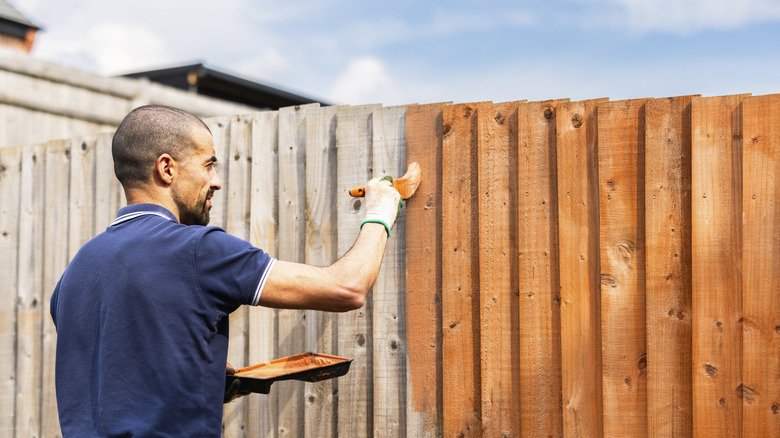
If you're a homeowner, you may already be all too familiar with the difficulty and diplomacy of sharing a fence. Fences are perfect for defining the edge of a property line and averting prying eyes from your backyard's relaxing oasis. As the fence begins to wear and tear, it can often become tempting to hit it with a coat of stain or paint, in an effort to beautify your side. Unfortunately, this can raise a wide array of legal and ethical questions, forcing you to face some serious roadblocks. If a fence lies right on the property line (also called a boundary or partition fence), then you each own a side. But if it lies fully on your neighbor's property, it's theirs (check local and state laws for the details). Painting a fence that doesn't technically belong to you could incur charges of vandalism or trespassing, even if you're improving the overall aesthetic. So before you commit to picking up your paint and going at it like some kind of suburban Banksy, there are a handful of factors worth taking into consideration, the first being simple communication.
For starters, it should be noted that there is no one-size-fits-all solution when it comes to managing fences, beginning with whether you've chosen wood or composite fencing. Property lines can be quite tricky, and can even be legally moved depending on city laws. Things may get more complicated if there's an HOA involved, as the rules can get quite strict. Still, with the right attitude and the right approach, you may come to find that getting your way is exceptionally easy. At the end of the day, it largely comes down to your subjective situation, and your relationship with your neighbors.
Best practices for painting your neighbor's fence
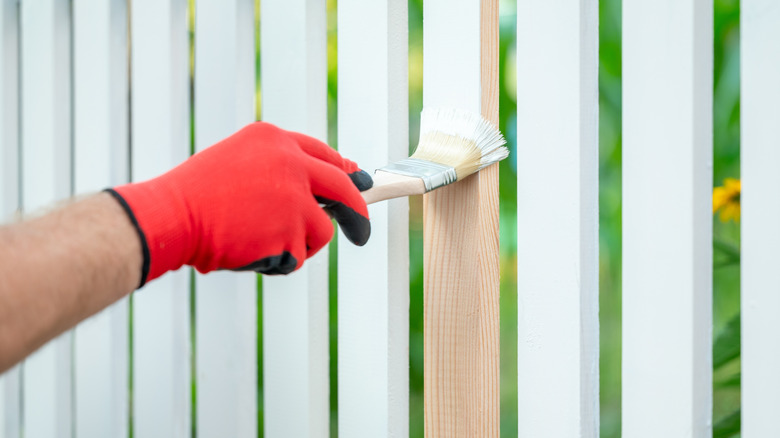
When performing outdoor updates that can add value to your home, it's always a good idea to consult any local ordinances beforehand. This could mean reaching out to city hall and your HOA president, or double-checking with an expert at your local home improvement store. When it comes to painting your neighbor's fence, the first step should be fairly obvious: Speak to them about it. Though it can be daunting, your best method for ensuring you're not stepping on anyone's toes will always be clear and concise communication: Share your plans, paint swatches, and whether you're hiring a professional for repairs. If you're lucky, they may reveal that they have no feelings one way or another about the fence, allowing you to proceed uninhibited. If you need to grease the wheels a bit, you could always offer to paint their side of the fence (and pay for it) as a courtesy, or bring them in on making sure you've picked the best color for your outdoor spaces.
Even if you're just painting your side, you'll want to make sure you do it right for your neighbor's sake. Strip, sand, and prime a wooden fence, then use a quality outdoor paint (bright or jarring colors are best avoided). Let them know if you're pruning overhanging branches. If your neighbor refuses to make themselves available, you'll need to weigh your options. Is the fence so dilapidated that it's worth souring your neighborly relationship to beautify it? In the end, while fences are a great way to create privacy in your backyard, you also need to remember there is a person on the other side sharing that same feature.