

Why Fall Is The Perfect Time To Plant A Pear Tree In Your Yard
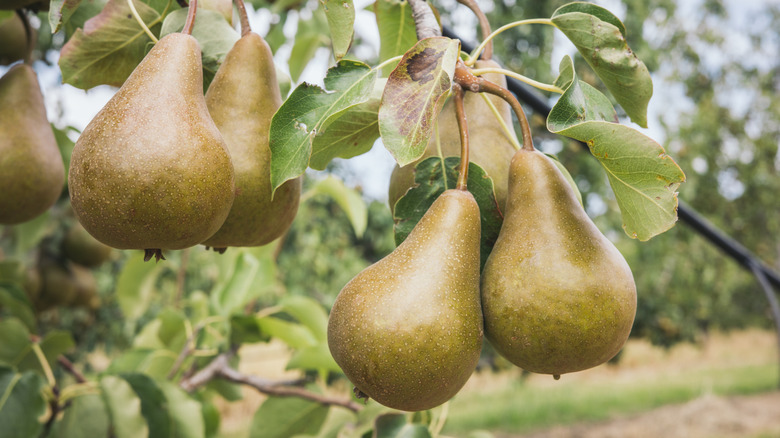
Originating from Asia, pear trees grow quickly and don't come with nearly the same amount of pest issues that apples do. As such, pears are relatively stress-free and will thrive in a wide variety of climates from zones 4 to 9 depending on the varietal. Honestly, the biggest stress in establishing pear trees might be knowing what time of year to plant them. Here is why fall is actually the perfect time to plant a pear tree in your yard.
The fall planting season has a few things going for it, in particular the weather. Intense summer temperatures are beginning to wane. This means that your fledgling pear trees won't be exposed to excessive heat and dryness, a deadly combo for all young fruit trees. The fledgling tree can lose moisture faster than the roots can absorb it, which leads to severe leaf deterioration and branch death.
While cooler temperatures are ideal for the health of your pear tree, there is one potential downside to choosing fall: Most nurseries and retailers sell their dormant bare root trees in the early spring, meaning that stock could be low to nonexistent come fall. Instead, you might be left to purchase a potted tree that is already established, or search nurseries online. While this usually doesn't pose any problem, these trees are often more expensive and are potentially root-bound from being confined for so long. Just be sure to avoid Bradford pears, as they are invasive and foul smelling.
Fall planting means warmer soil
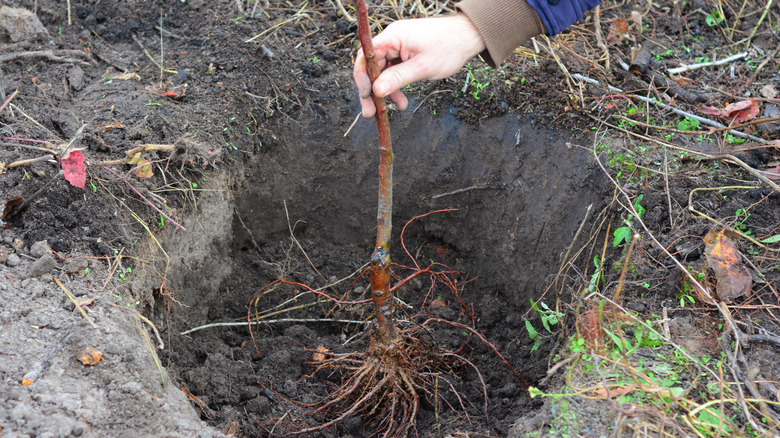
The other big benefit to planting in the fall is that the frosts and freezes of winter have yet to arrive. The soil remains warm from months of summer sun, and therefore still easy to work with. This is why you can grow vegetables like carrots and plant your pear tree later in the season than other types of plants. The warmth of the soil is really beneficial because it provides your pear tree's roots with adequate insulation, allowing it to establish its roots in comfort before winter arrives.
The reason fall's mixture of warm soil and cool temperatures are so good for your pear tree is that it is primarily focused on root establishment. Since fall is the natural time when growth slows down, the season puts less stress on your new pear tree because its preparing to go dormant, meaning it doesn't need to stress about producing leaves or fruit. As such, once spring rolls around, the roots are already established so all of the trees energy can be focused on producing leaves and growing new branches. For the same reason (warm earth, root growth), fall is the best time to fertilize to protect your plants. With more rain, plants can absorb more nutrients from the fertilizer, but it can also act as an insulating mulch, depending on which fertilizer you use.
This principle holds true if you are planting in the ground, or in a container. If you are doing the latter, just make sure you are using a dwarf variety of pear, as dwarf trees are more well suited to container growing than their full-sized brethren.