

How To Fix Your Lawn Mower After Hitting A Rock With It

We may receive a commission on purchases made from links.
Whether you love mowing your lawn or loathe it, odds are you want to extend the life of your mower as long as possible. However, sometimes things happen that can put your mower's health in jeopardy far faster than normal wear and tear. Hitting a rock — or a similar hard object such as a brick, pipe, or tree stump — is one such event. While this may seem easy to avoid, it can also happen quite unexpectedly. Should this happen, there are a variety of things that could potentially go wrong, including damaging your blade, deck, spindle, crankshaft, flywheel, or engine. That's why it's crucial to carefully inspect and troubleshoot the problem to know exactly how to fix your mower after hitting a rock.
When you hit an object, your mower may keep running, or it may stop on contact. If the mower does keep running, turn it off right away so as not to risk further damage. Before attempting to start it again, take time to assess any potential damage. Allow the mower to cool down for a few moments. For safety, disconnect the spark plug or remove the battery before beginning your inspection of the machine. Next, check under the mower deck to see if any debris is wedged under the blade or caught in other components, and remove any objects or debris you find.
Check for issues with mower deck, blade and spindles
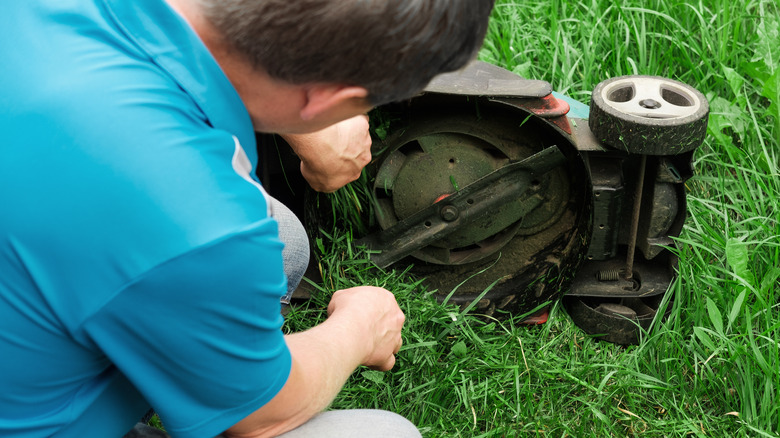
The next step is to inspect the deck, blade, and spindles for damage. Even if it still runs, damage to any of these components can result in your lawn mower cutting grass unevenly and can eventually lead to engine damage or other serious issues. Visually inspect your mower deck. If it's bent, you can attempt to straighten it with a mallet or by applying steady pressure with a jack and blocks. If it is too severely bent or damaged, you may need to replace the mower deck entirely.
Next, check the blade for any bends, dings, or dents. If the blade is bent, it is usually best to just replace it. However, if it is gouged or nicked, you can usually salvage it by filing down the rough spots and sharpening the mower blade. You will need to remove enough metal while sharpening to get past any damage. You will also need to balance it before reinstalling it on the mower. This is easily done using a simple device like the Oregon Precision Mower Blade Balancer. All you have to do is place the blade on the balancer. If one side sits lower than the other, remove a bit more metal from that side until the blade sits level.
If your mower deck is fitted with belt drive spindles for the blades, check those for damage as well. If they wobble or are visibly bent, then you have a problem. Although they can sometimes be repaired, it's usually best to just replace lawn mower deck spindles if they are damaged. They're relatively inexpensive, and it's typically much easier to replace the entire spindle unit than to try to repair a portion of it.
Crankshaft and fly wheel are more serious problems
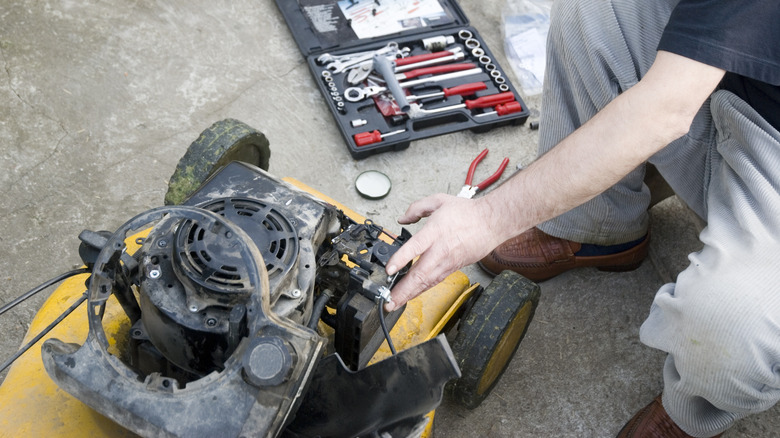
On mowers where the blade connects directly to the crankshaft, hitting a solid object can bend the shaft. To check, keep the blade off and hold a small block of wood on the underside of the mower deck a few inches from the crankshaft. Then, place a marker across the board pointing at the crankshaft. The tip of the marker should be close, but not touching. Holding that in place, slowly turn the engine over. If the shaft is bent, it will move closer and farther from the marker as it turns. This will also leave a mark on the shaft in the direction it's bent.
If the shaft doesn't touch the marker as it spins, it is straight. If it does, use a ball pin hammer or a mallet to strike the shaft on the mark, bending it back the other direction. Repeat the process of checking with the block and marker until the shaft no longer wobbles as it spins. You can also use a long section of pipe placed over the shaft to bend it back into a straight position.
Finally, reconnect the spark plug and try starting the mower. If it doesn't start, odds are your flywheel is misaligned and the shear pin needs replacing. This is a fairly simple fix. First, disconnect the spark plug and remove all the covers to access your flywheel. Remove the flywheel from the shaft and take out the broken pieces of the old shear pin. Put the flywheel back, aligning the slot on the flywheel with the keyway on the shaft. Place a new shear pin in the slot, tamp it into place, and replace all the covers.