

Why Aerating Your Lawn During Fall Is The Key To Thriving Cool-Season Grass

We may receive a commission on purchases made from links.
You've put in the work all summer, fixing those bare patches in your lawn, maintaining the perfect cut, and painstakingly removing weeds. If you have cool-season grass, your turf is made for high traffic and cold temperatures. But to maintain your thriving green lawn through the coming winter, one key move you can make this fall is to aerate. Of course with warm-season grasses, the best time to aerate is late-spring to early summer, important to consider with Bermudagrass or zoysia.
Aeration after summer comes to an end will relieve your turf of all that compaction it went through during the warm months from family baseball, backyard barbecues, and maybe even bouncy houses. Your cool-season grass is well-established and toughened up at this point, and it can take the disturbance aerating causes better now than in the spring when it is emerging from winter dormancy. Aeration breaks through the thatch layer into the compacted soil beyond, loosening it so that water and nutrients can penetrate. And as the name suggests, it allows air to circulate into the soil, bringing much-needed oxygen to the roots. Combine aeration with overseeding to preemptively control weeds and you have a winning fall maintenance plan for your lawn.
Aerate in fall for a thicker, healthier lawn come spring
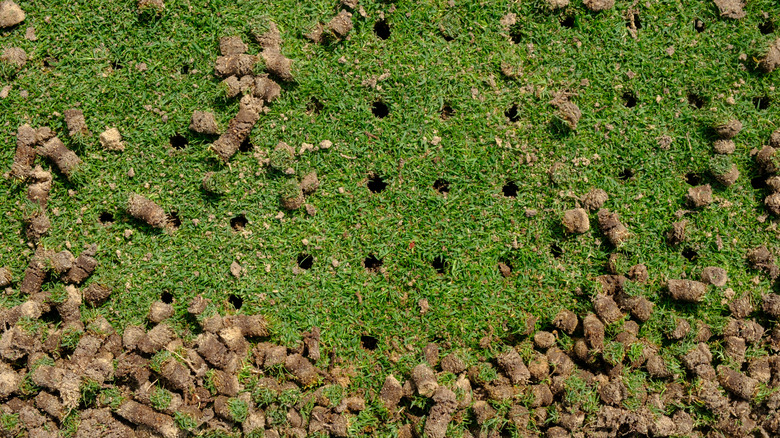
For a small amount of grass, you can aerate your lawn by using a simple hand-held aeration tool, like the Dolibest lawn coring aerator, made of stainless steel. If you have a lot of lawn, you'll want to consider a power or walk-behind aerator, which you can rent from a local garden tool center. You can even hire a landscaping service to do the aerating. But whatever tool is used on your lawn, make sure it is the kind whose spikes are hollow and remove cores of soil, not just poke a bunch of holes in it. Core aeration is the best way to improve lawn health, because it will be most effective against compaction.
And don't just stop after you've put holes in your lawn. Overseeding cool-season grass is a key follow-up measure to fill in bare spots and allow for thicker growth next spring. It also helps prevent weed growth in the spring. Post-aeration is also a good time to fertilize your cool-season lawn, or spread a layer of compost, because now those nutrients can really penetrate into the soil and reach the roots of your grass thanks to all those little holes. Aeration can look a little scary, but neglecting to aerate is one way you may be secretly ruining your lawn. Instead, aeration in the fall will make your cool-season grass come back stronger after a long winter.