

Help Your Tomato Plants Thrive With An Underrated Type Of Fertilizer
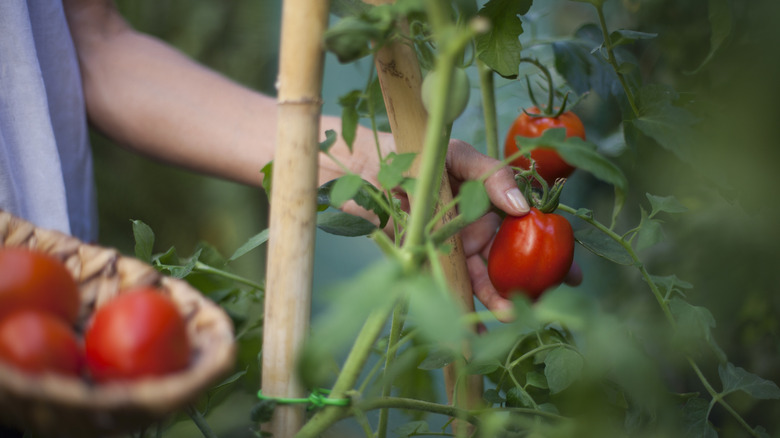
While tomatoes are one of of those plants many gardeners love to grow, they do have some rather specific demands. Tomato plants are what are known as heavy feeders and naturally become deficient in nitrogen, potassium, and phosphorus, so a fertilizer is vital to provide these nutrients. It turns out that bison manure contains generous helpings of these nutrients, as well as calcium, sulfur, and magnesium. If you've only ever used cow manure, you'll find that bison manure serves as a great substitute, and may carry a lower risk of transporting pathogens to your tomato plants. While it's important to note that there isn't much available research to determine whether bison manure works better than cow manure — some research lumps the waste products together or suggests there isn't much difference — you may still find it's a useful way to help raised garden beds thrive. What's more bison, or American buffalo, are indigenous to North America while cattle aren't, so you might consider that aspect.
Like cows, bison are herbivores, but each spends their lives in different environments, so they produce slightly different manures. Even when both animals graze freely, they eat differently: Bison focus on grasses, while cattle like both grasses and wildflowers like clover. In addition, an ecosystem of up to 300 types of insects can inhabit bison patties, with dung beetles playing a key role in breaking down the manure naturally to nourish the soil.
That said, there are a few tips to keep in mind before you use bison manure on your tomatoes. Like cow manure, bison manure is high in nitrogen, which can burn plants if applied directly. It can be high in ammonia in its raw state and may contain weed seeds. So it's best to compost manure with "brown" materials (ironically bison manure is a "green"), stored in a budget-friendly compost bin until it's ready.
How to compost bison manure
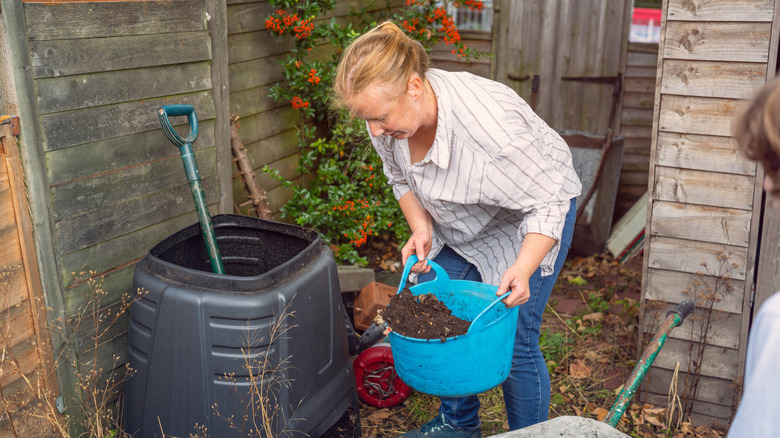
Composting is critical when it comes to growing tomatoes with bison manure. The last thing you want to do is overwhelm your plants with excessive levels of nitrogen. You also need to compost to protect your own health: A big part of the process involves heating manure to at least 130 degrees Fahrenheit, killing pathogens like Salmonella and E. coli. The heat also destroys any weed seeds. While the manure bakes, fungi will break down the organic matter, allowing your tomato plants to more easily process it.
Keep your bin somewhere on your property with good drainage, as you don't want the compost to become waterlogged. A hard, concrete surface is preferable. You also want to make sure that the compost pile doesn't drain directly into your garden, as that would defeat the purpose. To neutralize some of the nitrogen content in the manure and make a better overall compost, mix it with carbon-rich brown matter like straw or wood chips. About once a week, turn the pile so that air can reach all of the manure. After about 90 to 120 days, it should have the consistency of soil and ready for your crops. Alternatively, you can buy a concentrated liquid bison compost tea, diluting it with non-chlorinated water for each use.
Manure tea is an ideal natural liquid fertilizer for tomato plants. Once diluted, apply it immediately when transplanting plants. Then apply it every three weeks or so during the growing season. Pour a few tablespoons for each plant into the soil, about 4 inches away from the stems to help avoid nitrogen burn.