

The Showstopping Red Flower That Hummingbirds Can't Get Enough Of
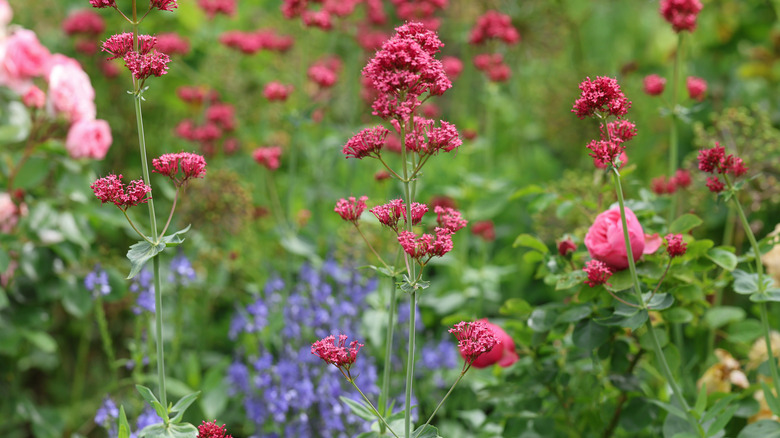
Watching hummingbirds dart back and forth through your garden is absolutely delightful, and there are many plants you can grow to encourage them to visit. Some, like the nectar-rich Ohio buckeye tree, are wonderful but quite large, which isn't a good fit for every yard. If you're looking for something smaller and more colorful, then you should consider planting a red valerian (centranthus ruber). Also known as Jupiter's Beard, this flower grows 2 feet to 4 feet tall and spends much of the summer and into the fall with deep pink-red blooms. They aren't just beautiful; the blossoms are highly attractive to pollinators. Bees, butterflies, and hummingbirds are all drawn to these plants. Not only do they attract actual hummingbirds, but these flowers also appeal to hummingbird hawk-moths, which look and move strikingly similar to hummingbirds and can be found across the U.S. Another great thing about the red valerian is that it doesn't attract deer, making this a great plant for deer-resistant gardens.
Something to note is that red valerian is not native to the U.S. While it isn't officially listed as invasive by the USDA, it does aggressively reseed and can spread if not managed properly. Deadheading, or removing flowers after they've wilted, is one of the best ways to control it, as it prevents the plant from producing seeds. It can also encourage red valerian to grow new flowers, extending their bloom time.
How to grow red valerian to attract hummingbirds
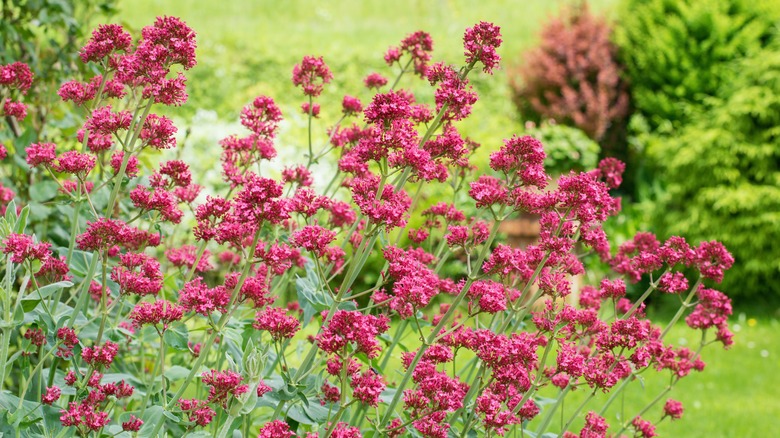
Red valerians grow well in poor soil, so don't worry if your garden isn't naturally rich — there's no need to amend the soil. They prefer moderate to well-draining soil, and planting them in full sunlight will give you the best and brightest flowers. Red valerian needs very little care after planting, so once you've chosen your location and gotten them in the ground, you're good to go! They don't need to be fertilized and only need occasional watering during long-lasting droughts.
Red valerians also make great companion plants for many other popular hummingbird and pollinator flowers. Sage, catmint, and yarrow will all grow well alongside it, and the beautiful but oddly named beardtongue is another great option. These flowers are beautiful and easy to grow, especially if you have rocky, well-drained soil in your garden. Alliums, spurges, and some types of ornamental grass can also work well with your red valerian.