

Protect Fruit Trees From Getting Ravaged By Pests With A Simple Clothing Hack
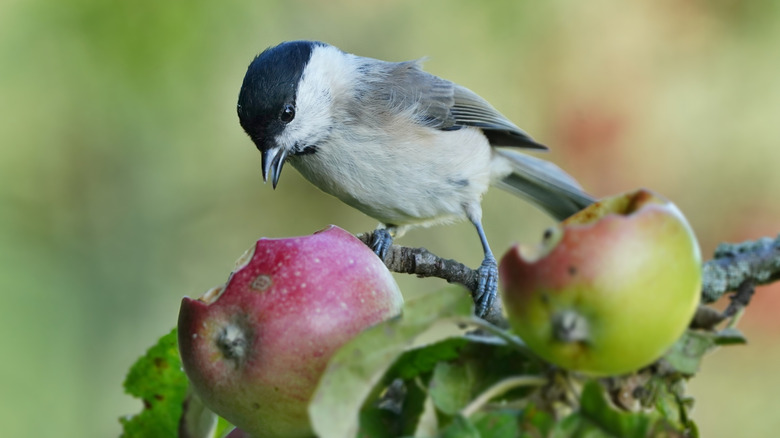
Stained, ripped clothing isn't ideal for donating to other people, but you can put it to good use in your garden. If you're not repurposing it in scarecrows and other garden decor, turn it into protective bags for your fruit trees. The same types of bags that protect growing fruit from wasps can be used to deter birds, squirrels, deer, and other creatures that might make a big dent in your crop. Making these sacks from old fabric keeps valuable materials out of landfills and stretches your gardening budget while safeguarding your fruit.
If you're new to growing fruit trees, you may be surprised how many snackers they attract. Many common backyard birds, including blue jays and house finches, are fond of apples and oranges. Invasive house sparrows will devour pears, peaches, and plums as well. Birds are happy to eat the fruit growing on your trees rather than the fruit you've placed in their feeders. So the harder it is for them to access the ripening bounty, the greater the likelihood that they'll stick to feeder-based food or seek fruit elsewhere.
Paper wasps and yellowjackets also love helping themselves to your orchards, and though squirrels are often portrayed as nut hoarders, they'll nibble apples, plums, and even avocados when given the chance. Many gardeners turn to tree netting to keep wildlife from obliterating their harvests, but it's easy for animals to suffer harm if they get caught in it, as they often do. Fruit bags are essentially small nets that enclose pieces or clusters of fruit. Since they're tied shut, it's hard for wildlife to become trapped.
How to make fruit protection bags from old clothes
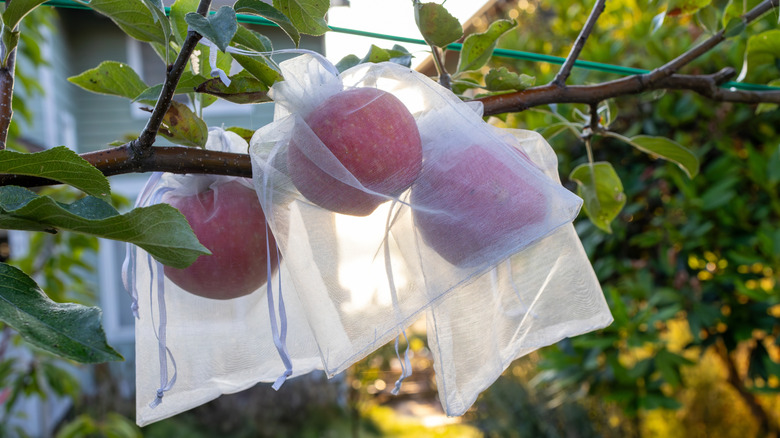
Garments made of light, airy material are ideal for creating fruit protection bags. As long as some air can pass through the fabric, your fruit should be able to ripen. Cotton and linen are two natural textiles to consider. You'll also need twine or ribbon, a pair of fabric scissors, and a threaded needle to transform old pieces of clothing into little fabric sacks that cinch shut.
To figure out what size to make your first bag, determine the dimensions of a large, mature piece of the type of fruit you're growing. Cut a rectangle of fabric that's roughly twice as big. Fold the fabric at its midpoint. The crease will be the bottom of the bag. After that, sew the sides of the bag shut. A simple running stitch will do, but a backstitch will create a stronger seam. Flip the bag inside out to hide the seam, and then make two little holes near the opening. Place them an inch apart from each other. Snake your twine through the holes and make knots at both ends of it. Finally, pop a piece of fruit into the bag and tie the twine in a bow to seal off the opening. Repeat this process for additional pieces of fruit.
If you run out of clothes to repurpose or want to cover large clusters of fruit, use laundry bags to protect your plants from pests. Or you can transform pieces of old sheets into jumbo fruit protection bags. No matter what size your protectors happen to be, wash them after harvesting your fruit to stave off mold and bacteria.