

Common Soil Colors And What They Mean For Your Garden
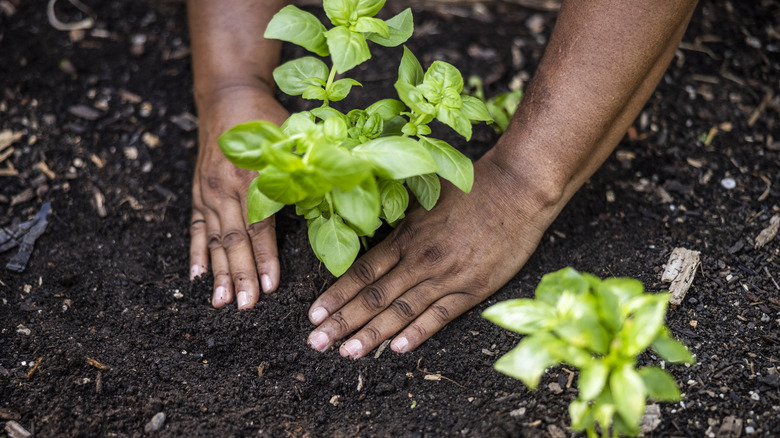
When you look at soil, there are some specific colors you'd expect to see — like brown, for example. However, you may sometimes come across more unexpected colors. Shades of red, black, white, and brown are actually fairly common; they can indicate the nutrients in your soil and tell you how healthy it is. There are also some slightly less common colors you may encounter, like green, yellow, or gray. These can suggest that something is wrong with the quality of your soil.
By far, the best colors to have are the darker ones. Deep brown or black soil usually represents a good mix of nutrients, organic matter, and moisture. This is great for plants that have a lot of nutrient requirements, like fruits, vegetables, or big flower bushes. That said, plants that are more accustomed to dry soil might not appreciate it as much.
Still good, although not quite as desirable, is light brown soil. This usually means that it contains some organic materials, even if it's not as rich as darker soil. You might need to boost it with a home-made fertilizer, although this soil can work as-is for plants that don't need a lot of nutrients. If this is your natural soil, native flowers and grasses may be the best option, as they are used to these conditions.
Other soil colors you may find in your garden
Sometimes, your soil can take on even more alarming colors. While light brown is okay, if it's lacking almost any color, you might have a problem. Pale or completely white soil usually suggests a complete lack of nutrients and moisture. It could also indicate a lot of sand or excess salts in your mixture. It'll need plenty of additives to be ideal for most plants, including organic matter and compost. If this sounds like a lot of work, you can also focus on planting above ground instead of trying to grow plants directly into the soil. Raised beds are often preferred over in-ground garden beds anyway, because they're easier to maintain and control — so that might not necessarily be a bad thing.
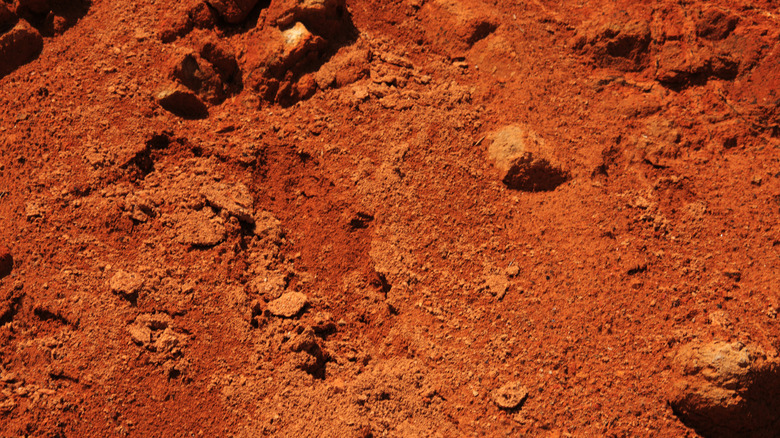
Another soil color you could see, depending on where you live, is red. This is most common in the western and southern regions of the United States. There, the soil tends to have a lot of clay and iron oxide, which provides that reddish hue. Red soil can come in a variety of shades, but, like with brown soil, it gets darker as more organic matter is broken down. It may also include important nutrients, such as sodium, though not as much as brown and black earth. High iron content may not be ideal for all plants, but vegetables like broccoli, lettuce, chard, and cabbage are still able to thrive to some extent in these conditions.
More unusual soil colors
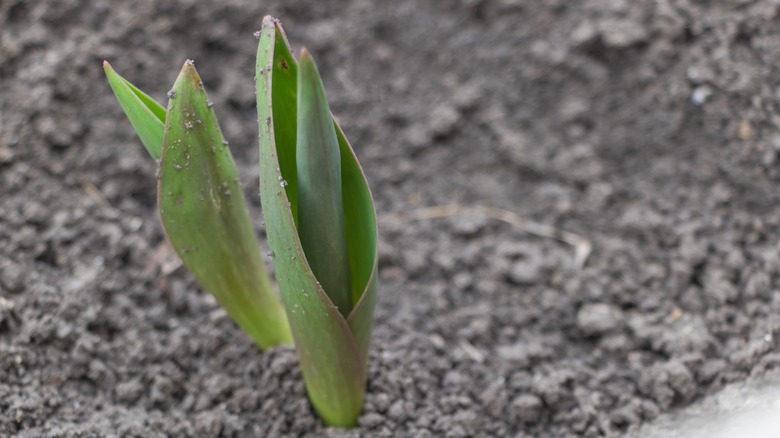
While all of the colors listed above are fairly common, there are some pretty strange shades your soil could take on. The first is yellow. Soils around the U.S. contain the iron oxide goethite, which turns earth a yellow color. Sometimes, it may come across as yellow-brown depending on the size of the goethite crystals. Generally, this type is dense and doesn't drain well. Adding some sand or small stones and organic matter can improve it greatly.
The final colors are gray and green. These are the most worrisome options, as they usually mean that there's far too much water and potentially a lack of oxygen in your soil. Generally, very few plants will survive in these conditions, and most definitely not the ones you want to grow. The best option is to let the soil dry out fully before adding a lot of organic material, which can provide the earth with oxygen and nutrients. You also may need materials to help break it up, like small stones or perlite. Amend the soil and use raised beds for a year or two so it has time to improve and get healthier. Of course, even raised beds aren't perfect. If you want your garden beds to thrive, you'll need to follow certain must-know tips.