

How To Find Free Camping At Any Of America's Stunning National Forests
We may receive a commission on purchases made from links.
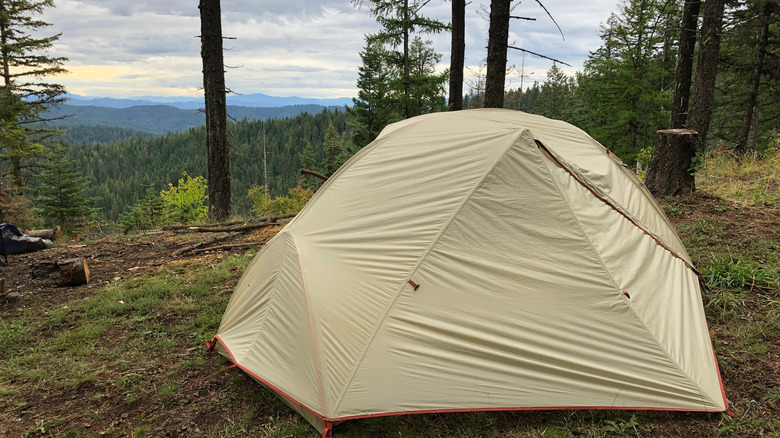
As you begin the process of booking the perfect campsite for your next outdoor overnight adventure, you may be surprised to learn some of the most breathtaking places to camp in the US don't require a reservation – nor do they charge a fee. That is because much of the land within the 154 National Forests in the United States offers free camping options, albeit typically on a first-come, first-served basis. Finding spots to camp for free within US National Forests requires a bit of legwork, such as scouring websites, referencing maps, and checking apps. Such efforts can often result in fee-free overnight stays in some truly incredible locales.
Before you embark on a quest to find free campsites in national forests, it is important to note that these are not developed campsites with full amenities. The free options are for dispersed camping, which is alternately known as primitive or wild camping. It may also be referred to as backcountry camping. Regardless of the moniker, this type of camping involves setting up camp in otherwise undeveloped areas.
Even though they are not developed and offer no amenities, free camping options in national forests are not limited to tent campers. Indeed, many national forests have free camping opportunities for RVers are well. Like tent campers, though, RVers looking to take advantage of free camping in national forests should be prepared for dry camping, which is RV camping with no hookups or amenities. Also known as boondocking, dry camping does require a bit of advanced prep, but can be a big cost-saver. Though most locations offer designated trailside or primitive campsites, some may still need to be reserved in advance, regardless. This is where the research on specific forests comes in clutch.
Tools to use to find free camping in national forests
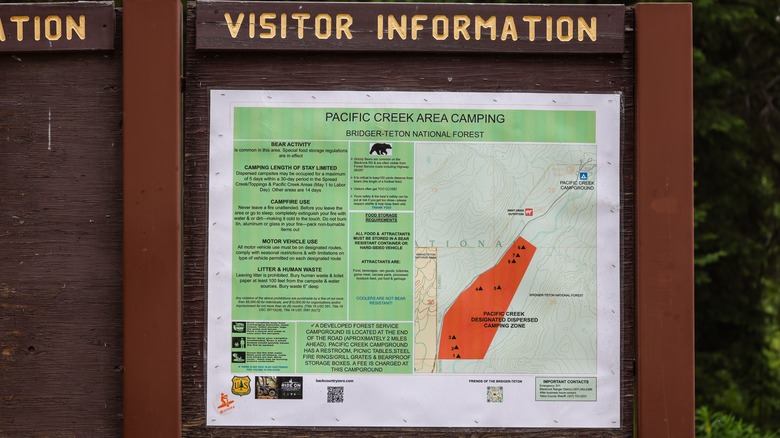
The primary tool you should use to find free camping in national forests is the internet. Websites for each national forest site will list any primitive camping options, as well as any applicable fees or permits. Again, while most national forests offer free primitive camping, there are some exceptions, so just be sure to check for any required fees and restrictions. These websites will also typically include maps of the forest with designations for areas where primitive camping is allowed, as well as the rules and regulations for camping within that particular forest. Be sure you are aware of and follow these rules.
As you narrow down which national forests to visit, it can be handy to utilize an old-school map to help you pin down possible spots to set up camp within the allowed primitive camping zone for that forest. For instance, the Pisgah National Forest Map Pack Bundle by National Geographic includes detailed maps for the various areas and districts within the national forest. These maps include not only details such as trails and rivers, but also contours and elevations that aren't usually included in the online map. Studying such maps can give you a good idea where you may want to camp within the chosen national forest before you even arrive.
There are also a number of apps that you can use to help you narrow down potential campsites, including the site Free Campsites, and apps such as Google Maps, iOverlander, and OnX Offroad are all valuable resources for pinning down access routes and potential campsites. Be sure to use apps and websites to do research and download any necessary information ahead of time, as you never know for sure how cell service will be within the national forest.
Things to remember during dispersed camping trips
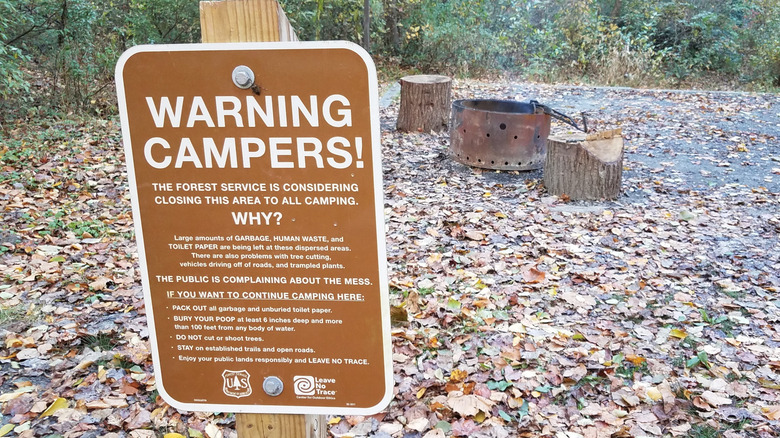
While campers often relish the free camping opportunities within national forests, it is also important to remember that dispersed camping comes with responsibility. Dispersed camping is meant to be a sustainable form of camping with little impact on the environment. This requires campers to be aware of the rules of regulations, such as the allowable duration of stay, rules regarding campfires, and more. Additionally, even though dispersed campsites are not developed and typically don't need to be reserved, campers are encouraged to use sites that have been used previously by other campers to reduce their environmental impact.
It is also extremely important to follow the Leave No Trace principles. Remember, you will need to pack in everything, including your water supply. Equally important, you will need to pack out everything, including your trash. So, it is usually best to be somewhat minimalist when going on a dispersed camping outing. This applies whether you are tent camping or boondocking in an RV. It is very important not to dump any trash, refuse, sewage, or other pollutants in the area. The fact that there are no sites with sewage hookups when dispersed camping is the reason it is important for RVers and van campers to make sure their grey and black water tanks are empty at the beginning of the trip. It is also a good idea to carry a tank tote for extra sewage capacity on extended trips.