

How To Choose The Best Type Of Sealer To Use On Your Birdbath
We may receive a commission on purchases made from links.
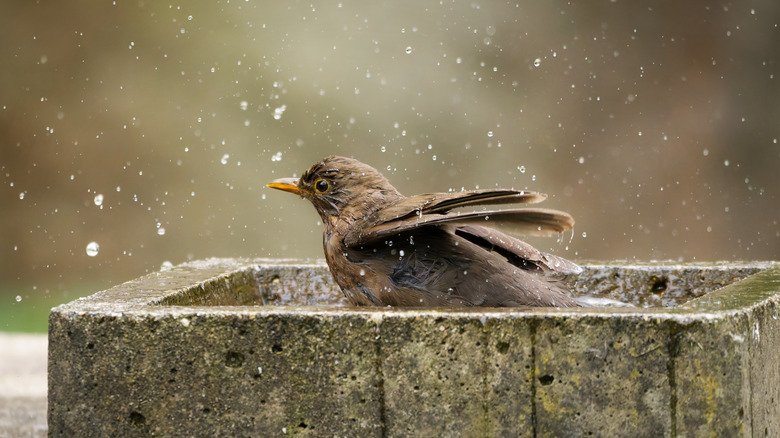
Providing a birdbath in your yard is a great way to attract a variety of wildlife, and it's safe to say that most homeowners enjoy watching their feathered friends enjoy a nice soak. However, to keep the water clean and avoid problems like cracks, your birdbath may require regular sealing. Choosing the right type of sealer is the first step in providing safe drinking water for the birds in your backyard.
The sealing process starts with identifying what your birdbath is made from. If yours is made from corrosion-resistant and easy-to-clean materials like aluminum, glass, or copper, then it doesn't need to be sealed. However, porous materials like concrete stone, terra cotta, and cast iron may look great, but they can all benefit from a non-toxic coat of penetrating waterproof sealer. You can use something like Siloxa-Tek 8500, or you can choose an all-natural solution like Hope's 100% Pure Tung Oil, which works great on most types of materials.
By sealing your birdbaths, it helps you avoid problems like algae, rust, cracks, and stains, and it ensures that they hold water longer. Of course, knowing what to look for when buying a birdbath can help you determine the best materials and designs for easy birdbath maintenance. For example, while birds love the texture of concrete baths, they're harder to keep clean and could end up with cracks during freeze-and-thaw cycles. Still, if you like the look of a concrete birdbath in your landscape, using a sealer is a good solution.
Everything you need to know about sealing birdbaths
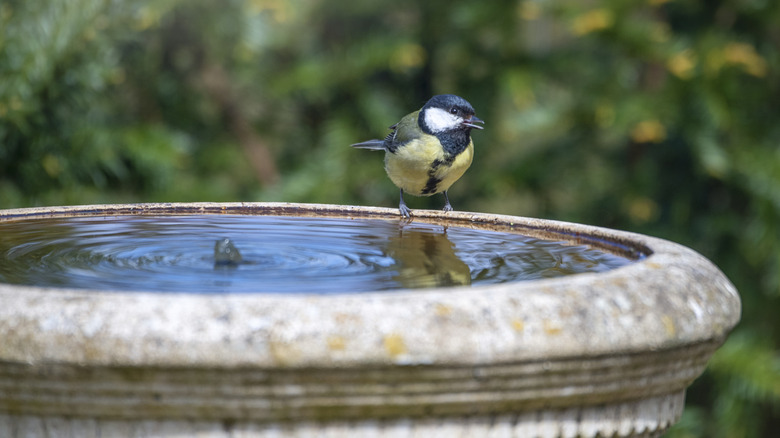
Whether you're DIYing a birdbath, repairing one, or simply want to seal yours, be sure to read the instructions thoroughly once you've picked a sealer. For best results, deep clean your birdbath before sealing to remove built up dirt and grime, then let it dry for at least 48 hours. For concrete birdbaths, now is a good time to use a fast-setting cement patcher to fill cracks, and then apply your sealer.
If you're restoring a cast-iron birdbath, start by removing the rust using a wire brush or steel wool. You may also need to use some vinegar, followed by a coat of rust-inhibiting primer. Then, you can seal it with a non-toxic sealer just as you would a concrete birdbath.
Once you're done sealing the birdbath, allow the sealer to cure completely before putting the birdbath back out for the birds. Then, you can continue to provide clean water for your feathered friends, refreshing the water at least every other day. If you have a large yard, you may even want to get another one. Consider maintenance as well as aesthetics when choosing a birdbath size and style to suit local wildlife.