

Hummingbirds Are Absolutely Obsessed With This Bright Purple Ground Cover
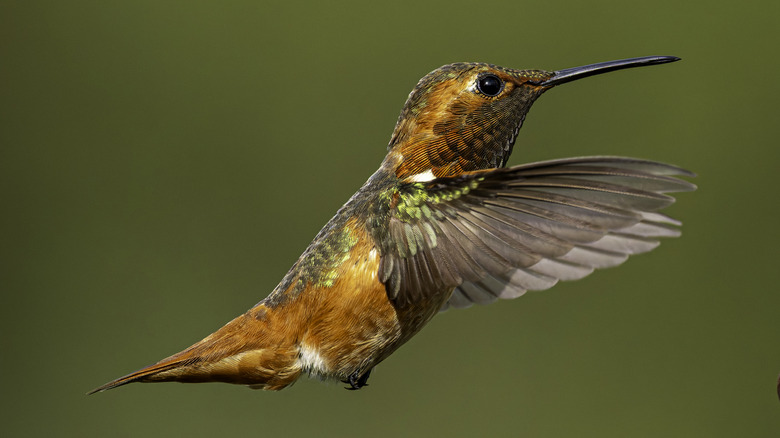
Watching hummingbirds zip around your garden is a real treat, and there are many ways you can encourage them to visit. You could DIY a hummingbird feeder out of a candy dish or fill your garden with their favorite flowers. One hummingbird-friendly plant you may have overlooked is the hairy wild petunia (Ruellia humilis), a low-lying native perennial. During late spring to early fall, it blooms in lovely shades of light blue or purple. These flowers are attractive to butterflies and bees as well as hummingbirds. If you can't find Ruellia humilis, look for its close relative Ruellia caroliniensis, the Carolina wild petunia.
The hairy wild petunia is also called the fringeleaf wild petunia and the prairie petunia. As you might have guessed from the name, this flower prefers open fields and prairies and is found in central to eastern U.S. The Carolina wild petunia is native to the east coast. Both have similar growing preferences, so the one you choose should be based on where you live. However, you should avoid the Mexican wild petunia (Ruellia simplex), which is native to Central and South America and can become invasive in the U.S.
Growing wild petunias for hummingbirds
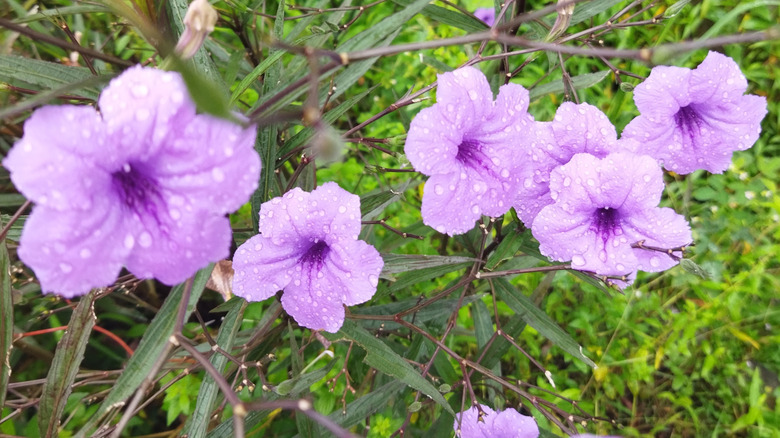
The wild petunia is a hardy and adaptable ground cover, but it can still struggle to thrive if its needs aren't met. Start with a planting site that has sandy, well-draining soil. It will also grow in richer soils, but other plants nearby may outcompete it. Wild petunias are quite drought-tolerant, making them a great companion plant for beardtongue. This oddly named perennial is another favorite of hummingbirds, so you can think of this pairing like setting out a buffet for them! Water them when the soil is dry, and water them more often during hot, dry weather to keep them blooming. Wild petunias do not need regular fertilizing, as they grow fairly well in poor soil. After they finish blooming in the fall, you can leave the dormant stems standing or cut them back like you would other garden perennials.
Their size and tolerance for shallow soil makes wild petunias a good candidate for containers, hanging baskets, and window boxes as well. While they don't make the best companion plant for fuchsias due to their differing needs, the two plants do look lovely together. Consider filling one hanging planter with fuchsias and another with wild petunias, then hanging them near each other to create a gorgeous display that hummingbirds will love.