

The Must-Plant Tree That'll Bring Hummingbirds To Your Yard From Spring To Fall
We may receive a commission on purchases made from links.
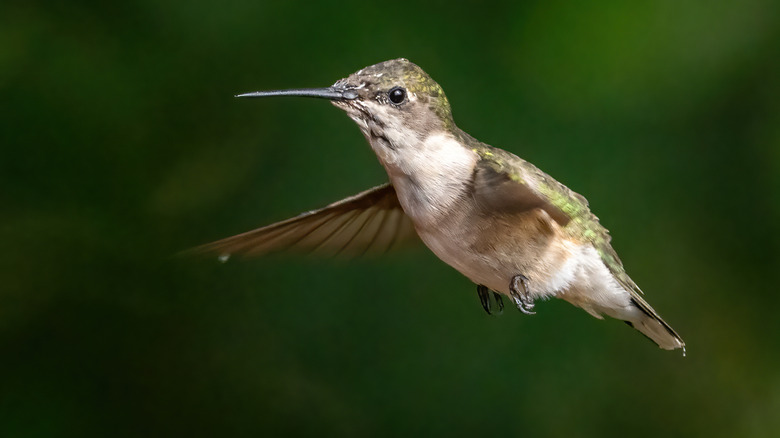
Few spectacles excite backyard birders as much as vibrantly-colored hummingbirds zipping around in a display of aerial acrobatics. So, it is little wonder that so many put so much effort into transforming yards into hummingbird havens. While picking the perfect spot to hang hummingbird feeders can help in this effort, so can adding color and nectar-producing plants. The desert willow will do both and is a must-plant tree that'll bring hummingbirds to your yard from spring to fall.
Planting a desert willow is an easy way to add more color to your yard to attract hummingbirds. The bloom of a desert willow is typically reddish-pink or purple, with white or yellow accents streaked along its throat — colors hummingbirds find particularly attractive. Like many of the stunning plants that attract hummingbirds to your garden and yard, desert willows produce a somewhat funnel- or bell-shaped flower. Hummingbirds are especially fond of these shaped blooms, as they are a perfect feeding vessel to accommodate their long beaks.
The timing of desert willow blooms is another reason it is an ideal addition to your backyard hummingbird sanctuary. Typically, the first blooms appear in late spring. The tree continues to bloom throughout the summer and until the first frosts arrive in late fall or early winter. This timing coincides with the spring and fall migrations in most areas, as well as providing fresh nectar for those birds that stay through the summer months. So, regardless of where hummingbirds go in winter, if you plant a desert willow, they will be coming to your yard from spring to fall.
Planting and caring for a desert willow tree
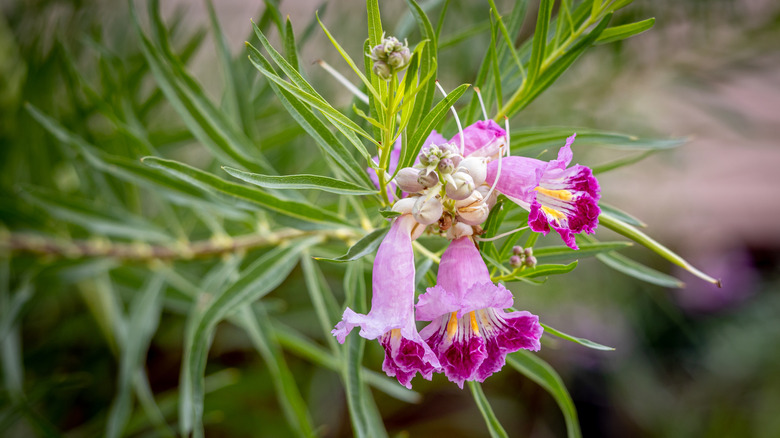
Before planting a desert willow, the first things you need to consider are your USDA hardiness zone and the size of your yard. Desert willow is best suited for hardiness zones 7–11. It has been successfully cultivated in zones 5 and 6 as well, although those regions are typically cooler than what is thought to be best for this tree. It is not only drought- and heat-tolerant, but actually does best in areas that receive below 30 inches of precipitation annually. This makes it an ideal choice in many areas that are otherwise difficult to grow some popular flowering plants.
Size is another consideration, as this tree typically matures to around 15 to 20 feet tall, although specimens reaching as high as 40 feet do exist. So, it is not necessarily the best if you are in a confined space, and it does not do well with excessive pruning. Additionally, it needs to be planted in an area that receives ample sunlight and drains well.
However, if you have the space and are in the right hardiness zone, a desert willow is relatively easy to grow and care for. It can be propagated from seed, allowing it to sprout in pots filled with a soilless mix like the Rio Hamza Trading Store Planting Mix for Plant Propagation. Let it grow for about three months before transplanting it to your yard. It can also be started from cuttings. Let cuttings sprout roots in a jar of water, then put them in a pot of soilless potting mix for the same amount of time before transplanting. Once established, it's okay to water a desert willow occasionally, but take care not to overwater. It also does best with a slightly elevated pH, so monitor your soil and amend as needed.