

What To Consider Before Buying A Patio Heater For Your Backyard
We may receive a commission on purchases made from links.
Patio heaters are useful tools, letting you use your patio or porch even after the weather turns cold. But there are a lot of options: Start by looking at your budget. Patio heaters have a wide range of prices, from around $100 to almost $2,000 for the Bromic Smart Heat portable gas heater. Setting a range you're willing to pay for one will narrow your options. You should also make a note of any exceptions to your budget, such as features you're willing to pay more for or specific brands you trust.
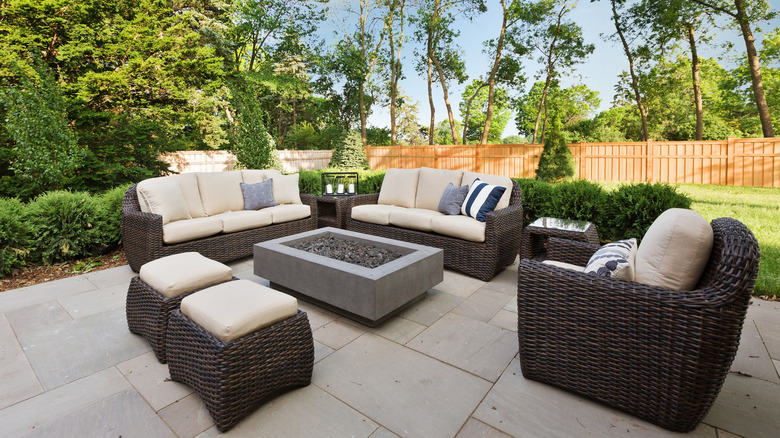
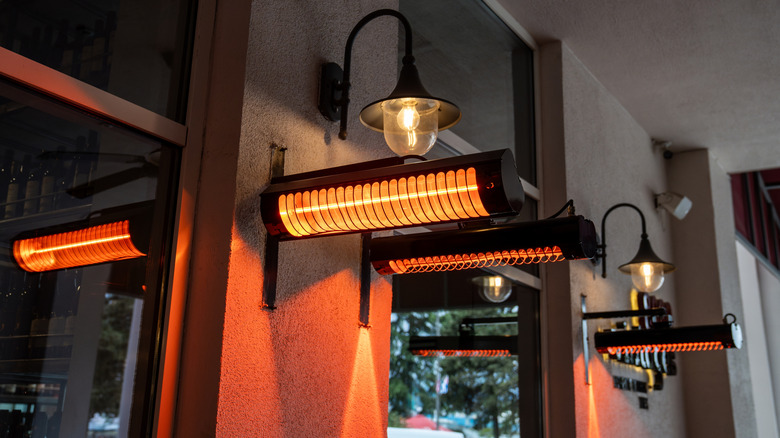
Consider where your patio heater will be. How much room do you have available for it, and how much space will it need to heat? This is important for determining the size your heater should be, whether you go for gas or electric, as well as what shape your heater will take. Patio heaters come in free-standing models that rest on the ground or tables and wall-mounted models. A wall-mounted heater won't be a good fit for a patio with open sides, but might be a great fit if you have added a little style to your porch with a DIY wood privacy screen! You know your patio best, so take some time to think about the heater that will fit your space and needs.
Propane vs natural gas vs electric heaters
There are three primary types of patio heaters we'll discuss here: propane, electric, and natural gas, along with wood fire pits. All are great for keeping your patio warm, but there are benefits and drawbacks for each to be aware of. Propane heaters tend to be less expensive, although you do need to refill the propane tanks when they run out. How often you need to refill the tank depends on the tank size and how frequently you're running it. However, they don't need to be plugged in or connected to anything. Note that propane heaters produce carbon monoxide, which is dangerous to inhale. If your patio is enclosed, it is dangerous to run a gas heater. They also feature a partially open flame and potentially flammable fuel tank, so avoid placement near the grill or any sort of drapery or plastic.
Natural gas heaters also produce carbon monoxide, so they're only safe for open, well-ventilated patios. They also need to be connected to your home's natural gas line, limiting placement and portability. However, natural gas tends to be less expensive than propane or electricity, making this an affordable option if you already have natural gas for building an outdoor kitchen.
Electric heaters do not produce carbon monoxide, making them safe for enclosed spaces, and they don't run out of fuel. The heaters are typically less expensive, although the cost over time depends on the price of electricity in your area. Most electric heaters need to be plugged in to run, but there are rechargeable battery operated options as well. Most importantly, make sure the heater is rated for outdoor use as are any extension cords you use.
Important safety features to look for
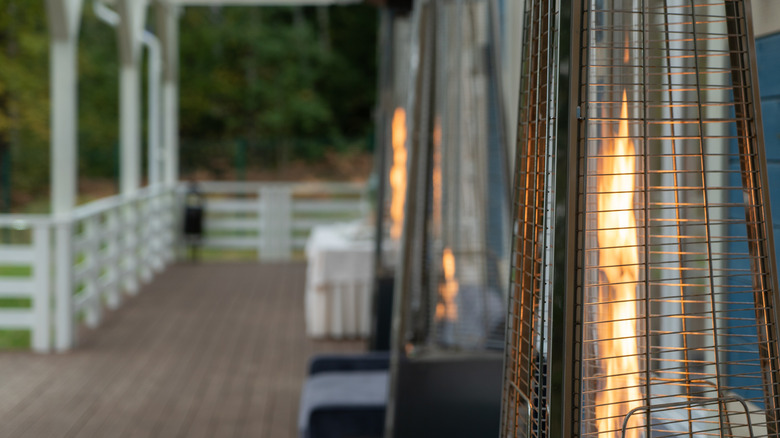
No matter the fuel type, your heater needs to be stable and resistant to falling over. A flat bottom that is weighted to offset the top of the heater is ideal. Some heaters will even automatically shut off if they are tipped over. Avoid placing your heater on anything other than a flat surface, even if it is tip-resistant. For propane and gas heaters, look for heaters with flame sensors or automatic shut off timers. These options will turn the heater off if it isn't lit, or if it has been lit for too long. While it can be frustrating if your heater shuts off while you're using it, these sensors prevent gas leaks, accidental fires, and running out of fuel due to neglect. Look for the UL safety certification and Compliance Safety Accountability (CSA) score on any heater you buy.
A good heater should also come with maintenance instructions that show you how to properly take care of your appliance. Information such as how often parts need to be cleaned or replaced should be readily available. This might come as a booklet with the heater or in the form of an online guide. Check for weather-related instructions as well. If you have an uncovered patio in a rainy environment, you'll need a water-resistant outdoor heater and (ideally) a heater cover. While you shouldn't leave a heater exposed to the elements constantly, you should be prepared in case you're surprised by a storm.