

How To Repurpose Avocado Skins In Your Garden
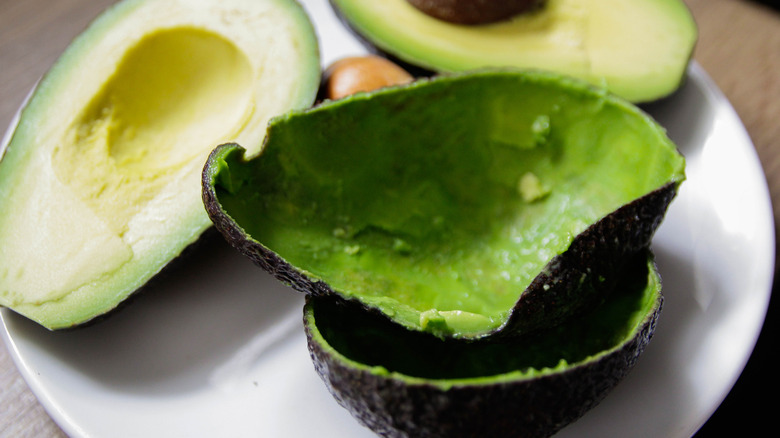
Did you know that avocados are a fruit, and technically classified as a single-seeded berry due to their botanical structure? They may seem a little quirky compared to other berries, though, especially with their tough, unappetizing skins that usually end up in the trash.
While eating the skin isn't common practice, they actually are good food... for a compost pile. Unlike many forms of kitchen waste, avocado skins are considered brown matter rather than green matter, so they're more like the twigs and dried leaves added to a compost pile than they are like banana peels and apple cores. In the compost pile, avocado skins provide nitrogen and carbon that help the compost pile's microorganisms break down all the materials into a rich soil amendment. The avocado pits can also be composted, if they're chopped up small first. Like the skins, avocado pits are considered brown matter. If you're not sure where to start a compost bin or what style to make, try one of these five ways to DIY a budget-friendly compost bin. A compost trench is the easiest way to compost if you're short on time or space.
Avocado skins are a little extra special when it comes to composting or helping the soil over time. While they can be part of a compost heap, they're also handy as biodegradable plant pots for seedlings, eventually breaking down and nourishing the soil. How's that for reducing kitchen waste and finding new ways to repurpose what might otherwise be considered trash?
Preparing avocado skins for the garden
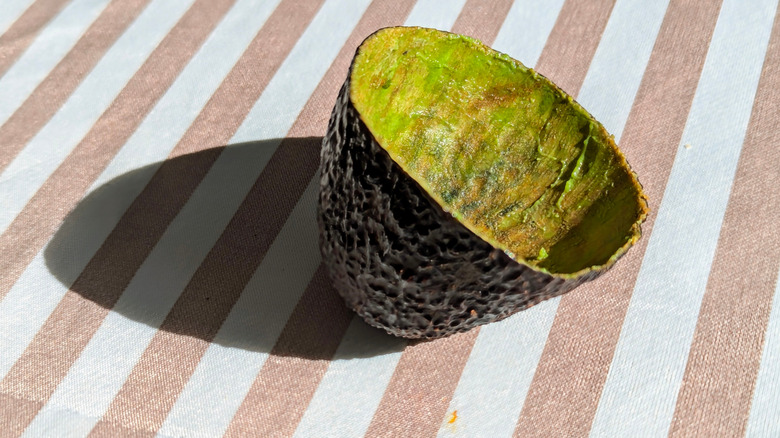
The next time you're making some guacamole or just enjoying an avocado with a meal, scoop out as much of the darkest green flesh closest to the skin and eat that too. According to Popular Science, that's the healthiest part of the fruit, and it's high in carotenoids, a form of antioxidant that may help protect against cancer and heart disease. Once you've got all of the healthy bits scooped out of the skins, decide whether you want to compost them or use them as seed-starting pots.
To compost the skins, cut them into small strips. The smaller the pieces, the easier and faster they'll break down. (This is true for other compostable materials such as banana peels, too.) A healthy compost pile is a mixture of brown matter, such as the avocado skins, and green matter, which is often materials such as other produce-based food scraps, coffee grounds, and even grass clippings. The brown matter provides carbon, while the green matter provides nitrogen; aim for about 3 parts brown matter to 1 part green matter, layer the materials, and turn the pile about once a week.
Repurpose avocado skins into seed-starting pots by keeping the skins in bowl-shaped halves after cutting the avocado and removing the flesh and seed. If you let the skins dry for a couple of days, the bowl shapes become a bit harder. Add some potting soil and seeds to start seeds indoors in the winter. Water the soil and place the natural pot atop a plant saucer in an area that gets ample sun. As the seed grows into a strong seedling, transplant the entire thing, avocado skin and all, into the ground or a larger plant pot for a container garden.