

Plant This Popular Ground Cover For A More A Dog-Friendly Lawn
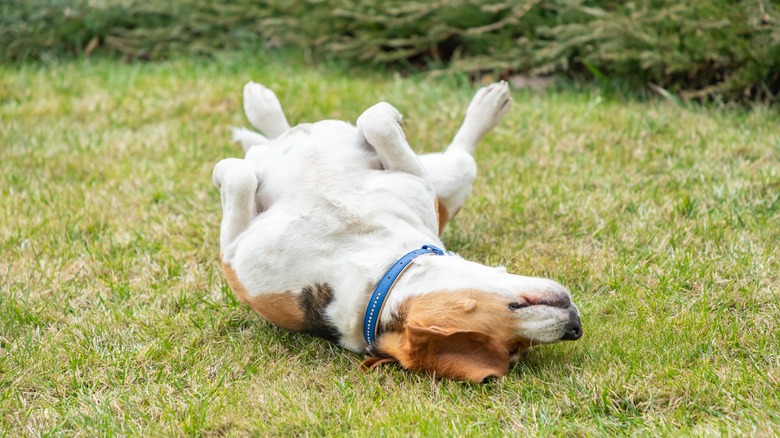
Traditional grass lawns often don't handle people's furry companions well, easily scalding from bathroom breaks and getting trampled as dogs run paths over and over again. Unfortunately, you may feel like you have to choose between fighting with grass or getting rid of your lawn. If you're still eager to have a green space and keep your dogs happy, the best option is to use clover, specifically white or Dutch clover (Trifolium repens). These plants were once considered useless weeds, but now the tides are starting to turn.
Clover lawns have started gaining ground over traditional ones because they are more environmentally friendly in several ways. However, there are still some reasons people may hold back from getting one. One concern is how it will handle dogs. Though it isn't completely immune to their roughhousing, it holds up better than grass in several ways. For one, bathroom breaks tend not to burn clover as much. Not only are clover lawns durable, but they are also safe for dogs. Generally, unless your pet just decides to eat all of the clover in your yard at once, it won't hurt them at all. Even then, the effects are relatively minor, consisting of stomach problems and irritated skin. However, this is very rare, because dogs don't usually like the taste.
In addition to their benefits for dogs, there are other benefits to choosing a clover lawn. This grass alternative provides a beautiful, low-maintenance lawn that doesn't need much in the way of fertilizer and can actually improve your soil in the long run. It's also pretty tolerant of drought and doesn't require as much maintenance as a grass lawn would.
Combining clover and grass can improve your lawn for dogs

Another option is to mix the two. While clover is a clever alternative to grass for a no-mow garden, there's no need to choose one over the other. If you don't want a full clover lawn, you can mix it in with your grass to add some support in the areas where it often dies due to dog urine. The clover will also help to fertilize your soil, as it adds much-needed nitrogen back in, which benefits your grass and may improve growth in the long run. It also brings in pollinators, which can help your garden out immensely, while still giving you a lush grass lawn.
White clover is one of the more common options for a yard, but it's not the only option. You could also go with micro clover, which tends to be a little smaller and spreads out its growth rather than clumping. This is a form of white clover, but cultivated to grow in a slightly different way.
There is also red clover (Trifolium pratense). As the name suggests, it produces reddish-purple flowers, and the leaves also look a little longer. It can work better if you're looking for an over-winter ground cover, or if you have a drier or shadier property than is ideal for white clover. Additionally, there are a few other options to plant in your yard if you live in the right growing zones. For example, Labrador violet (Viola labradorica) is one pet-friendly ground cover that naturally suppresses weeds.