

What To Know Before Installing A Modern Cable Deck Railing
We may receive a commission on purchases made from links.
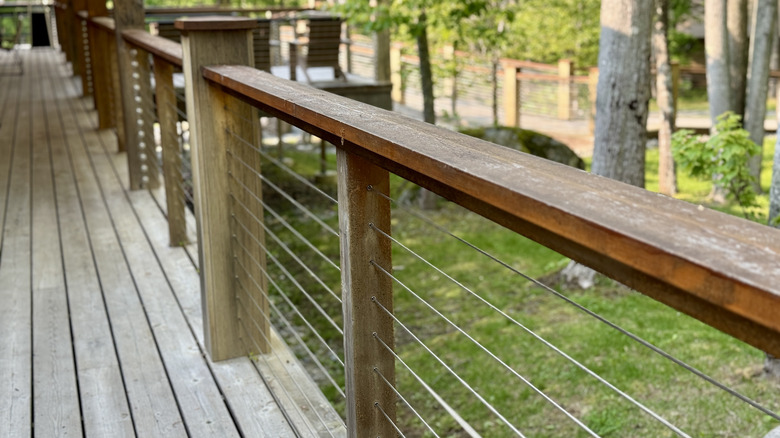
Making your deck your own is important and it can add serious value to your home, so installing a modern cable deck railing could be a great way to make your deck that much better. And while some sort of railing is a safety feature every deck should have, a cable deck railing is an alternative to the classic wooden railing. In general, wooden railing posts rise vertically from the deck and attach to a horizontal wooden frame. A cable railing has metal cables pulled taut and fixed to horizontal posts, allowing the same safety coverage with more visibility. Since the cables are so thin (but still strong enough to provide a safe barrier), you can see more through your railing without having to compromise safety, allowing for a more open feeling on your deck. These railings also allow for stylish flexibility with materials and design, with posts and handrails made from metal, wood, or a classy combination of the two.
While a modern cable deck railing may sound ideal, there are certain things to consider before moving forward with the installation. The first thing you should do is check to see if your local building code allows for horizontal cable railings, as building cable railings in certain municipalities or HOAs may be unauthorized. Additionally, cable deck railings can be quite pricey, as they can range between $80 and $270 per foot of railing. In addition to the cost of the railing, it's recommended that cable railings be professionally installed. If you want to install cable deck railing yourself, it will take a significant amount of time to do properly and safely, and to pass inspection.
Cable deck railing installation
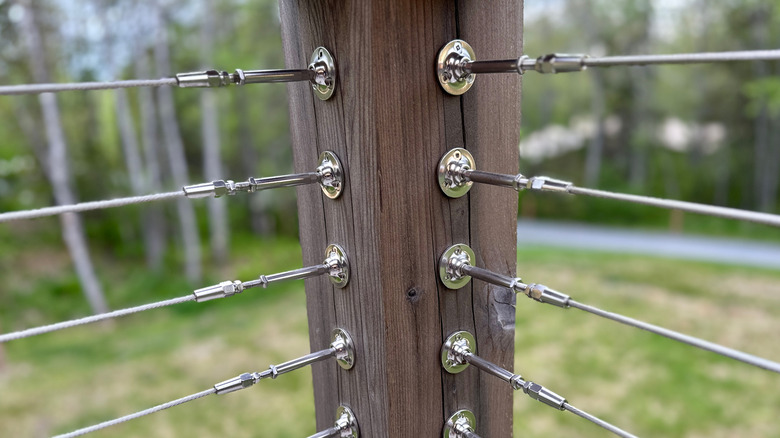
To ensure your cable deck railing is installed properly, safely, and up to code, the best recommendation is to have a professional perform the installation. However, if you're determined to save money and feel confident, there are several things you can do to make sure your deck railing is sturdy and safe.
If you don't want to figure out what materials to buy individually, you can purchase cable deck railing kits, like the CKE complete cable railing post kit, that allows you to purchase 10 or 15-foot segments of railing and individual corner pieces. This is a great way to build confidence in the materials you are purchasing and purchasing only what you need with few leftovers. If you have wood posts already, and just want to install the cables, consider the VistaView CableTec 10-foot cable railing kit. These kits also come with instructions and tools to help you with installation, making the whole process more approachable.
When you are installing your cables, there are certain requirements for the railing to be considered safe. The cables should be no further than 4 inches apart so people and pets cannot easily pass through them. Posts should be no more than 4 feet apart, and the cables should be tensioned to 200 pounds. To tension a cable, you will need a tension meter tool like the Loos & Co hands-free force gauge, that will accurately measure cable tension. You will need to tighten the cable and repeatedly check the tension for each and every cable for the railing to be safe. Be sure not to over-tighten the cable, as it can damage the posts (particularly with wood posts).
Maintaining your cable deck railing

As with any home improvement project exposed to the outdoors, there will be maintenance that needs to be done to ensure the look, safety, and longevity of your new fence. First, apply WD-40 Specialist corrosion inhibitor or a similar product to all the metal parts of the railing, including cables, bolts, end caps, posts, and handrail (if applicable), to help prevent rust. Apply corrosion inhibitor periodically to continue the protection long-term.
You should routinely inspect the railing for any damage. The easiest to spot may be any sort of rust forming on the railing, but there may be other wear and tear over time. Every few months, check all the hardware and weld points to make sure nothing has loosened, cracked, or bent, and replace damaged parts. You should also regularly check the tension on your cables, as they can stretch or warp over time and it is recommended to keep them at the required tension. Tighten any loose cables, bolts, or end caps as needed. In addition to the tension of the cable, it's worth periodically sends your tension gauge to the manufacturer for recalibration.
Part of maintenance is ongoing upgrades and improvements, and you can freshen up your deck in several ways. One way to upgrade your cable deck railing is to build a gorgeous deck railing planter box, as your new railing will be plenty strong to hold a small garden. To make the whole space more comfortable, keep your deck looking its best by avoiding a common outdoor rug mistake.