

How To Use Your Garden Compost To Heat Your Greenhouse
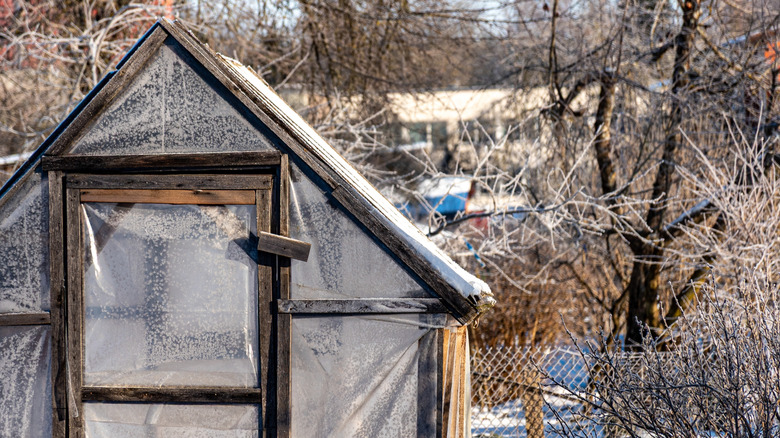
Anyone who gardens, especially those in northern climates, likely dreams of extending their growing season with a greenhouse. The greenhouse has been used in various iterations since Ancient Rome. Deciding to add a greenhouse to your yard comes with some additional questions, mainly, how are you going to heat it? In the winter, a greenhouse should maintain a temperature of between 45 to 50 degrees Fahrenheit. And while there are several ways you could go about doing this, one of the most effective ways is to utilize a material that is already a part of your garden: compost.
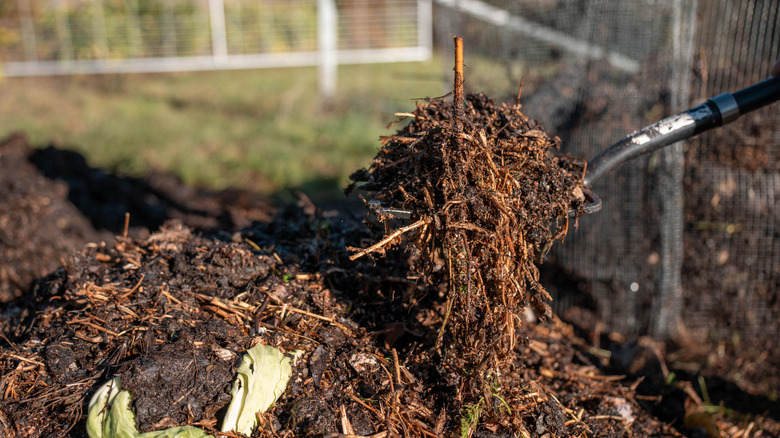
Anyone who has made compost in their own DIY bin or corner pile knows that, when done properly, compost can produce an enormous amount of heat. This is due to the composting process, which involves millions of microorganisms working hard to break down the organic matter into what we call compost. But does compost actually produce enough heat to warm an entire greenhouse?
As a matter of fact, it can! Societies have been using compost as a heat source for nearly as long as greenhouses have been around. The Chinese were the first to think of the method 2,000 years ago. However, the method we'll walk you through comes from a French farmer named Jean Pain, who managed to heat his entire home and fuel his car by using compost.
How Jean Pain Composting works
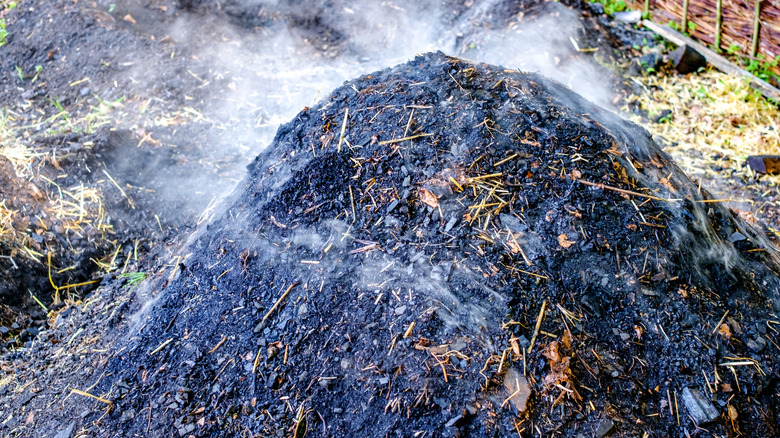
Jean Pain lived on a farm in southern France from the 1930s until his death in 1981. While there, he discovered a way to heat his home with water warmed by his compost pile. His system, now called Jean Pain Composting, could produce water that reached up to 145 degrees Fahrenheit. He even developed a methane distiller that allowed him to distill methane gas into liquid to use as fuel for his car. Thankfully, you don't need to develop any kind of intense technology to harness the heating power of your compost pile.
Pain's method involves threading coiled tubing through the layers of a compost pile. Water is then run through the tubing, and the active compost heats the water inside. This provides you with water you can use for everyday purposes, such as bathing or doing the dishes, and can also be diverted to provide radiant heating in your greenhouse.
This method has actually been used in large-scale agricultural settings in Vermont and New Brunswick, Canada. While you would not need something nearly of that scale, you can still employ the principles of the method to heat a plastic or glass greenhouse.
How to make your own compost heating system
For general heating purposes, we recommend building a compost pile that is 6'x6' in order to get the best results. The other key component you'll need here is 1-inch diameter polyethylene tubing. It's highly flexible and can be bought in massive yardage. On average, you are going to need at least 300' of tubing for a 6'x6' compost pile.
Begin by establishing a base layer of compost before adding a coiled layer of tubing. Repeat the process layer-by-layer until you've constructed your desired height. You can maintain the structure of the pile by wrapping it in wire mesh and covering it in a dark-colored tarp for more heat retention. Now that you have the pile ready, you can run the waterlines into the greenhouse. There are a few ways you can go about doing this. First, you can connect the hot water to a tank, then pump it through a heat exchanger to warm the air of the greenhouse. Alternatively, you could run connected water lines directly through your soil as a means of keeping it warm and soft throughout the winter. Having warm soil is equally important as warm air, so this is a solid option.
Combined with the help of the sun, you'll have ample heat with either of these methods. While it may require some grunt work, Jean Pain Composting is a simple, cost-effective technique that utilizes natural materials and transforms them into an efficient, renewable heat source that will keep your greenhouse toasty warm for seasons to come.