

How To Determine If Your Fertilizer Is Safe To Use In Hot Weather
We may receive a commission on purchases made from links.
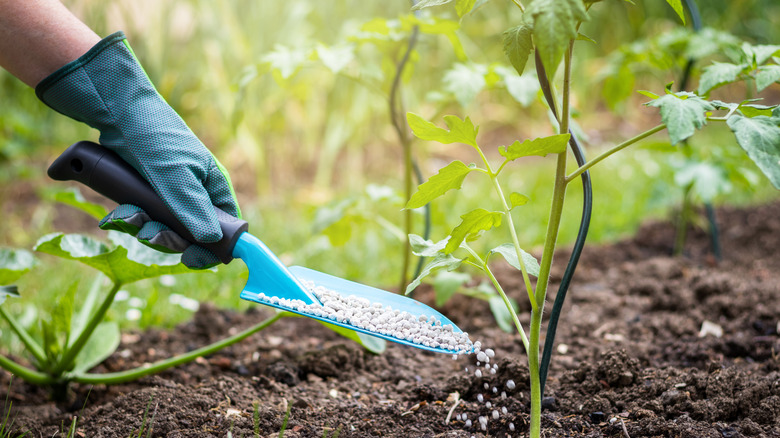
Fertilizing outdoor plants during a heat wave can have dire consequences, especially if you're using a granular NPK garden fertilizer or another synthetic product that supplies lots of nitrogen in one fell swoop. High temperatures can make these fertilizers deliver unhealthy amounts of nitrogen to your lawn and garden. This nutrient overdose is overwhelming for your plants and gives them a sad, scorched look. Even if you know some clever tricks for preventing summer lawn burn, avoid nitrogen-heavy chemical fertilizers when hot weather visits your community. The same wisdom applies to your garden. Fortunately, you don't have to skip fertilizer altogether when these conditions arise.
Since the hot summer weather causes granular fertilizers to over-serve nitrogen — the heat makes this element degrade faster than normal — you should consider safer alternatives to meet the needs of your plants on sweltering days. Applying a slow-release granular fertilizer when temperatures are high shouldn't burn your plants, but it may not perform as expected if the ground is parched. That's because plants can't absorb nutrients properly when their soil is too dry. This is especially true for the phosphorous and potassium in NPK fertilizers. If you must feed your plants when the air outside feels like an oven, water them before and after, or you can explore liquid fertilizer options. Also follow the instructions that come with any fertilizer you choose.
Why liquid fertilizer is better during heat waves
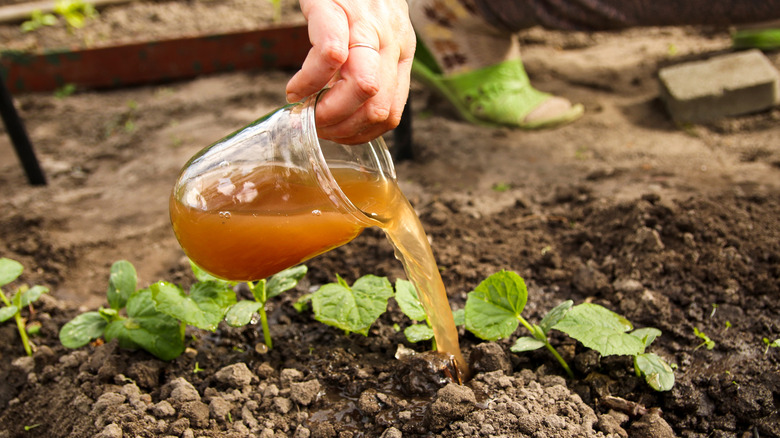
Liquid fertilizer is a safer choice for raising your plants' nutrient levels throughout the growing season, particularly on its hottest days. The water in this type of fertilizer makes nutrients more accessible, and its nitrogen is diluted if you prepare it according to the instructions on the package. You can also brew water-based DIY fertilizer teas that provide modest nutrient boosts with little danger of nitrogen overload. Since you control the process, you can make these natural fertilizers as weak as you'd like. Try soaking a cup of Dr. Earth Premium Alfalfa Meal or a similar product in 5 gallons of water. After you steep it for several days and strain out the plant matter, you'll have a diluted source of nitrogen, phosphorous, potassium, calcium, and several other vitamins and minerals. Or you can follow a recipe that uses different plants, adding 10 cups of water to every cup of the resulting liquid so the final product is quite mild.
Studying the nutrient needs of different plants can help you fertilize them optimally all year, reducing the need for feeding on hot days. In most cases, you should not fertilize plants that are dormant. This includes grass that's asleep during a summertime drought and flower bulbs that are hibernating for the winter. Many plants, from trees to vegetables, benefit from a nutrient infusion in the spring. Working nutrient-rich compost or slow-release fertilizer into the soil at this time provides a steady source of nutrition for months to come. When you adopt this gradual approach to feeding, your plants are less likely to develop deficiencies in the summer.