

Popular Privacy Screen Materials To Consider Using In Your Backyard
We may receive a commission on purchases made from links.
With new neighborhoods being built with houses closer together than ever before, having privacy has become a must-have at the top of almost every homeowner's list and can even affect the price of your property. Going out on your back deck or in your back yard and feeling like you have an audience can really put a damper on any relaxation you could get from your outdoor space.
There are many simple tricks and ideas that'll add more privacy to your backyard, but one of the best and stylish ways to get more is adding a privacy screen or two in key locations. These sight blockers are an easy solution to create a bit of seclusion for your back porch, patio, front porch, or backyard area, and they come in a variety of popular materials for you to consider. Even if you are a renter with a balcony or patio, privacy is just as important for you. There are renter-friendly solutions for adding privacy to your balcony or patio with screens for small spaces, too.
Whether you want to add a little style to your porch with a DIY wood option or you want to purchase one like this QINPTWUT Heavy Duty Metal Outdoor Privacy Screen, there is a perfect material and style for your yard. With so many options to choose from, you will have no problem finding one that takes care of your needs while matching your design preferences.
What kind of privacy screen materials are there?
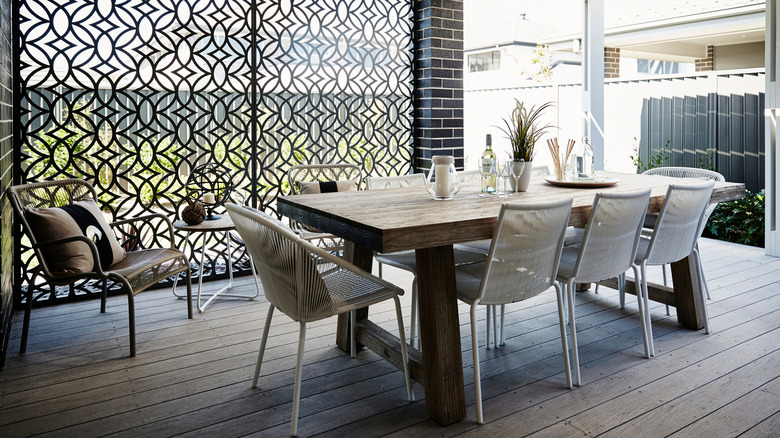
The three main materials used for privacy screens are wood, metal, and composite or plastic. Less common materials can include glass, fabric, and vinyl screens. There are great things about each type of material that you will want to consider when making your decision. All of them allow light to get in and provide plenty of airflow.
Wood is a very popular material for privacy screens and offers a large array of styles, designs, and additions. This option is the perfect backdrop for adding plants or greenery, creating a stunning and functional barrier that is a pleasure to look at. Out of all the screen materials available, wood privacy screens usually provide the most privacy coverage.
Metal screens also offer a lot of variety and come in many styles and sizes. The amount of privacy they provide depends on the pattern, but they do offer a nice barrier and a pretty visual element as well. Adding sheers to the tops can provide additional privacy if needed. Composite or plastic screens are very lightweight and can be moved around easily. This material also offers a variety of styles and designs to choose from, with privacy coverage depending on the design.
Choosing the right privacy screen material for your yard
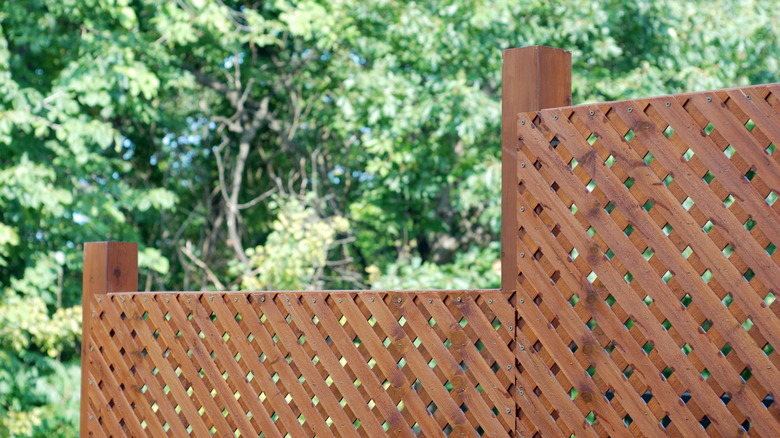
There are several things you want to consider when choosing the right screen material and design, which will help you select the best choice for your backyard. One of the most important factors to consider is how much privacy you need or want. Do you want total seclusion or just partial privacy? Some options, such as wood, provide a more solid style barrier, while metal privacy screens can usually be seen through fairly easily.
Also consider the amount of upkeep involved when choosing the right privacy screen material. Wood requires the most maintenance, while metal and composite are easier to clean. Since the privacy screens are outdoors, ensuring that the metal screens won't rust is very important. Composite or plastic materials can be cleaned with a hose or wiped down with a moist rag and handle the elements with no issues, but they don't have the strength of wood or metal. Fabric can be a problem if you live in a wet climate, as the screen could be damp most of the time and end up with mildew or mold. Humid or rainy environments would probably do better with composite or wood, as long as the wood has been treated and protected from moisture.