

How To Mow Your Lawn Safely If You Have Backyard Turtles
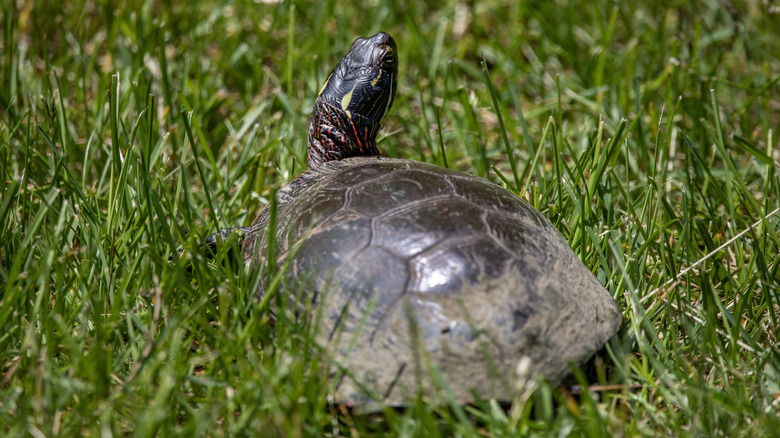
Many creatures don't move at the pace of a hectic human life, which means you may cross paths with slower animals as you hike, garden, or even mow your own backyard. Turtles in particular may leisurely make their way through your yard, and it's not that uncommon of an occurrence. The United States is home to more than 50 turtle species, so there's a fair chance at least one or two thrive in your area. Even an aquatic turtle might traipse through your yard, as they're known to travel up to a mile when looking for a decent location to lay eggs. Others may be looking for food or new sources of water, which can make mowing a bit complicated.
If you've seen a turtle in your yard or know of some nearby, it's wise to take a good look around your yard before mowing. Some turtles such as box turtles blend in well with their surroundings, making them harder to notice unless you get close to them. Even a colorful painted turtle may go unnoticed in tall grass, so a little extra time checking the yard before mowing will be well-spent, as you may be saving a turtle's life. This same process also prevents a lawn-mowing mistake that could hurt birds.
So before cutting your grass, walk the entire yard to be on the lookout for turtles, especially if they're regular visitors. If you do find one, don't be afraid. While it's true that some turtles can be dangerous, they just want to be left alone. If you don't want to wait until later to mow, you could place a laundry basket or even a milk crate over it as you mow so you know where it is, then free the turtle soon afterwards. Otherwise, mow slowly and always know where the turtle is before proceeding.
More turtle-safe mowing practices
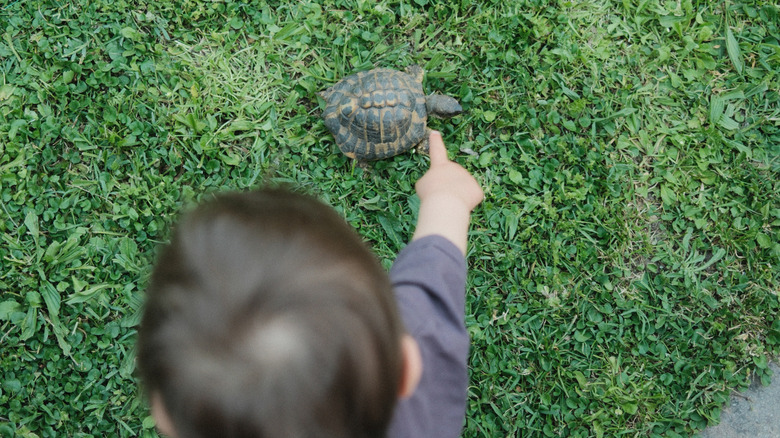
If you spot a turtle in the perimeter of the yard, mow far away from it or start mowing in the center of your yard first. This gives the turtle a chance to take cover, though you should still be on the lookout in case it moves within mowing range. If you do decide to move the turtle, don't take it far from where you found it, otherwise it'll likely head back towards where it was going in the first place. If it's small, lift it with both hands, grabbing between the front and back legs, closer to the back legs. Don't pick the turtle up if it's very heavy or if it's a snapping turtle, as their bite is powerful. If the turtle is large or a snapping turtle and you feel the need to move it anyway, use a large shovel, then temporarily place the turtle in a large plastic tote or trash can to move it.
While mowing, you might also want to consider creating a safe space for your reptilian friends. Providing an area with leaf litter or logs creates a bit of shelter for the turtles that frequent the area, and when mowing, leave some areas a bit on the wild side to provide potential food sources for turtles and other animals that visit. Avoid using harsh chemicals for weed and pest control, as turtles and other wildlife are sensitive to them. Plus, let the grass grow a bit longer between mows, as the length benefits turtles and helps prevent lawn burn during hot summer months.