

Repurpose An Old Window For A Unique Birdbath
We may receive a commission on purchases made from links.
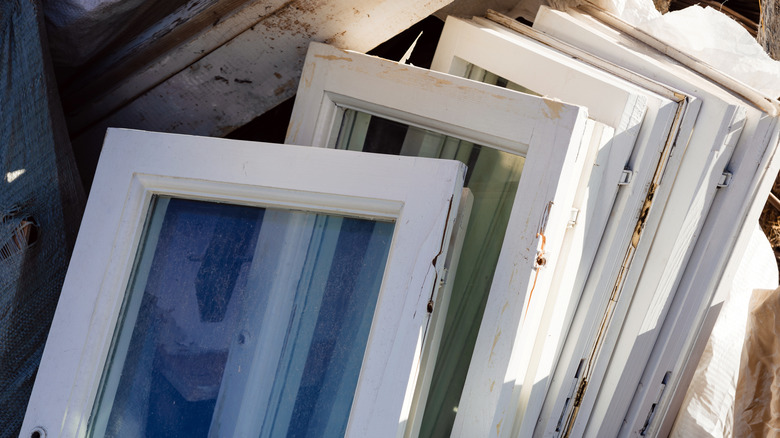
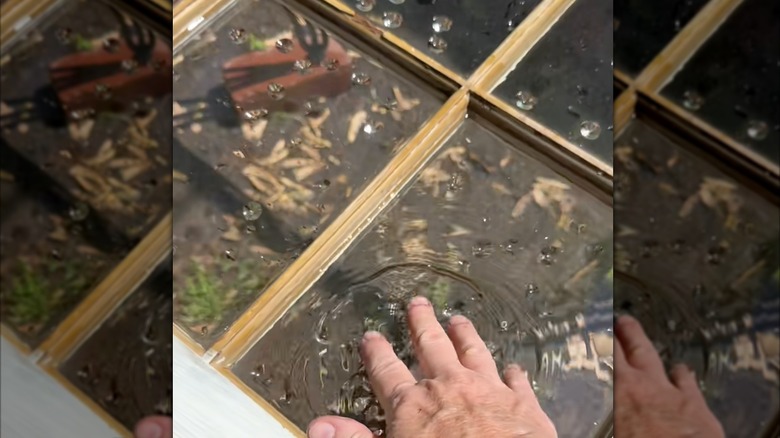
It's satisfying to breathe new life into a forgotten item — especially when you can use it to attract more songbirds to your backyard. With an unbroken window you're not using or one you've thrifted, you can create a beautiful and functional DIY birdbath. While it's important to choose the best material for your birdbath, old windows have some built-in advantages. Its smooth glass panes will gleam in the sun and hold a shallow layer of water, giving the birds an inviting spot to drink, splash, and preen. It's large size and shallow depth will accommodate a variety of feathered friends, as well as bees and butterflies.
While you could just repurpose your window as-is, you'll get more mileage out of it if you prime it and give it a fresh coat of non-toxic exterior paint. White or gray lends a soothing vibe, while a vibrant red or blue calls attention to your new water feature. Sanding the frame first will make it easier for the paint to adhere to it —so you'll also need sandpaper or a power version like the Black + Decker small orbital sander. A wet rag will be handy for wiping up the wood dust.
You can add four furniture legs to give extra height to keep the birds away from predators like cats (there are pros and cons to ground level birdbaths). Elegant legs like Smart Standard hairpin legs are available in multiple heights and include easy-to-install, pre-drilled mounting brackets and screws. Spray the legs with a coat of sealant or exterior paint for metal as an extra layer of protection.
Windowpanes are the right depth for a shallow birdbath
Once you've gathered your tools and materials, prepare your window frame by sanding it with 150-grit sandpaper to scuff the surface and remove any old paint or stain. Use a damp, lint-free cloth to wipe the wood clean of dust and debris. Apply an even layer of primer next, allowing it to completely dry before you proceed to the next step. Then lightly sand your coat of primer with extra-fine sandpaper (around 320-grit) to create a smooth finish, and again wipe the surfaces clean. Apply one or two even coats of your chosen paint, letting each dry before applying the next.
Once your birdbath is painted, you may want to sand it with your extra-fine sandpaper again to give it a finished look before attaching the legs. Choose a flat and sturdy outside location; one that is at least partially shaded is ideal to keep the water cool and provide a comfortable spot for the birds. Just be sure to avoid a location up against trees or bushes to keep the birds safe from squirrels.
As a beautiful, extra touch, you could consider adding a solar water fountain or mister and hanging a hummingbird feeder in just the right place, close to your new birdbath; these tiny birds will appreciate the cooling spray and food source, and you'll enjoy watching these winged beauties hover and dart about in your garden.