

What To Consider Before Installing A Chicken Wire Fence In Your Yard

If you're looking for the right fence for your yard, your first thoughts may be of wood or composite privacy fencing. While these are popular options, they aren't your only choices. Instead, you may want to consider more unique options, like the stylish gabion wall that's perfect for sloped yards or even chicken wire fencing. Chicken wire offers many benefits when used for fencing, number one being that it's affordable. But there are also some potential downsides to be aware of before making an investment. Essentially you get what you pay for, and a quick-install, wire grid fence just isn't very strong or all that private.
Before diving into why you may want to reconsider chicken wire, it is important to cover some of its benefits. After all, while it does have its cons, chicken wire fencing isn't all bad. For example, chicken wire mesh is flexible, making it the perfect option if you need to fence in an irregularly shaped area. This flexibility also makes it versatile, and you can use any leftovers for other projects around your yard, such as a cheap and effective way for keeping squirrels out of your garden. Chicken wire also sports a lower price tag than some other fence options (even other wire fencing), an essential component to consider for landscaping on a budget. However, no fencing solution is perfect, and there are a few things to keep in mind before choosing chicken wire for your fencing needs. For example, if large animals — either in or out of the fenced area — you may want to consider other options.
Consider durability and privacy when using chicken wire
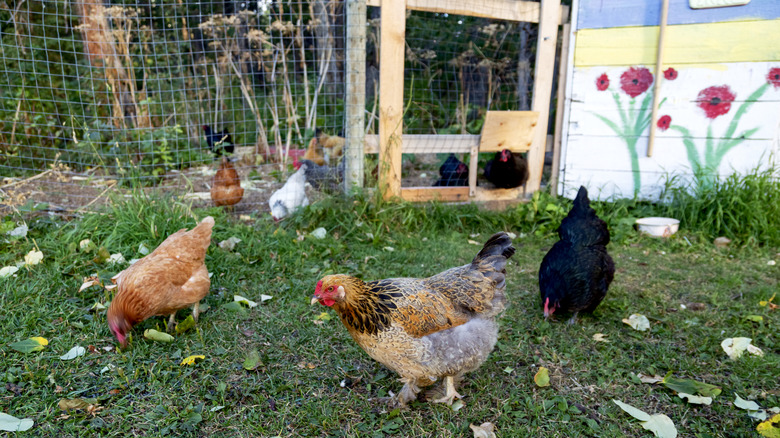
There are two main downsides to consider when thinking about installing chicken wire fencing in your yard: durability and privacy. These issues can become a challenge whether you're using the fencing for its original purpose — creating an enclosed area for chicken, ducks, or other small animals — or if you decide to use it as a fence alternative in your yard.
The first potential downside with chicken wire fencing is its lack of durability. As mentioned above, chicken wire is designed for smaller animals, like rabbits or poultry. If you're hoping that adding chicken wire fence to your yard will help keep energetic children or large pets contained or deer and coyotes out, this may not be the best option for you. This is especially true given that chicken wire fencing isn't suitable for underground use, such as burying it to prevent pets from digging their way out. While it might deter squirrels for a time, other animals like dogs and badgers won't have much difficulty breaking through.
Even in the best of times, chicken wire isn't as long-lived an option as other fencing options. Well maintained and in optimal conditions, a chicken wire fence may last a few years. In contrast, wood fences can last 10 to 20 years, while an aluminum fence might last for half a century or more. It may be the cheapest option, but it also means you'll be replacing it more often.
Chicken wire fencing also doesn't offer the same privacy as other fencing solutions. Because chicken wire is mesh, you can see through it. This can be helpful if you're enclosing small animals and want to keep an eye on them, but you may want to opt for a more traditional (and solid) material if your goal is to shield your yard from any wandering eyes.