

What To Know Before Using A DIY Sod Patching Kit
We may receive a commission on purchases made from links.
Homeowners often use DIY sod patching kits to replace portions of lawns that have died or become infested with weeds. These kits — like Scotts EZseed patch on Amazon — can certainly help revive a struggling lawn, but they're not foolproof, says Bryan Clayton, CEO of GreenPal, a service that connects homeowners with lawncare professionals. "Patching kits work, but only if you treat them like a real lawn job, not a quick fix," he told Outdoor Guide in an exclusive interview.
Attention to detail matters when selecting a sod patching kit. As Clayton explains, the quality varies because the contents of these kits vary. "The ones with name-brand seed and a clear mix of mulch and fertilizer usually give better results," he says. "You'll want to read the label and see what kind of seed is in there. Cheap mixes with annual ryegrass are gonna fade fast."
Learning what new grass needs to thrive and then consistently creating these conditions is also crucial when patching a lawn with a kit. "You've got to give that seed the right environment," Clayton says, also explaining, "The biggest mistake I see homeowners make is thinking these kits are miracle fixes. They'll toss them down in the dead heat of summer on hard, compacted dirt and wonder why nothing happens. These kits are better than just seed alone because they usually have mulch, a little fertilizer, and sometimes some fiber to hold moisture, but they're still seed." In other words, you can't neglect them and expect seedlings to sprout. Also, make sure you know when and how to water the seedlings that emerge.
The best seasons to try a sod patching kit
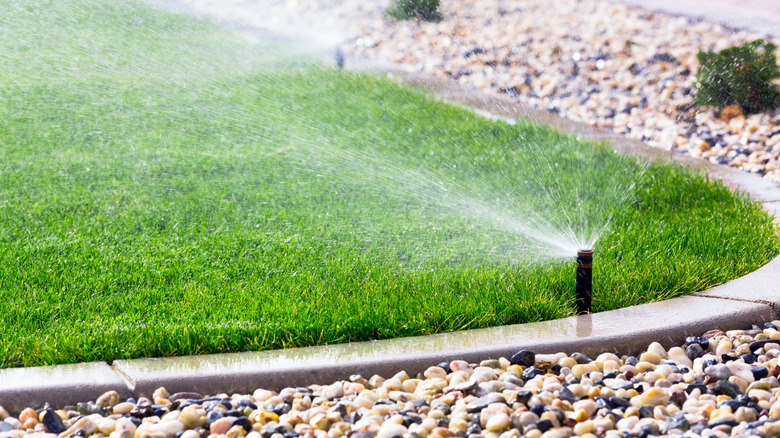
When you use a DIY sod patching kit is just as important as the kit you choose. GreenPal CEO Bryan Clayton says mid-summer won't work "unless you're willing to water like crazy twice a day." If you must water grass seed during hot weather, do it early in the morning to discourage rust, dollar spot, and other fungal diseases that can ruin your lawn.
Instead, Clayton recommends using a sod patching kit in September, October, or early November. Have you missed the deadline for autumn? Don't worry — you might not have to wait a full year to patch your lawn. "Spring can work too, but only if you haven't had pre-emergent weed control applied. That stuff kills off everything, including the seed you're trying to grow," Clayton says.
In addition to considering seasonal weather when deciding whether to patch your lawn with a DIY kit, it's important to think about climate. If you live somewhere that experiences summer-like heat for much of the year, a patching kit may not be the best solution. "They're less effective in dry, hot southern areas unless you're running irrigation," Clayton says, "and for cool-season grasses like tall fescue, they need mild temperatures to get going. So, if you're in Texas or Arizona mid-summer, don't even bother."
Caring for grass from a sod patching kit
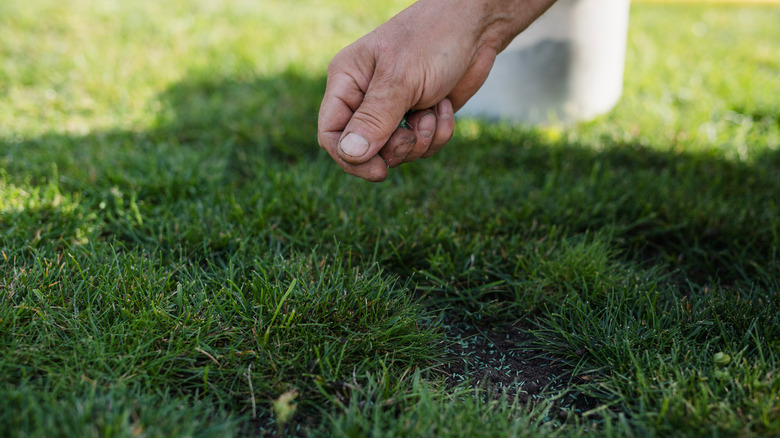
A little prep and consistent care are essential for keeping new sod happy. GreenPal's Bryan Clayton often tells homeowners to think like farmers when working with their patching kits. "You can't just throw seed on concrete and expect a crop," he explains, adding that the soil needs some TLC to encourage grass to root in it. "If you don't scratch up the soil first, either with a hard-tine rake or a little hand aerator, you're wasting your time."
Shielding your sod from stress can prevent quite a few problems too. These dense mats of shallow-rooted grass may turn brown if they get too much fertilizer or not enough water, so make sure to provide the right amounts of both. Sometimes the roots don't attach to the soil underneath a patch of sod because the grass is being cut too short. After determining when it's safe to mow your new sod, see what the ideal blade length is for the type of grass you're growing. If you're not sure how short is too short, aim for 3-inch grass when mowing.
All in all, if you prepare your lawn properly and introduce new grass seeds at the right time, your lawn could be looking sharp in about a month. "Expect it to take about three to five weeks before it starts blending in," Clayton says, noting that "full color match might take a season or two, especially if the rest of your lawn is mature."