

What To Do If You Spot The Infamous Couch Grass Taking Over Your Yard
We may receive a commission on purchases made from links.
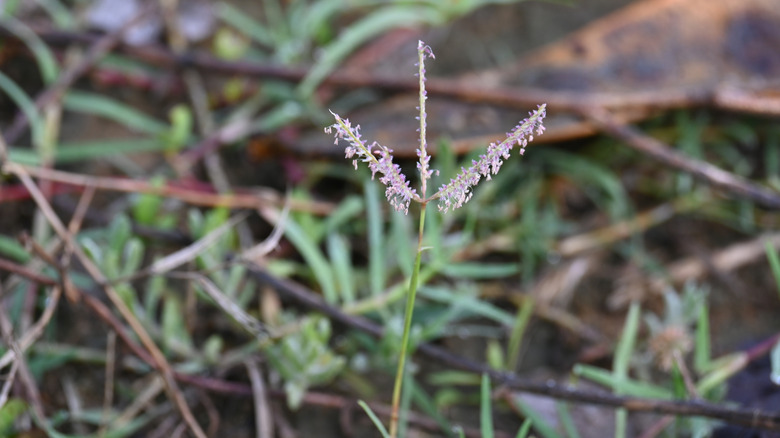
It sprouts up overnight, chokes out your other plants, and creates a massive hassle for landscapers everywhere. Whether you know it as couch grass, quackgrass, witch grass, or something else, the person responsible for eradicating it from your lawn will surely know it as a major problem. If you've ever encountered this frustrating weed, you may already be aware that it's highly invasive and recognizable thanks to its flattened green leaves with thin yellow or pink flower spikes. Each summer, couch grass spreads like wildfire, sprouting to heights of 4 feet tall when left unchecked and choking out the roots of common garden plants along the way. Though resistance may seem futile for first-time victims of this insidious grass, there are a few ways to banish weeds from your garden before the summer ends.
For many years, it was believed that the only way to defeat couch grass was to painstakingly remove the root system by hand, loading wheelbarrow after wheelbarrow with shovels full of fibrous roots. This can be quite tricky, however, as there's a specific method required to ensure you're solving the problem and not just delaying the inevitable. To pull by hand, dig below the roots and loosen them as much as possible with a hoe, trowel, shovel, or garden fork. Then, carefully yank out the plant in one piece.
Couch grass spreads via runner roots beneath the soil, so pulling from the stem only plucks the top of the weed, and it does effectively nothing to stop the infestation in its tracks. Of course, if you're looking for a measure that requires a little less labor, there are additional ways to restore your lawn to its original appealing shade of green.
Start by smothering the afflicted area
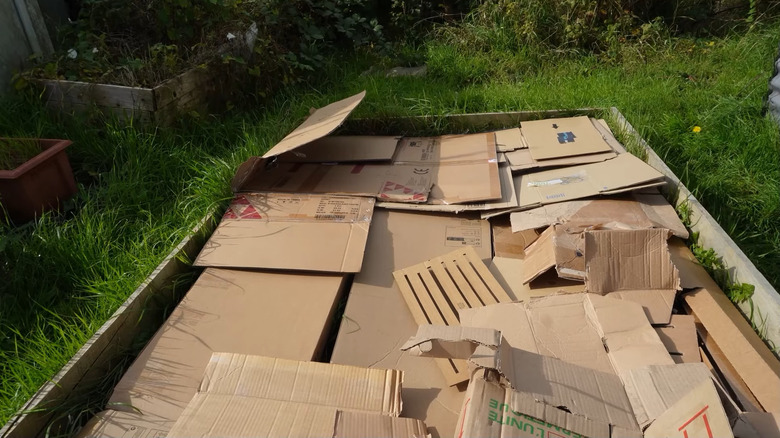
If spending hours hunched over the lawn digging up roots like Bugs Bunny sounds unappealing, you might find that smothering is a much more preferable solution to your couch grass problem. Instead of tilling the afflicted area by hand, begin by smothering the couch grass with a layer of newspaper or cardboard. If the grass is tall and unruly, you can weigh your cardboard down with old soil or mulch bags, rock salt, or even sand. Smothering will prevent the weeds from absorbing nutrients and sunlight, leaving them to brown and decay like any other grass. In your garden, you can even achieve this as a preventative measure by laying down weed fabric before the summer begins.
While this method is highly effective, there are a few major drawbacks. For starters, it's kind of an eyesore to have cardboard or newspaper all over your lawn. If you're fighting off a small patch of couch grass that you caught early, it won't be such a problem, but tackling a lawn full of the stuff might make your home look like a recycling plant. To make matters worse, smothering couch grass takes an extremely long time compared to other methods, meaning you could be stuck with this cardboard clutter for weeks or even months at a time before the weeds are all dead. Doing so will also, obviously, spell demise for any other grass or plants obfuscated by the smothering material. If you're dealing with more than a few patches here and there, it's probably best to continue on and try our next recommendation instead.
Get rid of couch grass with herbicide
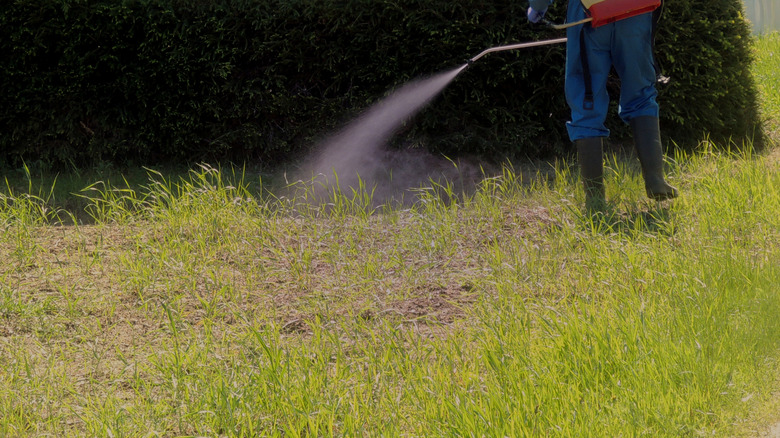
Many homeowners are apprehensive toward using herbicide due to a number of justifiable concerns regarding environmental and personal safety. While they might not be your first choice, sometimes these chemical sprays are the best, fastest, and most effective way to deal with couch grass and other weeds. Glyphosate, which is found in common weed killers such as Roundup, is generally considered to be the best herbicide for killing couch grass. If you have a preferred brand such as Rodeo Aquatic Herbicide, Eraser Max Super Concentrate, or Ranger Pro Herbicide, it should effortlessly eliminate the weeds as well. Still, it's worth noting that these quick-acting weed killers will knock out just about any other plant in their immediate vicinity, so be careful not to spray your lawn or garden with reckless abandon.
Using a weed sprayer like those provided by Chapin, herbicide treatments are best when applied during the early spring as a preventative measure, though they can be employed throughout the summer as couch grass continues to pop up. If your lawn becomes completely overrun, you'll surely find that herbicide treatment is a more sightly response than smothering, even if it does kill all of your grass. Luckily, you can always throw down fresh grass seeds and shore up your yard next year, sans invasive weeds named for indoor furniture. Any way you slice it, couch grass is a major hassle. With these tips in mind, plus a bit of elbow grease, you might just have a fighting chance at maintaining a manicured lawn and garden.