

Upgrade Your Backyard With A Smooth And Natural Looking Gravel
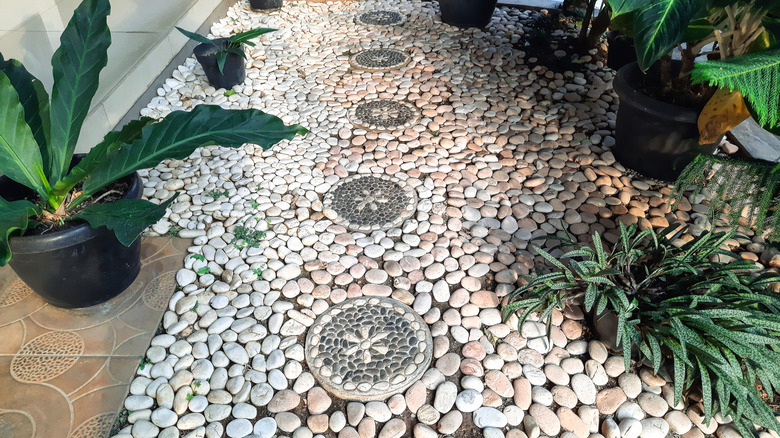
Gravel comes in handy for so many uses around the yard, from forming a basic driveway to lining the area around a stepping-stone path. All gravel is not the same, however. One common mistake is using the wrong type of gravel or stone for your backyard project. For instance, some people may call crushed stone "gravel," but it's not the same material. Crushed stone is coarse, often larger, and has jagged edges compared to gravel. Gravel is somewhat rounded by nature for a softer aesthetic, making it attractive for projects where it will be visible. Smooth, rounded stones such as Mexican beach pebbles are visually pleasing and smooth enough to walk upon, compared to machine-crushed stone.
Mexican beach pebbles come from the riverbeds and coastal shores of Baja, Mexico, smoothed by many years of gentle tumbling in the water. Their naturally beachy look evokes a soothing, tranquil vibe when incorporated into your low-maintenance backyard oasis. Mexican beach pebbles come in an assortment of sizes from half an inch to 5 inches in diameter, depending upon the supplier. These stones tend to be neutral in color, ranging from light, creamy gray to a darker charcoal hue. They're also sold in quantities from small bags for simple projects on up through pebbles by the ton, so there's an available solution to just about any stone-based landscaping idea you have in mind.
Considerations for landscaping with Mexican beach pebbles
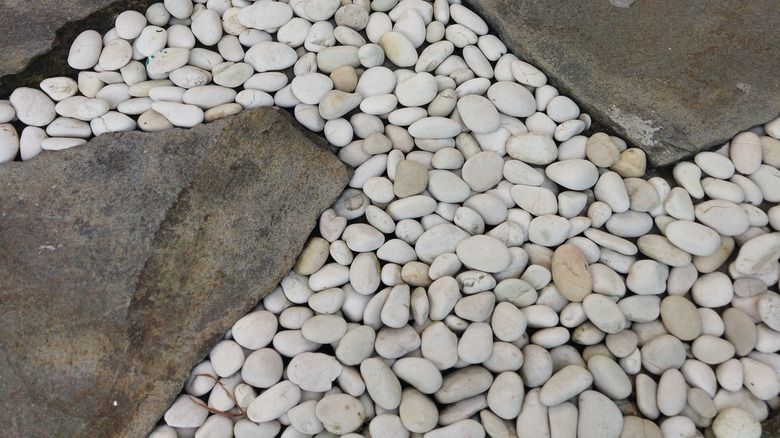
Mexican beach pebbles tend to be sold in groupings based on color, so you'll end up with a uniform, natural look when using them for projects such as a rock garden or a decorative area between pavers. They're also handy for making a stunning, winding path that emulates the look of a dry riverbed. When using Mexican beach pebbles to fully cover an area, such as that dry riverbed, landscaping fabric helps prevent the stones from sinking into the dirt. Choose a landscape fabric that allows drainage, otherwise water will pool up around the rocks. A non-woven landscape fabric is more permeable than woven landscape fabric and therefore better for use beneath beach pebbles to allow drainage while keeping the stones above ground. (Over time, however, most types of landscape fabric eventually break down.)
If using the beach pebbles for a walkway or in the spaces between pavers, a bed of sand helps keep things level. A layer of coarse sand 2 to 3 inches deep and packed with a tamper stabilizes the area so the stones can settle in and stay in place with minimal shifting. Use smaller quantities of Mexican beach pebbles to surround a water feature such as a small pond or a fountain. Make a birdbath more comfortable for birds by using flat beach pebbles to create footholds for your feathered friends entering the basin.
It's worth noting that Mexican beach pebbles are not good for fire pits or high-temperature areas, as they retain heat and could crack, spark, pop or even explode due to moisture within the stones. Use stones such as lava rocks that are specifically made for fire pits instead.