

Find The Perfect Plant Pot For Your Garden With A Simple Trick
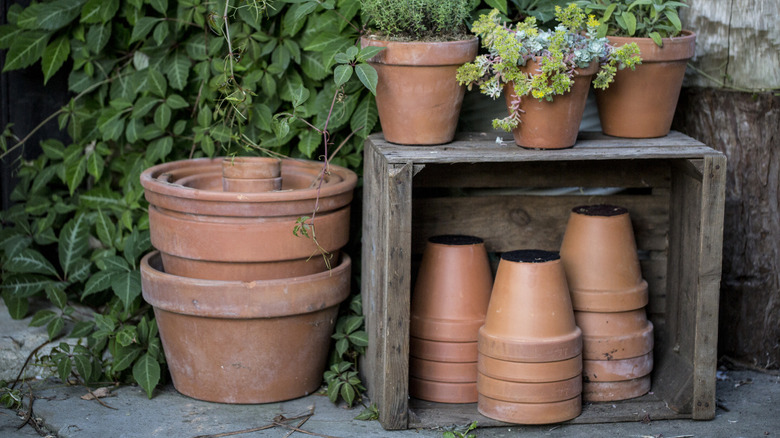
Whether you're creating a hummingbird-friendly container garden or shopping for pots to grow fruit trees in a small yard, knowing how to select good planters can prevent disappointment down the line. Losing lovingly cultivated plants when a pot cracks open is a bummer, and sharp ceramic shards can lead to nasty wounds. However, inspecting a pot with your eyes won't always reveal if it's structurally sound. That's because tiny cracks can be hidden from view, waiting to make themselves known when you fill the container with soil or move a just-potted plant to a sunny spot on your patio. Though you should certainly look closely at any plant pot you're considering for your collection, you can also use your sense of hearing to evaluate it. One method of doing this is nicknamed "if you hear a thud, it's a dud." Touching the pot in a certain way will elicit a thudding sound if the pot is cracked.
This hack is especially useful when browsing large patio pots at garden centers. You don't want to haul a heavy container home only to realize that you have to drag it back to the store. Plus, things can get messy fast when one of these pots breaks, especially if you've already put soil and plants in it. Listening for thuds isn't foolproof, especially if you're shopping in a noisy area, but it can make cracks easier to spot.
Evaluating plant pots with the thud method
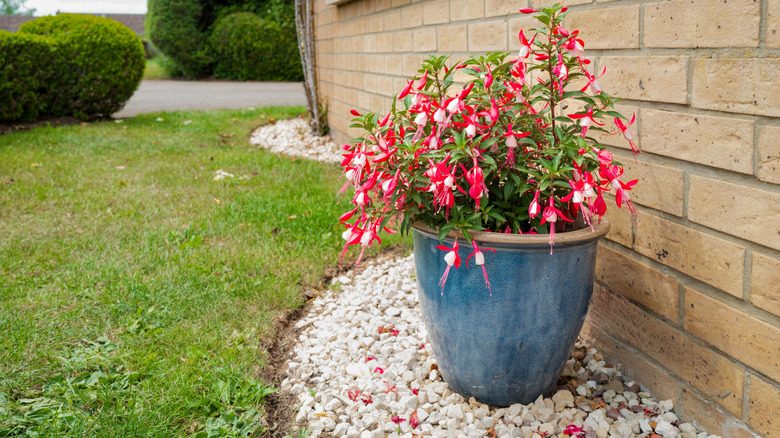
"If you hear a thud, it's a dud" is used for evaluating clay and ceramic pots, so don't expect the same results with containers made of other materials. To try the hack, simply knock on the rim of a plant pot as if you're knocking on a friend's front door. Like a bell or xylophone tapped with a mallet, the pot should resonate if it doesn't have cracks. The sound should fall flat if cracks are present. This thud tells you to choose a different pot. It's best to give each pot a few raps to be confident of your assessment. You may get a few funny looks and amused smiles as you perform a tiny concert for passersby.
This method might also work when selecting coffee mugs to turn into planters, though knocking the rims of smaller containers is tricky. Once you find the perfect mug for holding a small flower or herb plant, clean it and use another hack to ready it for its new resident. Submerge it in water as you hammer a nail through its base, and this will turn your ceramic mug into a little planter with a drainage hole. Of course, there are also ways to deal with a cracked plant pot, so don't just toss it away. If you're hoping to salvage it, make sure the broken area is nice and clean before adding either epoxy or gorilla tape.