

Snakes Have Completely Taken Over These Beautiful Bodies Of Water In Massachusetts
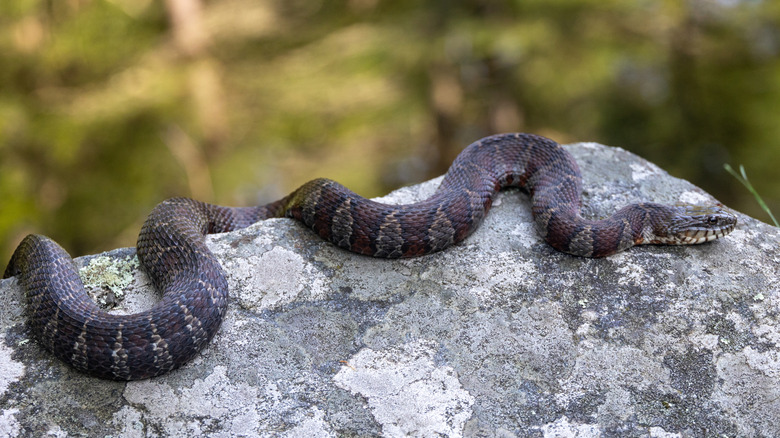
Seeing wildlife up close is always a fun experience. However, not all wild animals are equal. While it may be cool to see a deer or fox, snakes aren't always as appreciated. If you're looking to head outdoors in Massachusetts but aren't the biggest fan of serpents, there are a few bodies of water to potentially avoid.
There are a total of 14 species of snakes found in Massachusetts. Of those 14, only two are venomous — the timber rattlesnake (Crotalus horridus) and the copperhead (Agkistrodon contortrix) — and both are restricted to small areas. Copperheads are usually found in Norfolk and Hampden Counties, and timber rattlesnakes have only five small populations throughout Massachusetts. This means that there's a very low chance, if any, of meeting these creatures. Additionally, though they're venomous, they don't rank in the most dangerous types of snakes you'll find across the world.
You'll likely come across at least one of the several other species, but thankfully, they're generally very calm and may even be more scared of you than you are of them (as impossible as that sounds). Who knows, by the time you finish exploring some of these bodies of water, you may find yourself curious to learn more about why you might want snakes in your yard and how to attract them.
Spot Pond
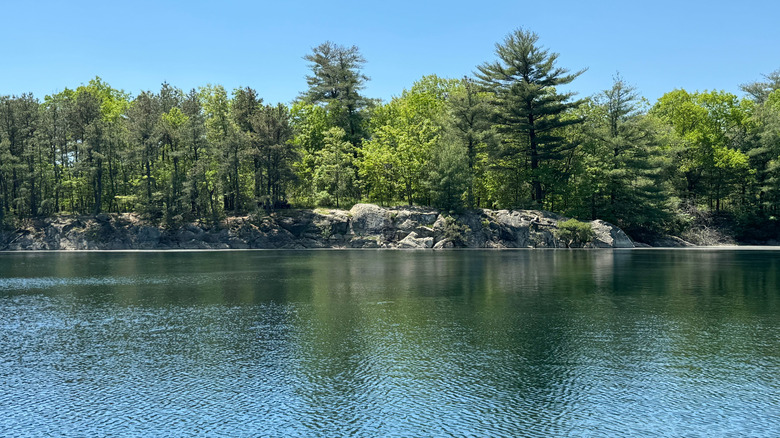
Spot Pond is a beautiful 298-acre body of water surrounded by urban development right outside of Boston, known as Middlesex Fells Reservation. There are several other lakes and plenty of trails in the area, giving you opportunities to get outside and enjoy nature. Despite it's proximity to urban development, this area has managed to become a haven for wildlife, including snakes. Many of the species in the state can be found in and around Spot Pond, including red-bellied snakes (Storeria occipitomaculata), DeKay's brown snakes (Storeria dekayi), and the smooth green snake (Opheodrys vernalis). The reason they thrive here is due to the variety of different environments. Not only is there the water, but there's also marshlands, rocky places for snakes to sunbathe, and safe havens for them to hide in the cooler winter months.
While you can't go swimming or paddleboarding in Spot Pond, there are opportunities for fishing, canoeing, and kayaking. You can also hike and bike. Keep in mind that to prevent invasive species from taking up space in the water, private vessels are not allowed. However, you can rent boats and kayaks nearby.
If the only kinds of snakes you like are ones in cages, you may enjoy exploring Stone Zoo as well, right next to the lake. They have hundreds of animals, many of them exotic. It's a good place to stop and visit during your exploration or if you're feeling a little creeped out by the thought of so many snakes around you. Want to see the lake but not get too close to the water? There are a few lookout points, including Spot Pond Lookout and Straw Point. If you're really worried, take time to understand the unexpected behavior that leads to countless snakebites so you can stay safe while exploring.
Great Meadows National Wildlife Refuge
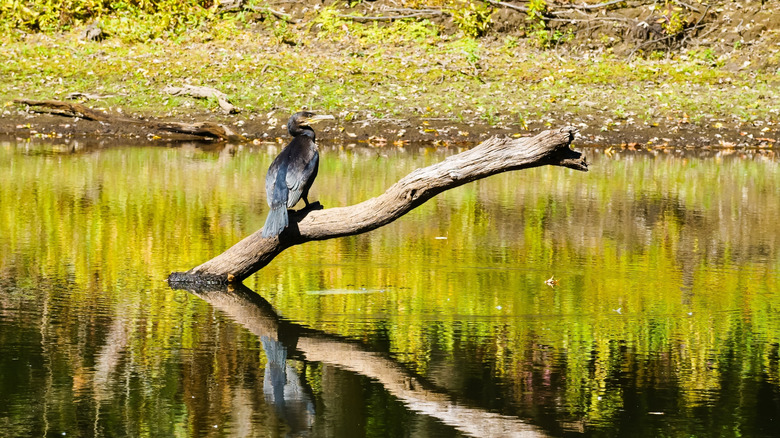
Great Meadows National Wildlife Refuge is a place designed to protect animals and their habitats. It includes several bodies of water across 3,800 acres, and you're likely to find snakes in or around all of them. Of course, you'll come across far more than these slithery animals. It's estimated that there are over 220 different species here, including various foxes, weasels, frogs, deer, and birds. Then, there are all the beautiful plants to appreciate as well. Even if you're frightened by snakes, it's worth visiting to see the diversity.
As for the legless reptiles, the most notable serpent species you'll come across is the northern water snake (Nerodia sipedon sipedon). They come out in the summer when they can enjoy the warm temperatures and water. You'll often find them swimming or basking on a rock. However, the refuge is also home to many other species, including DeKay's brown snake, the common garter snake (Thamnophis sirtalis), the ring-necked snake (Diadophis punctatus), the eastern ribbon snake (Thamnophis sauritus), and the North American racer (Coluber constrictor). If you're worried, keep an eye out for hiding spots for these animals while walking. Though it's not home, the most common places that snakes hide in your yard and in the wild are similar. They enjoy either lounging in the sun or curling up in cozy and protected places.
Speaking of protected places, wildlife refuges are primarily for the preservation of land and habitats for animals, which means certain activities are limited. Many refuges aim to offer entertainment for visitors, but the primary goal is to protect the land. Thankfully, Great Meadows National Wildlife Refuge has managed to find a balance. While visitors can't go swimming in the waters, they can hunt, fish, hike, use non-motorized boats, snowshoe, cross-country ski, and watch all the wildlife.
Quabbin Reservoir
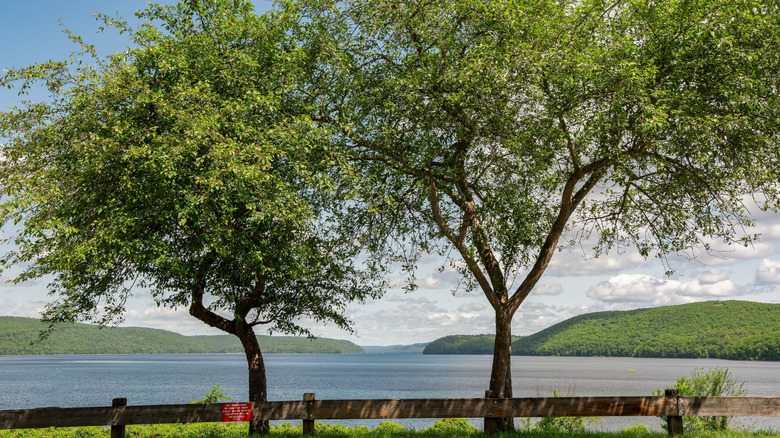
It's no surprise that Quabbin Reservoir has one of the highest populations of snakes of all the locations on this list. After all, it's the largest inland body of water in the entire state. It also acts as the primary source of drinkable water for Boston. While you can't swim there, you are allowed to go fishing and boating. Additionally, there's a lot to do in the surrounding area, including hiking, biking, and hunting. Unfortunately, your furry companions aren't allowed as they can potentially contaminate the water.
Northern water snakes and common garter snakes are the two species you'll likely come across the most, but there are others such as eastern milksnakes (Lampropeltis triangulum), eastern rat snakes (Pantherophis alleghaniensis), eastern hog-nosed snakes (Heterodon platirhinos), and red-bellied snakes. You may even see the rare eastern worm snake (Carphophis amoenus). There are many other animals that visit Quabbin Reservoir or call it their home. In fact, in the effort to create a water storage system for the state's demands, Massachusetts ended up creating a safe haven for wildlife. Over the years since the development of the watershed, all sorts of animals have moved in, including several fish species, mountain lions, and bald and golden eagles.
The Quabbin Reservoir is an amazing success story, and it's somewhere to go and visit if you enjoy protecting wildlife or even just beautiful hikes. Of course, keep an eye out for the small scaly friends that may be swimming in the water or basking on rocks. Even with the abundance of species, there are no venomous ones around, though it wasn't for lack of trying. In 2016, it was proposed that an island in the middle of the lake could be home to a new timber rattlesnake colony, but the project faced a lot of controversy and was eventually abandoned.
Assabet River
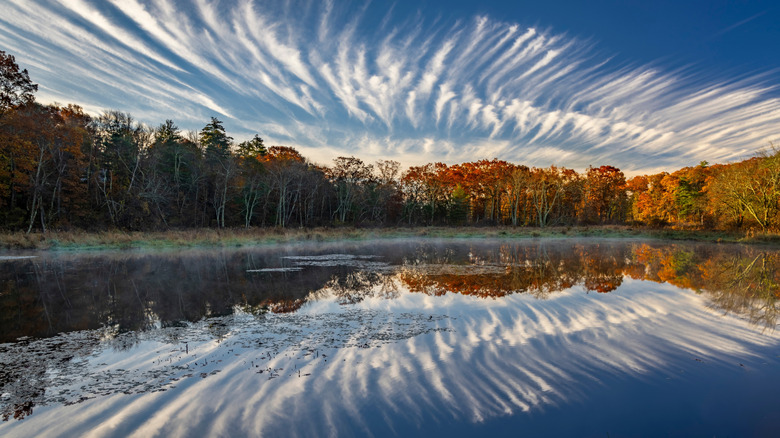
Out of the five bodies of water on this list, the Assabet River is the only one you're allowed to swim in. While you might see snakes or stumble across one sunbathing at the other four locations, here's where you have to actually worry about bumping into a snake while swimming. Thankfully, like the rest of the places on this list, the snakes you're most likely to come across are the mild and nonvenomous species, especially the northern water snake.
While you can't swim in the Assabet River National Wildlife Refuge, there are areas where you can get into the water, as well as places to hike, boat, and bike. This is one of the rivers you'll drive across while exploring the Oregon Trail, one of the incredible U.S. road trips that deserve a spot on your bucket list. It's also just a great place to stop and take a breather.
Interestingly, while the Assabet River has always had natural beauty and the chance to see a diverse range of animals, the refuge is relatively new. It was transferred over to the U.S. Fish and Wildlife Service in 2000. Before that, the U.S. Army used the land for military training. It's crucial for migratory birds and has important habitats, such as freshwater wetlands, pine oak forests, and shrublands. So if it makes you feel better, those snakes you see roaming around the refuge are incredibly important for the land's purpose, as these reptiles are a great food source for many of the birds that visit.
Wachusett Reservoir
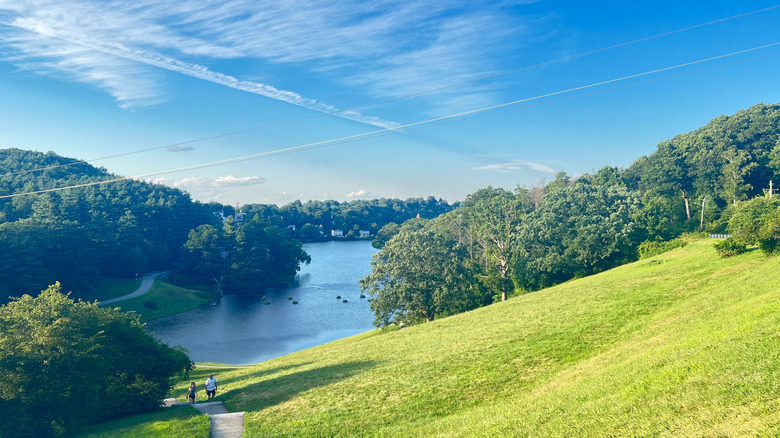
Wachusett Reservoir is the second-largest body of water in Massachusetts, so it makes sense that it would be on the list as well. You'll find water snakes, milk snakes, garter snakes, and brown snakes here. Like Quabbin Reservoir, Wachusett is important for providing water for people in and around Boston, and it's therefore heavily protected. The reservoir covers 6.5 square miles, and it provides water to roughly 2.7 million people.
Because of its importance, visitors are not allowed in or on the water, and dogs are completely banned from the area, as well as horses and ATVs. However, you can still enjoy fishing, hunting, hiking, and a few winter activities. Additionally, Wachusett Reservoir Watershed Interpretive Services hosts several events throughout the year, including sensory walks and open houses.
It's important to remember that while snakes might be scary to come across in the wild, they are rather interesting and helpful animals. DeKay's brown snake and the red-bellied snake are two types of snakes you'll actually want to see in your garden as they can be beneficial if you're looking to keep pests out of your yard. Additionally, snakes are generally not aggressive towards people. Though they can try and bite if they feel cornered, most of the time, they prefer to just run away when possible. Take care to pay attention to where you're stepping, and give any wildlife you come across — not just snakes — plenty of space so they don't feel pressured.