

Why A Concrete Birdbath May Not Be The Best Option For Your Feathered Friends

We may receive a commission on purchases made from links.
Adding a birdbath is right up there as one of the top backyard hacks to bring in all of the birds. In some ways, a birdbath could be even more important to them than a bird feeder. Birds know how to find insects and source seeds to grab meals out in the wild, but in dry weather, that birdbath in your garden might be their only oasis. The water in a birdbath is handy for birds not just for hydration and cooling off, but because they need it to maintain their feathers. Bathing helps birds keep their feathers in peak flying condition; it may even make the birds more agile in flight.
While it seems that birds will bathe just about anywhere they can find water, not every birdbath is ideal. Certain designs — such as some concrete birdbaths — may fall short on what your feathered friends actually need. If you don't know what to look for when buying a birdbath, you may end up with a heavy beast of a bath that serves more as a lawn decoration than as a functional bird-bathing station. Concrete birdbaths are among the heftiest types available, which means they won't tip even if a squirrel or raccoon grabs a drink, but they're not always the best for the birds. The depth, slope, and texture of the basin all determine whether a bird feels comfortable using it. Birdbaths also need to be cleaned regularly to ensure bird safety, and concrete is sometimes a bit difficult to clean compared to resin or glass basins.
Why a concrete birdbath isn't always ideal
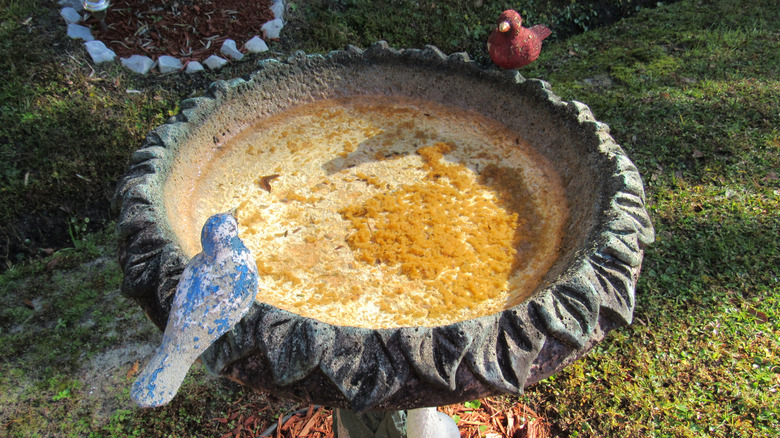
Concrete birdbaths are so heavy that you may end up simply leaving them in place, even if their basins aren't ideal for birds. For comparison, a 26-inch-high concrete birdbath by Athens Stonecasting weighs a whopping 183 pounds, while a similar resin birdbath by Best Choice Products weighs less than five pounds. With that much weight, you're probably not going to move the bath indoors when winter approaches. A concrete birdbath could crack, especially if water freezes inside the basin, or if the moisture in the material expands and contracts with temperature changes. Even an empty basin can crack. A cracked birdbath may lose water, which isn't great for birds when they find a dry basin, nor is it convenient to have to refill frequently. If you're unable to move the birdbath to a garage or warmer area, emptying it, filling it with towels, and then covering it may insulate it from the weather.
Some concrete birdbaths are too deep and don't slope properly, which makes it harder for birds to find footing. Birds prefer a mild slope so they can stand at a depth that suits their leg height. Water no more than 2 inches deep works best for typical backyard bird species. The basin's concrete should also be textured to make the birdbath more comfortable for birds, and so their feet don't slip. If you really want to use your concrete bath, add some flat rocks for them to stand upon as they bathe.
Concrete is also more prone to staining from algae and mildew — even tree and leaf debris could stain the bowl if it sits in the water for long. Scrubbing the basin regularly with a paste of baking soda and water could remove some staining elements if they're caught early on. You should clean your birdbath every few days to keep the basin water clear and the birds healthy.