

What To Consider Before Using Stone Carpet Flooring In Your Outdoor Space
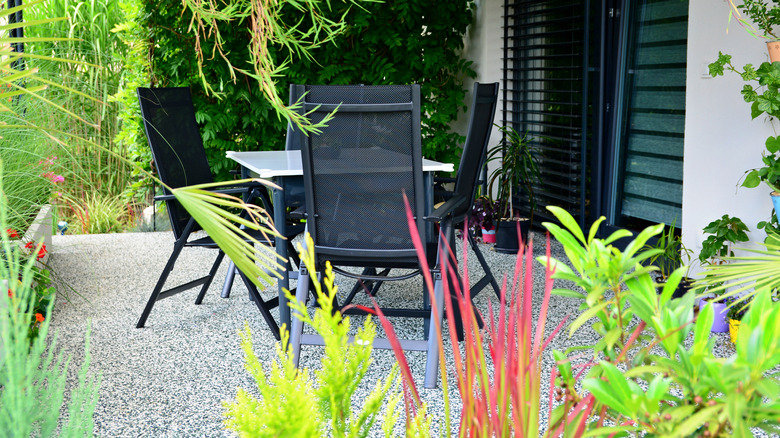
Your yard should be your perfect retreat. Not only do you want it to look stunning, but it needs to be a place where you always feel relaxed and comfortable. If you're wanting to create a low-maintenance oasis in your backyard, it needs to be inviting, and nothing feels like a greater welcome than a beautiful walkway. However, there are many options available, making it hard to choose. But if you want the appearance and texture of gravel but not the weeds or moving, uneven stones, then a stone carpet might be the way to go. Despite the name, it's not actually a carpet. Instead, it's gravel — or some series of small, pebble-like stones — covered in resin to hold everything in place. It's been popular in public areas, used often as a more natural-looking pathway in gardens, parks, and even parking lots.
There are a few perks to this method. For one, because it has a binder, the gravel never moves, which means less regular cleanup for your yard and a lower risk of falling or twisting an ankle. The surface is also textured naturally because of the stones, so on rainy days, you have less of a chance of slipping or worrying about other such safety concerns when using landscape gravel in your yard. Since you can use almost any kind of stone or sturdy material, you also have the option to get very creative with your pathway, creating a design that fits perfectly in your garden or yard. Finally, resin is durable, and it can handle the weight of a car or outdoor furniture without any problems. However, while it is ideal in many situations, it also has some negatives.
Things you need to be wary of when using stone carpet flooring

The biggest negative of stone carpet flooring has to do with the resin. While it's an amazing tool indoors, it may not be the best for the outdoors. You might not have to worry about water ruining it, but there are other issues. For one, resin yellows over time, and UV light can speed up that process, leaving you with a dingy color between your stones in a few years. You also have to take care to choose the right kind. Some don't handle heat well and may warp in direct sun, while other kinds aren't very scratch resistant and may not be great at withstanding the wear and tear of the natural elements. There are resins that can perfectly deliver, but if you don't know what you're doing, it can take a lot of research.
Resin on such a large scale can also be hard to do yourself. It requires a lot of preparation and precision to get it just right. Additionally, whatever outdoor surface you're covering with a stone carpet has to be nearly perfect. For it to last a long time, you need to make sure it's able to handle the additional weight, that it's completely clean and dry, and that it has no sealant. It also needs to be a material that won't really shift or separate much over time, such as wood or concrete.
An alternative — if you want the basic idea of a stone carpet — is to use something like cement to replace the resin. It may not look quite as cool, but it will hold the rocks better and can last longer as it's made to deal with the outside elements. Or you can use a DIY paver project to take your landscaping to the next level.