

What To Know About The Hummingbird Diet To Help Attract Them To Your Yard
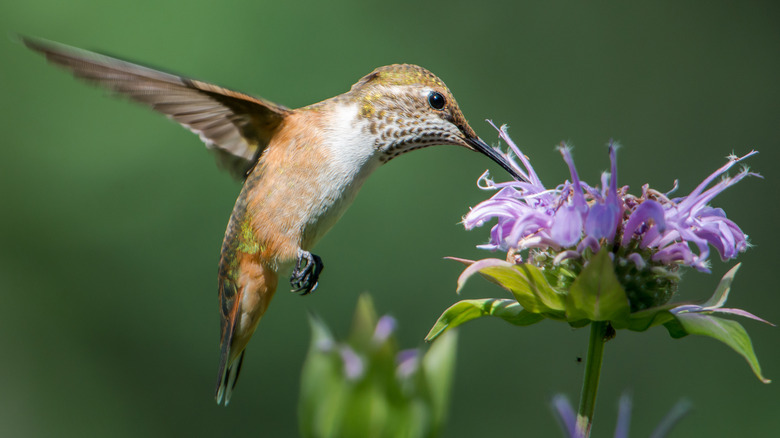
Hummingbirds are a delightful sight in your yard. With their jewel-like wings, they add a splash of color wherever they go, and their personalities make them interesting to watch as they flit from flower to flower. If you're seeking to attract more hummingbirds, adding an eye-catching combination of hummingbird-friendly flowers is a great place to start, providing them with a vibrant source of nectar. However, while a hummingbird can easily visit 1,000 flowers in a day, nectar actually makes up only a small percentage of this little bird's diet. As a result, one of the best ways to encourage more hummingbirds to your yard is to consider their entire diet, not just the sweet part.
From ants to mosquitoes, insects make up a large portion of a hummingbird's daily meals. They'll even eat other critters like spiders, which they'll pluck directly from the web for a quick snack. As a result, while planting the right flowers and choosing the right hummingbird feeder can be a great way to attract more of these tiny flyers, that's only one part of the equation.
Instead, to attract more hummingbirds, start with attracting more insects. By adding just a handful of strategically selected plants, you can create a bug buffet for hummingbirds to enjoy, drawing them to your yard. Plus, by opting for low-maintenance options, you can spend less time tending your garden, and more time enjoying its feathered visitors.
Using insect-friendly plants to attract more hummingbirds
Attracting more insects to your yard can feel counterintuitive, especially when you're putting in so much time and effort to create a garden you enjoy being in. However, with the right plant picks, you can focus on attracting helpful insects that benefit your garden while also providing a source of food for your flying friends.
One of the best ways to attract more insects to your yard, and thus more hummingbirds, is to choose wildflowers native to your area. Any nearby native insects have adapted to survive side-by-side with the plants, and they rely on them for shelter and food. For example, monarch butterflies will only lay their eggs on milkweed, since that's the sole source of food for their caterpillars. While other native species may be more open for variety than the monarch, the sentiment still stands: Native flowers encourage more insects to visit. As an added bonus, native plants and flowers are perfectly adapted to the local environment, requiring less additional water and soil amendments.
You can also choose to line your yard with more wildlife-friendly berry bushes. These offer two benefits: Attracting more fruit-eating birds to your yard and inviting more insects to visit in pursuit of food. Just beware of any animals that may also visit to snag berries of their own, like squirrels.