

How To Make Sure Your Bird Feeder Is Safe For Your Feathered Friends
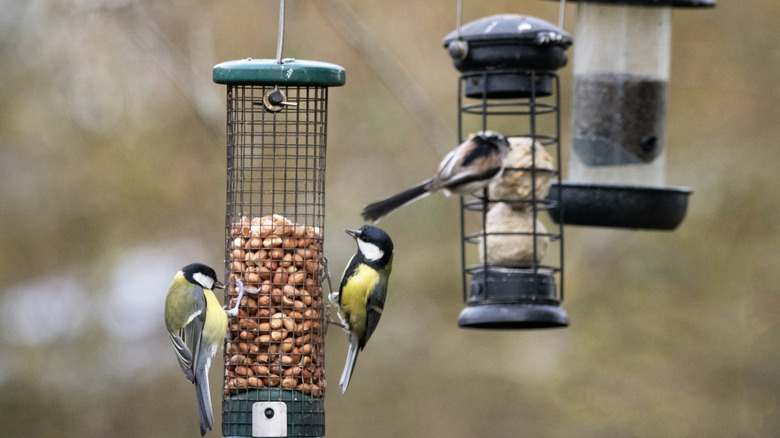
With their beautiful feathers, mesmerizing melodies, and interesting personalities, birds can add life and color to your garden. If you have space to spare, adding berry bushes that attract songbirds can be a great way to utilize a natural food source, encouraging birds to flock to your yard. However, if you're working with a smaller outdoor space, even a single feeder can go a long way — so long as you take steps to ensure your the feeder is safe for visiting birds.
Whether you're interested in hanging traditional bird feeders designed to target a variety of species, or hummingbird feeders filled with an easy homemade nectar for the smallest of your feathered friends, safety is a top priority. After all, you don't want your bird feeder to end up doing more harm than good, especially when your goal is to provide a tasty buffet that keeps birds returning time and time again.
There are many hidden dangers that come with bird feeders, especially in regard to regular cleaning. However, one of the biggest things to keep in mind when choosing the right bird feeder for your yard is its design — paying close attention to any spots on the feeder where birds can become trapped. While these flaws may not be visible at first glance, they can rapidly turn a lunch date into a survival situation for your local avian guests.
Choosing a safe bird feeder
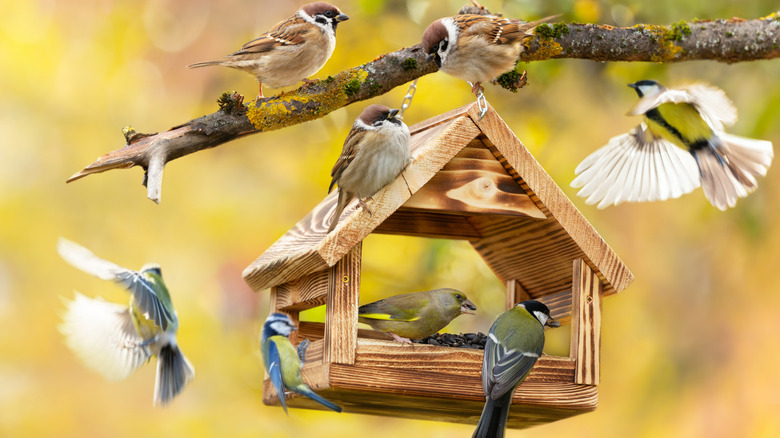
Stepping outside, expecting to see birds flocking to your bird feeder only to find an injured or even deceased bird trapped in your feeder is a heartbreaking sight. Unfortunately, it's one that many birders have experienced.
While many feeders are designed with bird safety as a priority, issues can still arise, especially as feeders get empty. When your feeder is full of seeds, birds are satisfied plucking up and devouring their fill with ease. However, as feeders empty, it can become more and more difficult for birds to access the seed. In many cases, the result is a bird cleverly trying to reach in for the remaining food only to find themselves stuck. If the bird is unable to free itself or human help is delayed, they're faced with a somber fate. There are other ways birds can become trapped as well, either in small gaps that pinch their feet or by entering an enclosed feeder and being unable to escape.
One of the best ways to prevent this tragic situation is to pay close attention to the details when choosing your bird feeder. Check not only the perches and feeding ports but the feeder itself to ensure there are no areas where birds can become trapped. You can also regularly check in on your feeder, which allows you to free any birds that may be trapped as well as top off the seed. If the feeder is located somewhere where no one is regularly checking it (vacation home, remote locale), it should be emptied and cleaned between human visits. If feeders aren't your thing, there are other ways to make your yard a must-visit place for birds too, including adding a variety of plants to attract more birds.