

How To Determine If Squirrels Are Causing Damage To Your Tomatoes
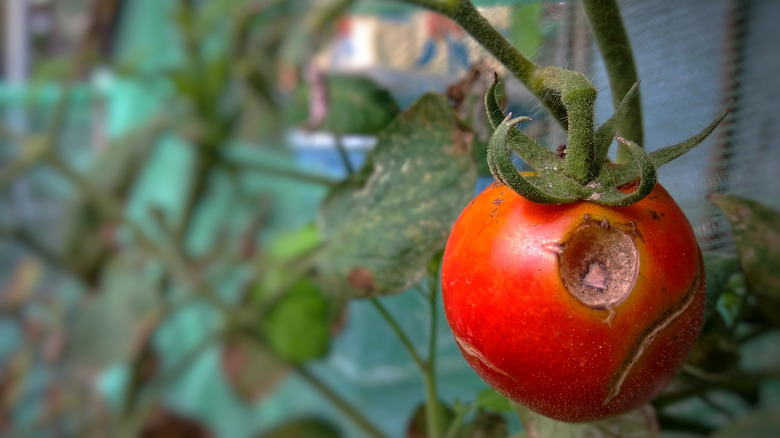
When it comes to gardening, few things are as frustrating as walking to your garden in anticipation of enjoying the fruits of your labor (literally), only to find that some critter made a meal out of your plants before you could. When you see signs that something has eaten the juicy, ripe tomatoes you were looking forward to, your mind might first jump to insects. After all, tomato hornworms are common garden pests with a voracious appetite for the fruit. However, before you set out to remove hornworms from your tomato plants using this nighttime trick, there may be another culprit to consider, and it's a mammal, not an insect.
While it may seem strange to think about at first, squirrels are actually a common garden pest, and you may find them eating your tomatoes. Unless you catch them in the action, it can be difficult to tell exactly who or what is snacking on your tomatoes. Thankfully, squirrels aren't the sneakiest tomato thieves and leave several signs that can help you identify if they're behind your tomato damage.
Signs squirrels are eating your tomatoes
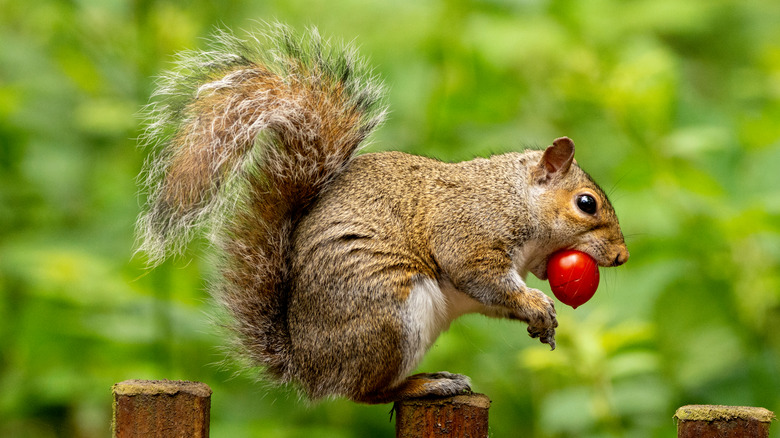
There are actually a lot of wild visitors who love munching on tomatoes, including deer, raccoons, slugs, and earwigs. Each leaves different identifying damage, but it can be tricky to learn the differences, particularly since tomatoes are soft and give way when bitten, covering up sign of the crime. With a little digging, you'll learn the tell-tale signs pointing to squirrels. Birds peck at your fruits, deer graze on the leaves, insects nibble and leave small bite marks or holes. Squirrels put their incisors to work, biting through hard exteriors and carving their way into your precious produce.
Of course, looking for bite marks on decaying fruit can be difficult even for the seasoned pro. Ground squirrels may give themselves away by burrowing near your plants, while tree squirrels pop in and out. Both species focus on ripe tomatoes rather than green. With enough patience, you may even be able to catch a furry thief red-handed (they do their gardening during the day, which should help). Once you know that squirrels are the pests you're dealing with, then you can create a game plan for protecting your tomatoes from further damage.
So long as you choose a bird-safe wildlife netting, it can be a great way to keep squirrels and other common garden thieves off your plants. You can also opt for a more natural approach — if you don't mind the circle of life in your yard. There are many types of non-venomous snakes you may want to attract to your yard, as they're an excellent source of natural pest control. Alternatively, consider sharing. If you have enough space and plants, you might decide it's fine to give the little rodents a free meal or two before they move on.