

The Simple Lawn Mowing Mistake That'll Hurt The Birds In Your Yard
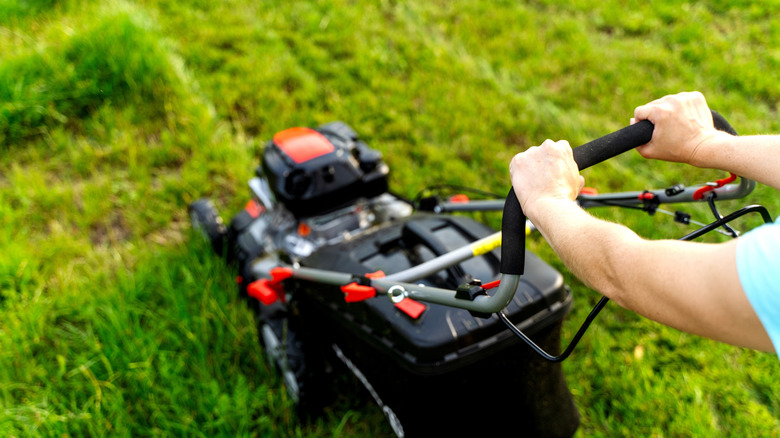
Whether you determine a gas or electric lawn mower is right for your yard, before you start mowing, there's a checklist you should go through each and every time. This includes making sure all of your equipment is in good shape, picking the right cutting height using these clever tricks, and deciding how you cut your lawn. However, preparation shouldn't stop there. Instead, before you start mowing and create the picturesque yard of your dreams, take an extra second for this one step that can save your local bird neighbors.
Did you know some birds build their nests on the ground? That's right — instead of building their nests in trees or cavities like you might expect, there are a handful of species that instead cozy up with their eggs in the deep grass of your lawn. Birds aren't the only animals to do this either, with critters like deer and rabbits also turning your yard into their nursery.
Because of this, before you start mowing, it's important to take the time and check your yard. After all, you want to make sure you're aware of any potential hidden nests or baby animals before it's too late.
Don't mow without checking your lawn for nests
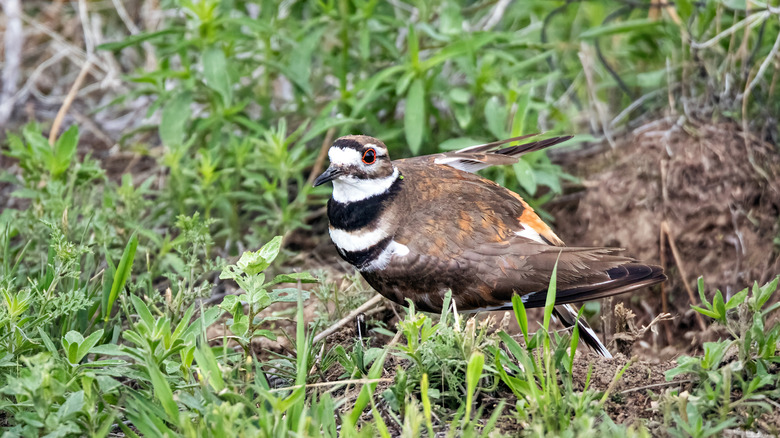
Killdeer, meadowlarks, northern bobwhite quail — these are all examples of birds that build their nests on the ground. Because their nests can easily be hidden in tall grass or shrubbery, mowing without first checking your yard for any of these little residents can be a mistake with deadly consequences.
Thankfully, checking over your yard with an expert eye doesn't have to be time-consuming or difficult. In fact, it's an essential step that can be easily incorporated in your pre-mowing routine every time you cut the grass. Just take a few minutes before you start up your mower to walk your lawn, checking for any nests or hidden offspring that may be tucked in the grass. Sometimes, you may encounter eggs or chicks with a parent present, which can make spotting the nest a breeze. However, other times, the parent may be away gathering food, so you'll need to familiarize yourself with your local ground-nesting birds and learn to recognize their nests even without an adult bird present.
If you do happen to stumble across a nest in your grass, it doesn't mean you have to forgo cutting the lawn altogether. Instead, you can have your perfectly trimmed yard while also keeping wildlife safe. Mark where the nest is in the grass, and, while mowing, leave plenty of space between your mower and the fragile nest. For added peace of mind, use spray paint, flags, cones, or stones to delineate the nest, ensuring you won't accidentally run. It's important to do this rather than try and move it, as it is illegal to move or destroy most native and non-invasive bird nests in the U.S. while they are active, due to the Migratory Bird Treaty Act.