

A Stunning Flower That'll Complete Your Colorful Cottagecore Garden
We may receive a commission on purchases made from links.
Cottage gardens brim with charm thanks to their casual design and vibrant flowers. They often feature vegetables, herbs, and other edible plants as well. English-style cottage gardens are more popular than ever thanks to the cottagecore trend sweeping the interior decorating world. Sometimes, incorporating a flower that's bursting with charisma is the best way to infuse a cottage garden with a cozy vibe. If your cottage garden needs a colorful personality, consider planting giant larkspur (Consolida ajacis). This easy-care annual is suited to USDA hardiness zones 2 through 11, so it's capable of thriving in almost any part of the United States.
Giant larkspurs tend to unfurl bright blue petals between June and August. You may come across varieties that make pink or white flower spikes, too. These plants make a statement with their size as well, sometimes growing as tall as 4 feet. Most giant larkspurs are 2 to 3 feet tall, though dwarf cultivars are a bit shorter. In the North, the best time to direct sow their seeds is early spring. In the South, autumn is preferable. No matter what type of climate your growing zone has, plant your giant larkspurs in soil that's rich in organic matter and good at draining away excess water. Though giant larkspurs like their growing area to stay damp, they don't tolerate being waterlogged, a situation that can lead to root rot. Heavy, compacted earth also encourages this problem, so be sure to give your giant larkspurs loose soil that promotes air circulation. Planting each specimen about a foot from its neighbors can promote airflow, too.
Helping giant larkspurs thrive in your garden
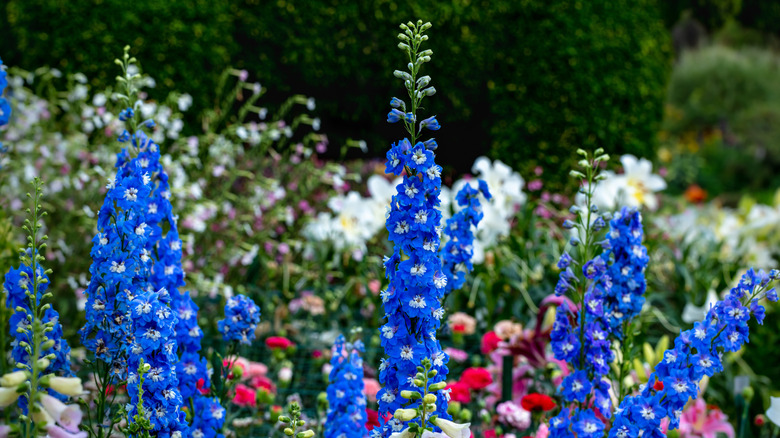
Like many cottage garden favorites, giant larkspurs are low maintenance but benefit from a bit of TLC. These plants crave lots of sun but relatively cool weather, so making a plan for hot summer days is wise. If you live in an area that experiences sweltering temperatures during the growing season, plant your giant larkspurs in a spot that receives some afternoon shade to discourage wilting. In regions where summer scorchers are uncommon, full sun — at least 6 hours of direct sunlight each day — is the way to go.
To convince your giant larkspurs to flower as often as possible, snip off blossoms that are done putting on a show. Consider starting the seeds indoors in the winter so the flowers will bloom as soon as possible in the spring. If you go this route, wait until the risk of frost has passed before transplanting the seedlings in your flower beds. Sowing the seeds about 8 weeks before the last predicted frost date in your area should help you get the timing right. Also keep the freshly planted seeds nice and warm before moving them outside. This can promote germination and reduce the amount of stress the young plants experience. Placing clear plastic over the tops of your seed-starting trays locks in heat, creating a greenhouse-like environment for sprouting. Or, try a product such as the Vivosun waterproof seedling heat mat to keep your baby plants toasty.