

Keep Your Plants Happy In The Summer With A Clever Umbrella Hack
We may receive a commission on purchases made from links.
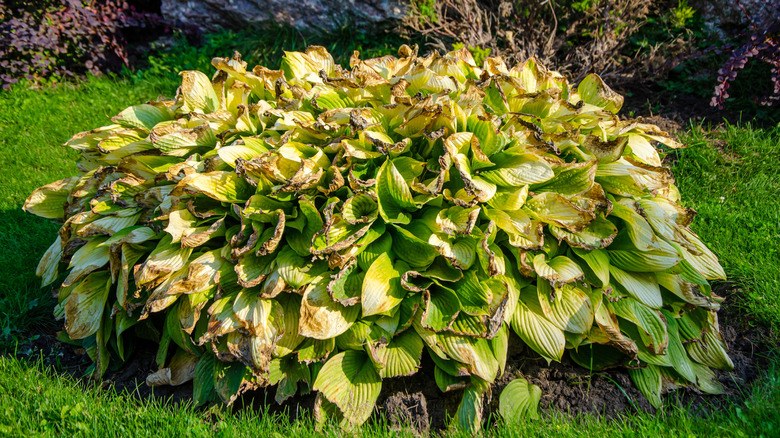
In some ways, garden plants are a bit like people: Some seem to thrive on hot, sunny days, while others do not. If some shade-loving outdoor plants get more sun than they can tolerate, they even get sunburn, much like humans. However, sunburn doesn't cause plants to turn pink or red or darken. Instead, sunburned plant leaves yellow or even turn white. They eventually turn brown and wither, or they may develop dried edges. As with humans, the easiest way to prevent sunburn on plants is to move them out of direct sunlight. That may be easy to do for potted plants, but it's not so convenient for plants rooted in the ground. Fortunately, there's a simple solution: Use a plant umbrella.
An umbrella (or technically a parasol) offers plants some protection from the sun on those scorching-hot days, and it's easy enough to remove during more moderate weather. A canopy-style sun shade could help, but some are a bit expensive, and they're often rather large. Companies such as Tryly make umbrellas specifically for plants and in an assortment of cheery colors, but you could just as easily use another umbrella as a plant parasol.
To ensure any type of plant umbrella doesn't blow away during high winds, either bring it indoors on a windy day, secure its post to a fence or a sturdy stake with a clever fence DIY for more shade, or add a few ventilation holes in the umbrella canopy to allow air to pass through. Many types such as the double-top umbrella already have ventilation, so there's no need to add more holes to those.
How to use plant umbrellas
Since a plant can't hold its own umbrella or parasol, the bottom end of the umbrella post gets pushed into the ground to keep it in place. Some premade plant umbrellas come with a forked stake at the bottom, similar to what's found on shepherd's hooks. Step on the horizontal portion of the forked area to push it into the ground. Position the umbrella so it blocks the sun for plants that need more shade each day. Keep an eye on the plants as the day goes on to ensure maximum protection from the sun while still allowing them to get the right amount of sunlight. A DIY shade scarf is another option to protect shade-loving plants from the harsh sun, but it requires a little more effort to build.
Other umbrellas such as patio umbrellas may be used as plant parasols, too. Repurpose an adjustable patio or beach umbrella to provide sun protection for an entire section of the flowerbed at once. Either push the umbrella post into the ground, or better yet, use it with its heavy base to ensure the umbrella stays put on windy days. Set the heavy base near the plants atop a bare flat spot on the ground, or even on part of the patio. Umbrellas designed for young children may be used to protect smaller plants or plants in pots. If the umbrella has a curved handle at the bottom, cut the curved part off and stick the straight post into the ground.