

A Montana State Park That's A Must-Visit For Travelers Interested In Archaeology
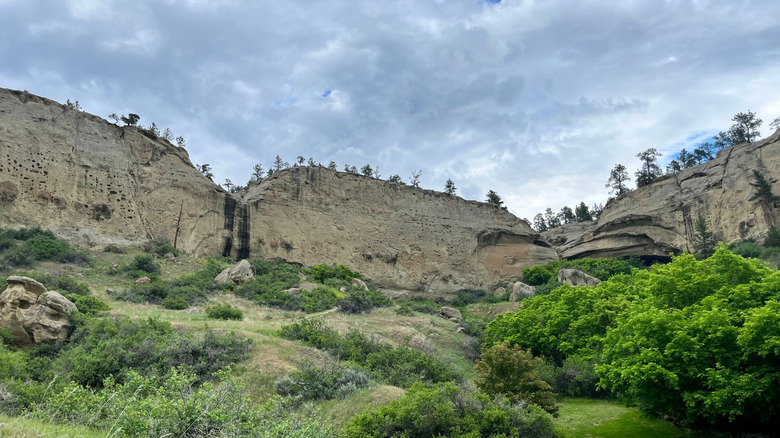
Fossils, petroglyphs, and other pieces of ancient history are abundant throughout the American West. One of the best places to find ancient cave paintings in the U.S. is Montana's Pictograph Cave State Park. The hunter-gatherers who frequented this area thousands of years ago left behind rock paintings — what archaeologists call pictographs — as well as weapons and tools. Researchers believe that the park's three main caves housed these hunters and their families for many years. This National Historic Landmark also offers beginner-friendly hiking trails and grasslands that are ideal for birdwatching. Binoculars are handy for viewing the rock art as well as the birds, so be sure to bring a pair on your trip.
If you're road tripping north to Montana on scenic, popular Route 89, head east on I-90 after passing the northern border of Custer Gallatin National Forest. Pictograph Cave State Park is about 8 miles from downtown Billings. Start your journey into the park at the visitor center, which contains educational exhibits about the indigenous peoples who created the pictographs as well as details about the region's geology. The ¾-mile Loop Trail connects the visitor center with the caves and a dedicated picnic site. You'll also find fire rings and grills where you can prepare a hot meal. No overnight camping is allowed, but you can roast marshmallows and enjoy the park's natural beauty. For some of the best scenery, take a stroll on the Prairie Overlook Path. It provides an expansive view of the park's landscape, which includes sandstone cliffs and prairie scrub-vegetated valleys.
Exploring the caverns at Pictograph Cave State Park
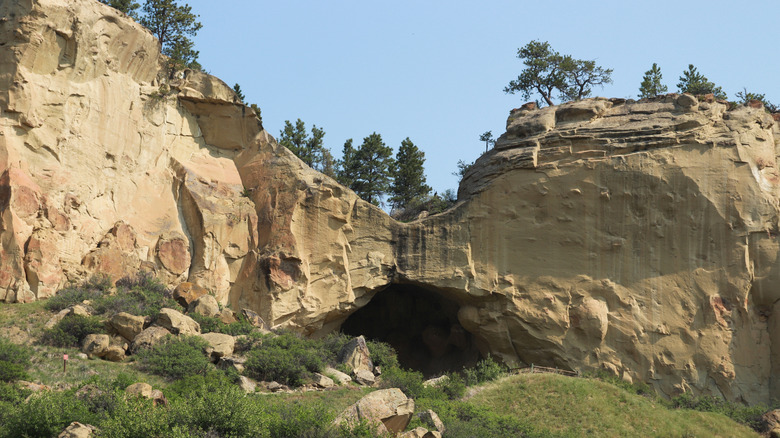
Pictograph Cave State Park's main attraction is a trio of caves named Pictograph, Middle, and Ghost. More than 30,000 ancient artifacts have been discovered here since the late 1930s (though many have been lost over time), when a team from the Works Progress Administration (WPA) started excavating the site. Pigments from the cave paintings give researchers clues about the age of the art and artifacts. The area's oldest pictograph, an image of a turtle, was created more than 2,000 years ago. Many of these artworks depict warriors and animals. Over 100 of them were originally identified in Pictograph, the largest cave, which is about 45 feet deep. Today, about 20 are still visible to the public.
The paved path leading to Pictograph gets more rustic as it heads toward the other two caves. Middle Cave isn't accessible to visitors, and doesn't appear to have been occupied prehistorically. Ghost Cave is filled with history but not pictographs: Beads, bones, and bows have all been unearthed in the cave, and it may have been a workshop where tools were sharpened.
Before you leave this fascinating park, take a close look at the Eagle sandstone formations, including the one that contains the caves. They're made from the sediment of ancient shallow oceans that once covered this part of North America. Over the years, the sandstone has produced fossils of clams and other creatures that inhabited these prehistoric seas. If you're lucky, you just might find one. Up for another national park alternative featuring sandstone cliff dwellings? Add Colorado's Chimney Rock National Monument to your destination list.