

Why You Should Reconsider Spreading Grass Seed By Hand
We may receive a commission on purchases made from links.
Whether you are starting a new lawn or it's time to reseed your existing lawn, once you've chosen the right grass seed one of the most critical steps to successfully planting it is to ensure it is properly spread. To get complete, efficient coverage and ensure you are able to plant as many square feet as the seed bag states, you need to spread seed at an even, consistent rate. This is the main reason you should reconsider spreading grass seed by hand.
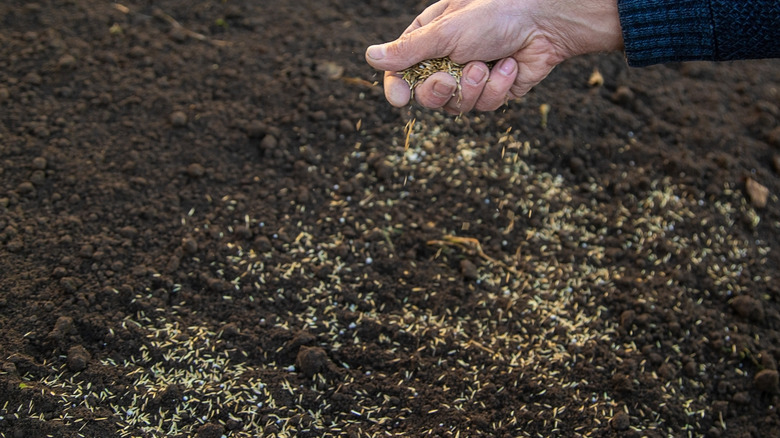
The temptation is obvious — spreading seed by hand is quick and simple. This is especially true when seeding small areas. However, whether you are literally tossing the seed by hand or using a cup, scoop, or shaker, it is incredibly difficult to spread seed evenly and consistently. As a result, you can end up with bare spots and clumpy areas, and your seed may not stretch as far as it should. With that in mind, forgoing the quick and simple can actually save you time and money in the long run, and result in a better looking, healthier lawn.
How to spread grass seed to ensure proper coverage

In order to ensure you grass seeding is successful, it is critical to properly prepare the area first, regardless of which spreading method you are using. To make sure your ground is prepared for grass seed, clear it of any loose objects and, if starting a new lawn, existing vegetation. If you are overseeding an existing lawn, be sure to remove thatch so seed can reach the soil. Then, loosen and level the soil. This will help ensure the seed stays where it should when spreading.
Once the soil is prepared, the best method for spreading it is a broadcast spreader. For large areas, a push model like the Scott's Edgeguard DLX broadcast spreader is preferred. Fill the seed bin with the required amount of seed and set the dial adjustment to the spread rate recommended on the seed level. At that point, it is simply a matter of walking up and down your lawn distributing the seed. For smaller areas, you can utilize hand-held broadcast spreaders like the Scott's Wizz spreader, which holds enough seed to cover 2,500 square feet.
After the seed is spread, cover it with a light layer of soil to ensure proper germination and prevent birds from eating it. Using a push broom to brush seeds into soil is one easy way to accomplish this task without disrupting the amount of seed spread over any given area.