

Signs That It May Be Time To Replace Your Lawn Mower
We may receive a commission on purchases made from links.
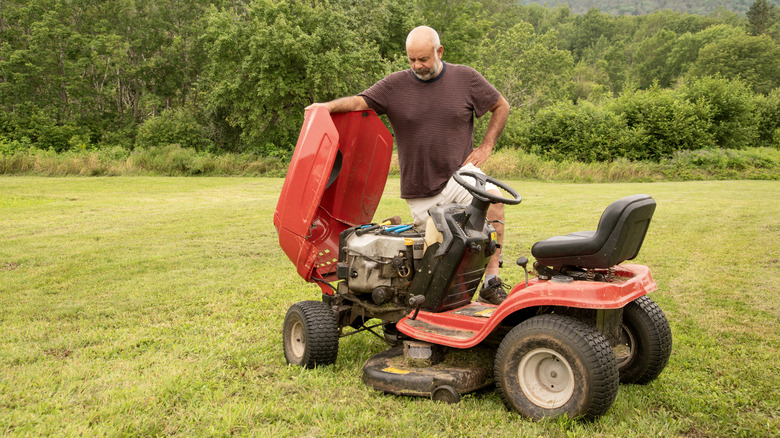
Following proper mowing protocol is a critical step for controlling weeds and creating a lush, green lawn. This seemingly simple task can be infinitely more difficult if your mower isn't functioning properly. But waiting until your mower to crater completely isn't necessarily the best time to buy a new mower. Instead, you should look for signs that it may be time to replace your lawn mower. Once you begin to witness those indicators, opt to shop for a new one rather than suffer through the inefficiencies and sub-par performance of a malfunctioning mower.
Given the wide array of mower types on the market today, the signs you may need a new one can range from dying batteries and electrical issues to powerhead problems and rusted mower decks. Once you begin the shopping, it's important to avoid common mistakes when buying a lawn mower. Missteps such as buying the wrong type or an underpowered mower may shorten the effective life of your new lawn machine, leaving you needing to purchase another much sooner than you otherwise should. Additionally, you should consider the issue that led you to need a new mower to begin with and attempt to find a replacement mower that is better fortified against that specific issue.
Your lawn mower has power problems

Not starting is an obvious problem there are issues with your mower. While this can sometimes be related to a minor issue, it can also indicate it's time for a new mower. Additionally, if you start noticing the performance of your mower begin to slide, it might be time for a new mower. Sometimes, a ragged cut is simply a sign it's time to sharpen your mower blades. However, this can also indicate your mower is beginning to lose power or has another mechanical malfunction.
For push mowers, poor performance is likely because the engine is failing on gas motors. While such performance issues can also have a less dire diagnosis, such as being time to clean the air filter or replace spark plugs, if you have been keeping up with routine maintenance, the mower engine may have just reached the end of its effective life. Electrical models may lose power due to listless batteries, which can be replaced but do not guarantee a return to peak performance if the motor brushes are worn. With that in mind, brushless mower motors, as on the Greenworks 40V 12-Inch Brushless Cordless Self-Propelled Mower, are usually worth the cost.
For riding and zero-turn mowers, the same engine maladies can indicate it's time for a replacement. However, additional potential problems related to the transmission, drive train, and mower deck drives can occur. Again, there is the possibility that a simple fix, such as replacing the mower deck drive belt, will restore performance. If the problem persists after completing cost-effective maintenance and repairs, it's time to shop for a replacement mower. You can determine whether pursuing repairs is worth it by comparing the estimated repair cost to the price of a new mower while factoring in the age of your existing machine.
Your mower's body is falling apart
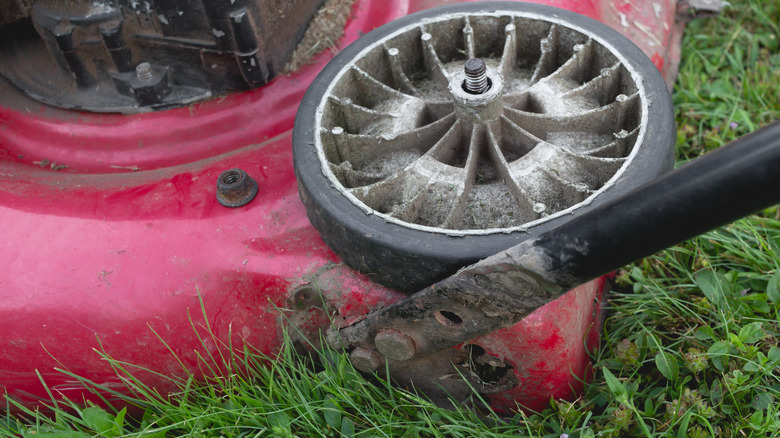
While the engine and power train are what most often come to mind when the topic of mower issues arises, sometimes it is the body that fails. Much like a person who is still mentally sharp but aged beyond their physical prime, it is not unusual for mower engines to outlast some of the metal parts — especially mower decks. These parts will begin to rust if the paint is scratched and bare metal is exposed, which is pretty much inevitable with mowers. The accumulation of wet grass under the mower deck expedites the rusting process, and is why it is important to keep grass off mower blades and decks throughout the life of the mower.
With gas-powered push mowers, it is not uncommon for the body to rust around the areas where the wheels and handle connect. Additionally, since these areas are often put under a good deal of stress when maneuvering the mower, the light metal on these mower bodies will crack and even break off. This frequently happens when mowing rough or hilly terrain. If you notice any wobbling around these parts, they may be getting ready to break. Should this turn out to be the reason you have to buy a new mower, be sure to look for models with thick gauge steel bodies and solid plating around the connection points.
On riding and zero-turn mowers, the mower decks, as well as the mower body, can be susceptible to rust. Oftentimes, rusted metal on mower bodies is purely a cosmetic issue. However, mower decks that become rusted and weak can be a real performance problem. While mower decks can be replaced, it is well worth weighing the cost of replacing the deck versus replacing the entire mower.