

Why You Should Reconsider Using A Lawnmower To Get Rid Of Goosegrass
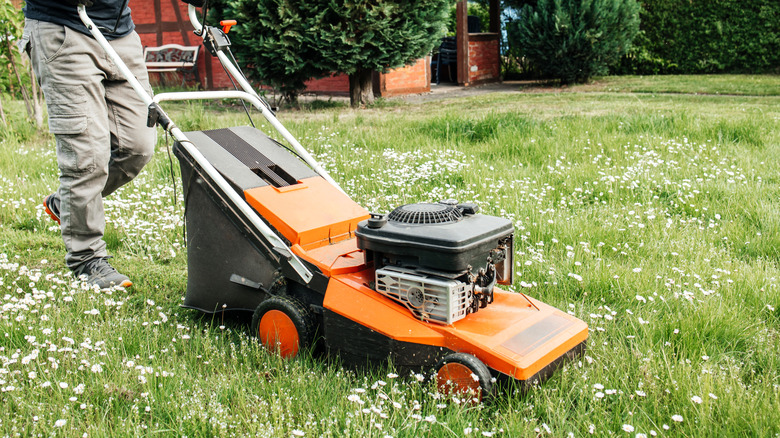
Having a beautifully manicured lawn is the dream when you sow grass seeds. However, it's very rarely that easy. Pests, weeds, and problematic soil can all cause your grass to be not quite as healthy as it should. Goosegrass (Eleusine indica) is just one example of a pesky weed easily able to take advantage of a struggling lawn and make itself right at home. While you might hope that mowing would get rid of the problem, in this case, it might actually make the situation worse if not done at the right time.
It's not always easy to figure out how to get rid of goosegrass. Mowing your lawn can benefit the grass and minimize an outbreak of this invasive species, but it has a chance of backfiring and actually harming more than helping. It can potentially spread the seeds around your lawn. Additionally, trimming both your wanted grass and goosegrass allows the more resilient plant to grow back first. In this case, the goosegrass will return faster and quickly take over the lawn before it has a chance to grow.
So while it's not a hard and fast rule that you should always avoid mowing your lawn if you have this invasive plant, you need to be careful about it when you bring out your machine. The main step is to make sure your lawn is coming in healthily. This means the goal is to first figure out why your grass is growing patchy and how to easily fix it. There are also other ways to remove goosegrass once it starts to take over your yard.
How to properly get rid of goosegrass
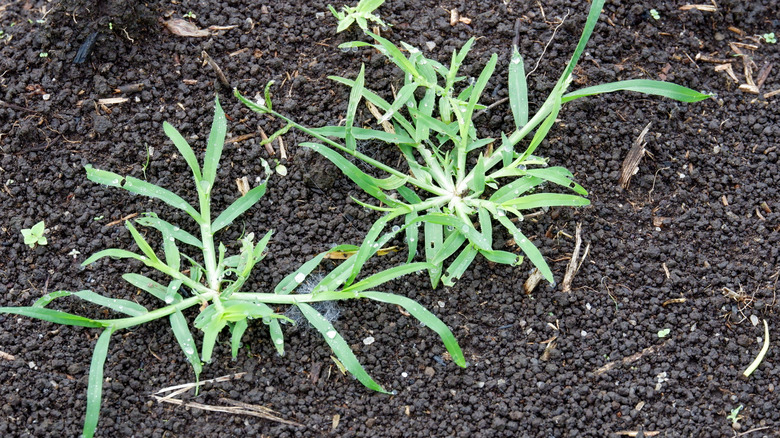
There are a few reasons why goosegrass causes such problems. The first is that it's an aggressive species. It's great at adapting to its environment and often finds a way to thrive better than most other grasses or plants you may be trying to grow in your yard. The seeds can go dormant for a long time until conditions are more favorable, and the plant is resistant to many forms of herbicide.
With how hardy this weed is, it's difficult to know how to properly remove it from your yard. There are a few ways, but the best option is to keep your lawn healthy. If you can minimize the amount of goosegrass in your yard, and focus on caring for your lawn and the plants you actually want there, then you can keep the problematic plants minimized. You do this by making sure your soil is robust, you water the right amount (which is why you should think twice before watering your lawn every day), and you catch any goosegrass that pops up as early as possible. If you get the grass while it's young, you can pull it out and get to the roots by hand.
Once you've got your goosegrass under control, don't think you're done yet. It might be gone for now, but it's quick to reemerge if given the chance. To keep it away for good, you'll have to keep up preventative measures such as keeping your lawn nice and thick, as well as a certain height. If you're not sure how to get your grass healthy, look at this article for a way to create a more lush and green lawn with a simple grass seed tip.