

How To Keep Your Birdbath Cleaner For Longer
We may receive a commission on purchases made from links.
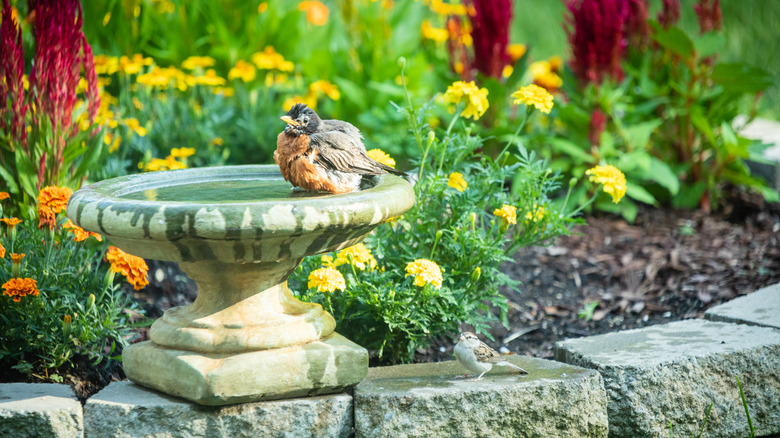
Birdbaths are, hands down, one of the simplest methods for attracting more songbirds to your yard. But you have to keep them clean. A dirty birdbath can easily become a haven for algae, harmful pathogens like avian flu, and mosquitoes — and birdbaths tend to foul up fast. Thankfully, treating the water with enzymes, keeping it aerated, and the right placement can help keep your birdbath cleaner for longer.
If the basin is already coated with algae growth, start with a thorough scrub. Use a wire brush and a solution of one part vinegar to nine parts water to scour off the algae. Avoid using household cleaners on your birdbath, as leftover residues could affect the natural oils on birds' plumage (which are key for flight, waterproofing, and hygiene). Rinse with plain water and allow the basin to dry before refilling it. After this, you can utilize an enzyme treatment to fight stains and sludge in your birdbath, and figure out the best placement for reducing algae growth and accumulated debris.
How to use enzymes to keep your birdbath clean
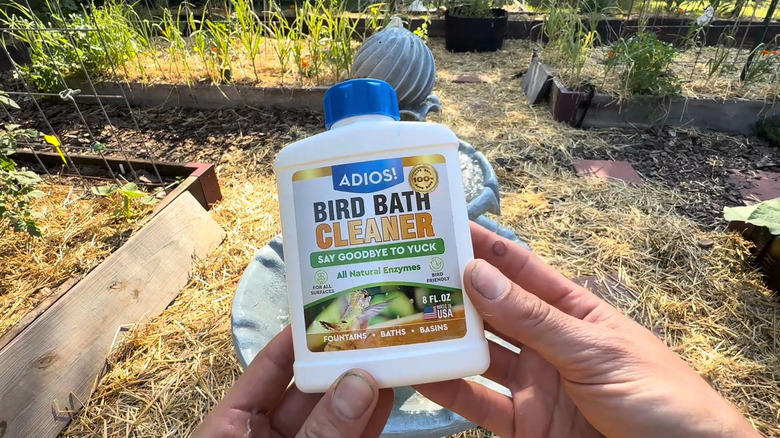
While vinegar is a great, natural ingredient that will help get your birdbath clean, it doesn't provide any lasting protection, as it is rinsed away before the bath is refilled. Natural birdbath protectors like the one made by Care Free Enzymes are designed to help the water stay cleaner between refills. As the brand name implies, this protector is made using a mixture of plant-based enzymes, food-grade minerals, and essential oils. The purpose of these products is to prevent stains, sludge, and mineral buildup from occurring in the basin. Care Free isn't the only enzyme treatment around: Other brands include Microbe-Lift and Adios. These enzyme products are labeled as safe for birds and other wildlife to consume, and reviews for all three are largely positive.
Using an enzyme protector could not be simpler. After cleaning out or refilling your birdbath, add a capful or teaspoon of the enzyme mixture per gallon of water. As for how often you should change out the enzyme-treated water in your birdbath, most brands recommend refreshing it on a weekly basis. This is easy to add to even the busiest schedule. However, you may need to do it more often depending on how frequently the birds are using the bath and how fast the water evaporates.
Location and aeration can also help keep your birdbath clean
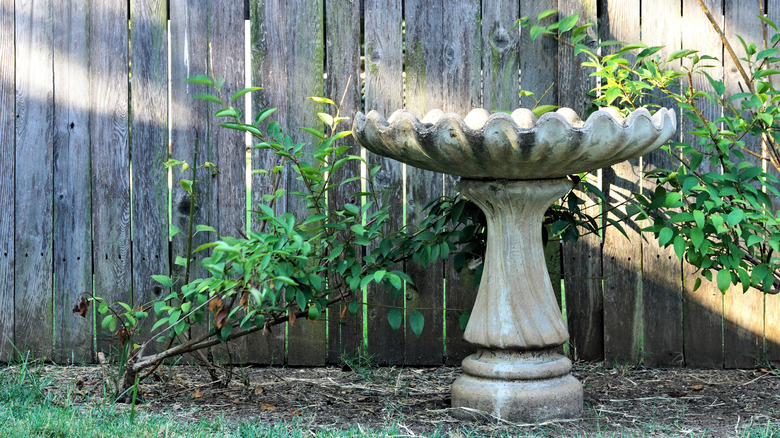
While enzymes can slow down sludge accumulation and stains, you can also help keep your birdbath cleaner for longer by placing it in the right location. While every property is different, there are some fundamental rules to follow when it comes to birdbath positioning. To start, you might want to limit intense direct sunlight exposure. Too much sunlight can actually make your birdbath dirtier.
Besides evaporating the water more quickly by warming it up, direct sunlight can also increase algae growth. Instead, keep your birdbath in a protected area that is partially shaded. The protection from the trees might encourage the birds, and will help keep the water temperature cooler so algae is less likely to grow. However, don't place the bath directly under tree canopies or any bird feeders where leaves and food debris may fall.
Finally, you can also keep your water cleaner by making your own DIY recirculating birdbath or buying a solar birdbath fountain (something like this 3.5-watt solar fountain from Amazon will run you less than $20). The moving water helps to prevent mosquitoes from laying their eggs in the water and aerates it. Aeration can help combat harmful microorganisms that develop in stagnant water and fight algae. Of course, even with all these measures in place, you should still clean your birdbaths regularly. But adding enzymes and aeration — and placing your bath in a sheltered spot — can allow it to stay cleaner in between.