

Not Water Bottles: This Is How Boomers Grew Up Drinking Water Outdoors

We may receive a commission on purchases made from links.
Today, much is made about your fluid intake while adventuring outdoors in order to avoid severely dehydrating your body. However, outdoor activities and the need to stay hydrated are not new. So-called baby boomers — born roughly between 1946 and 1964 — grew up playing an array of iconic lawn games and enjoying a multitude of outdoor activities, such as hiking, camping, and fishing. In fact, boomers actually grew up spending far more time outside than do kids today. So, they definitely had a need to stay hydrated. But what they didn't do was carry plastic water bottles or trendy steel tumblers everywhere. Instead, boomers got creative when it came to drinking water outdoors.
Throughout the 1950s and early '60s the only real hydration options were water or soda. Gatorade, the first sports drink, was invented in 1965 but wasn't sold in stores until 1967. But commercial water bottles, like Evian or Poland Spring, didn't become commonplace until the boomer generation was well into adulthood. So the ways kids from the 1950s through the early '80s grew up drinking water outdoors were basic and way less chic, but much more environmentally sustainable: Essentially, they either drank water straight from the source or used sturdy metal vessels from army surplus stores and construction sites.
Like many of the outdoor activities boomers loved, these methods are still available, but are mostly a thing of the past for modern kids and adults. The casual convenience of disposable plastic water bottles and the stylish appearance of Stanley cups and other refillable containers have largely displaced the simpler methods long used by boomers and gen X.
Hose water kept boomers hydrated

Hands down, the most common way boomers kept hydrated when playing outside was drinking straight from the garden hose. This applied to kids living in cities, suburbs, and rural areas. About the only difference was whether the water coming out of the hose was from the municipal supply or a well. In both cases, many boomers recall the water having a unique flavor from the pipes, which were primarily metal at the time, and from the rubber or synthetic rubber hose itself.
While this method for securing water was about as basic as it gets, there was some strategy involved. Although everyone wanted to be first in line to get a drink, that first burst of water out of the hose was typically quite hot, as it consisted of liquid that had been sitting in the hose on the ground, baking in the sun. So, the longer the water ran, the cooler it got. Once it was tolerably cool, all one needed to do was point the hose at a slight angle to give the stream a bit of an arc and open their mouth.
To many, this practice may seem unsanitary. However, the water running from the outdoor spigots on homes is the same as what comes from the kitchen sink and is potable. Additionally, since no one's mouth actually touched the hose end (or shouldn't), the worry of contact contamination wasn't an issue. That said, some legitimate concerns have been raised in recent years over bacterial growth inside hoses, as well as chemicals leaching from the non-food grade plastic from which hoses are made.
Metal canteens were the water bottles of the mid-20th century
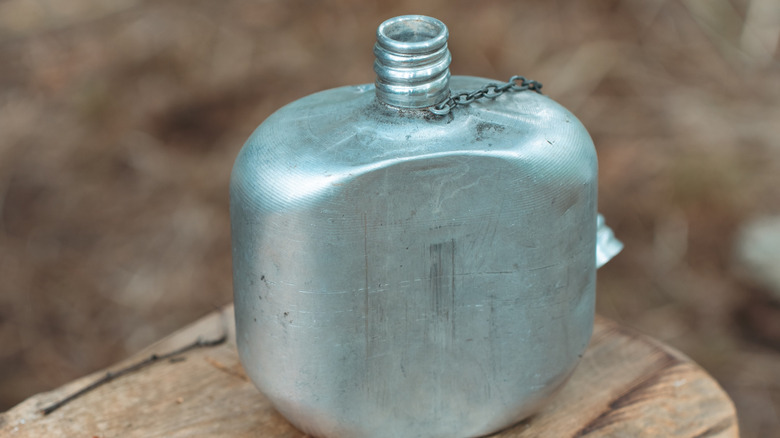
Today it might be easy to forget that the event which kicked off the baby boom in the United States — which the Boomer Generation was named for — was the prosperity the country enjoyed following the end of World War II. However, during those first few decades in which this generation grew up, the war was still fresh on everyone's minds. Additionally, the country was flush with surplus army supplies, many of which became available to the public. In fact, army surplus made a bulk of the camping items boomers grew up with.
Among the more common Army surplus goods during those years were canteens and mess kits. As a result, Army surplus canteens became the typical way most hikers and campers carried water afield. WWII-era Army canteens were usually made from aluminum and had a nesting cup attached. In some instances, they had a canvas cover which served as a bit of insulation and make it possible to attach the canteen to a belt or backpack. The canteens used by scouting programs followed a similar design for decades. So even when a kid didn't have to deal with the pros and cons of army surplus, if they were carrying a portable drinking vessel, it was almost certainly an aluminum container filled with lukewarm water.
While canteens are still very much in use today, they tend to be made from modern materials and are often well insulated. Despite these advancements, most hikers prefer water bottles or hydration packs for their portable water needs.
Thermoses were stylish and kept water cool
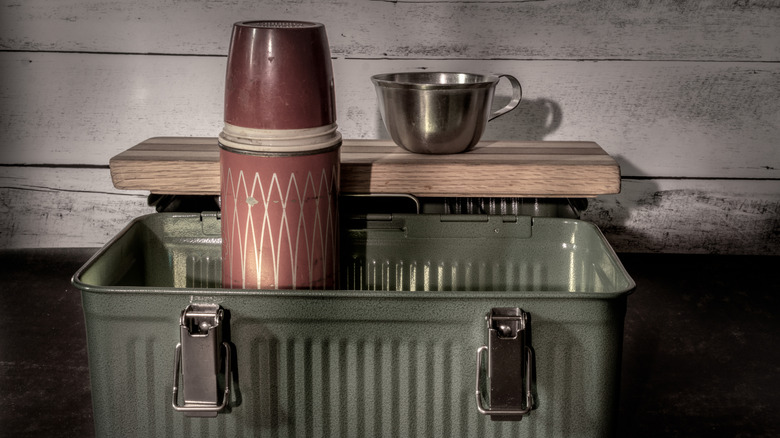
A thermos was another way to take water, coffee, and other fluids along with you. Most often during the 1950s and '60s, thermoses were found in work and school lunch boxes, filled with either drinks or hot soup. However, they also played a role in keeping boomers hydrated when they spent time outside. Because they were insulated, like many of today's tumbler-style mugs, thermoses could keep water cool in the summer and keep coffee or cocoa hot in the winter. This was a big advantage over a canteen and found favor among those who spent time outdoors in all seasons. Almost without fail, thermoses featured covers that doubled as cups that fit tightly over a screw-top lid. This allowed people to pour a drink, then seal the thermos to keep its contents cool or warm.
The thermoses of mid-century school lunchboxes were typically vacuum-sealed models, utilizing glass liners, which were fragile. As a result, brands like Thermos and Stanley developed versions with sturdy metal casings, often painted with colorful patterns, to withstand the rugged outdoor conditions faced by fishermen, hunters, campers, and construction workers. The Stanley 1913 model, in particular, became a go-to for those spending time outdoors, as it was marketed as indestructible and featured a hammered metal, green exterior that evoked the outdoors. In other instances, companies used lithographs depicting decorative outdoor scenes to better market their products.
Work site water jugs kept kids hydrated
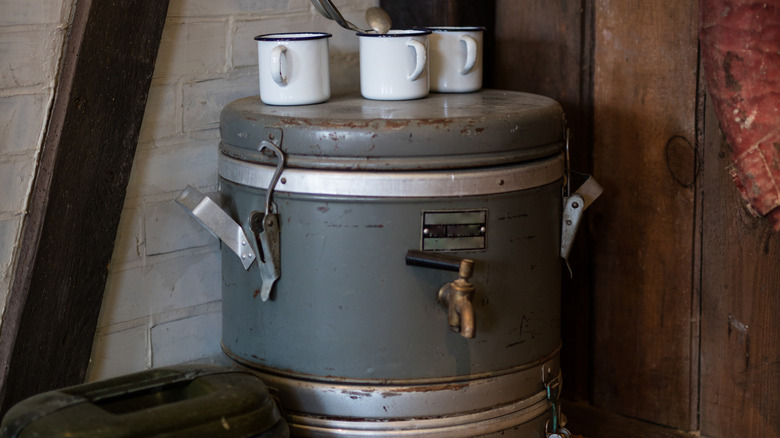
Water jugs capable of holding 3 to 30 gallons of water, dispensed by a spigot, are commonly seen on work sites. They also became another way for boomers to stay hydrated when outdoors during their childhood. Whether at a team practice or group campsite, large water jugs were often the best way to provide water to a group of kids during the '50s and '60s.
There were a wide variety of water jugs used for this purpose. Igloo's 5-gallon galvanized metal model was among the more popular. Smaller models, such as the Coleman water jug, were the best choice when portability was at a premium. As a result, these became popular among fishermen and campers. And the iconic orange-and-white Gatorade coolers began showing up on the sidelines at football games by the late 1960s.
In some instances, such as group camping trips, water from these coolers were dispensed into metal mugs or cups. Other times, most notably at team games and practices, a sleeve of disposable, conical paper cups would be attached to the cooler. However, it is worth noting that throughout the 1950s and well into the '60s, most teams — from high school through the pros — used a communal water bucket with a metal ladle for keeping players hydrated.
Cupped hands worked when cups weren't handy
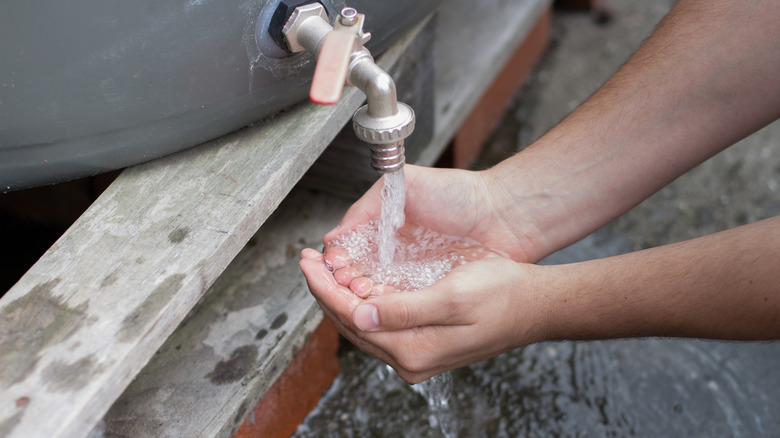
During their youth, boomers were, at the very least, resourceful. So, whether they were playing outside or in the midst of working a summer job mowing lawns, when they needed a drink, they found the nearest source of water. That is why the water hose was the go-to hydration option. But what if there was no hose? Well, typically that situation called for drinking straight from the spigot.
If a kid had a cup, canteen, or thermos, they could simply fill it from the spigot. However, in many instances, none of those items were handy. In those situations, it was a simple matter of cupping hands under the water cascading from the spigot, sometimes in a rapid-fire repetition, moving those hands from water to mouth for a quick sip and back. Incidentally, this technique worked equally as well with a pitcher or water cooler (or even the nearest pond, though that's not recommended, for health reasons). Depending on the cooler's design, thirsty boomers might need to execute a one-hand cup move while holding the cooler spigot down with the other hand.