

5 Camping Rules Campers Break In The First 10 Minutes
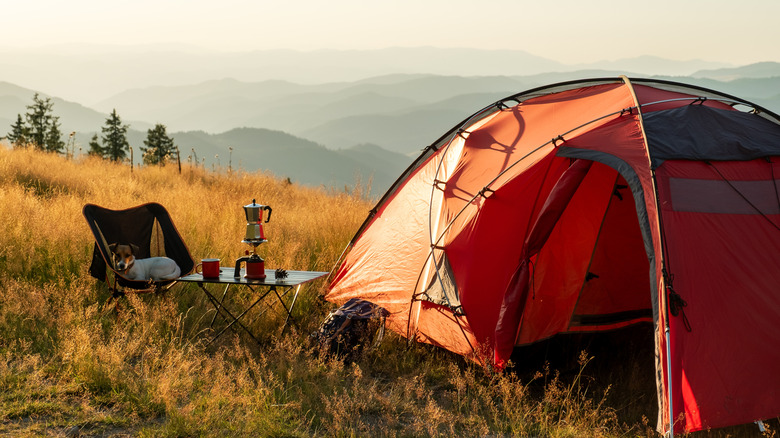
After spending all day driving to the campground, there's a natural temptation to treat your arrival as the moment when the adventure begins and civilization's rigorous demands stop existing. But experienced campers know that those first few minutes settling into a campground or national park can be crucial for upholding some of the unwritten rules of camping etiquette. These are the moments where you're choosing where to park your RV or throw down your tent, and how to handle your dining, firepit, and pet setups. Though it all seems straightforward enough, it's an all-too important time where small mistakes can snowball into big problems.
Some campground etiquette is obvious. Nobody wants to hear music from three campsites away, and nobody enjoys discovering that the people next door have decided to annex a portion of your site for their own sprawling setup. Still, other rules are less intuitive, particularly for newcomers who may not realize how quickly an innocent decision can affect other campers and local wildlife. Arriving too late at night, unleashing your pets, and leaving food unsecured might all be things you wouldn't give a second thought to at home, but they're major red flags for seasoned campers. When in doubt, defer to one of your more experienced backpacker friends, or ask a park ranger for advice at check-in.
The most important thing to remember is that campgrounds — whether primitive or packed with modern conveniences and activities — aren't your own private backyard. You're sharing these spaces with people who may have driven hundreds of miles for a bit of peace, quiet, and R&R. Part of camping responsibly and sustainably means respecting boundaries, keeping pets under control, and keeping setup noise to a reasonable volume, so be sure and avoid the common mistakes below.
Arriving too late
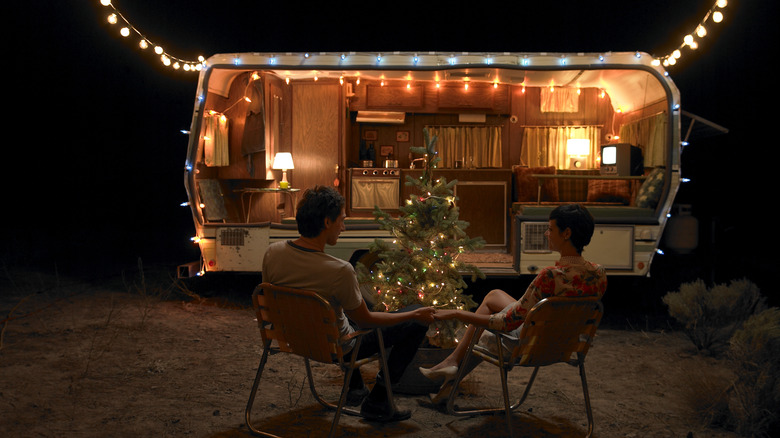
Sometimes, when planning a camping excursion, you're forced to spend all day on the road. Whether you're stuck in unexpected traffic or just got a late start out the door, arriving at your campsite after sunset is considered a major faux pas. Under the best of circumstances, this results in unpacking your gear by flashlight or headlamp, probably making a fair amount of noise, and disturbing your slumbering neighbors. The worst-case scenario could see you injuring yourself by tripping over a tree root or fire pit, or accidentally driving into a neighboring site. Even if you've found your spot, you may be setting up in the wrong place, encroaching on your neighbor's site. Depending on the campground, you may even find yourself locked out for the night.
Arriving too late can be especially uncool for RV campers, who need clear sightlines to park. Leveling your vehicle, connecting electricity, and deploying your awning are difficult enough without the tedium of low visibility. Plus, nobody wants to be on the receiving end of your headlights, or subjected to the sound of vehicle doors slamming shut all night.
Whenever possible, aim to arrive at your campsite by midafternoon, giving yourself several hours of daylight to get organized. Check-in times at most campgrounds usually begin at 1-3 p.m., and that's an ideal time for your arrival. This is especially true for campers who need to pitch tents, arrange camp kitchens, or hook up water and sewage lines to an RV. An early arrival also leaves a buffer for the unexpected. If you find there's a problem or discover issues with your gear, you can utilize the extra time to troubleshoot, reach out to someone for assistance, or run to the store for last minute add-ons.
Setting up too loudly
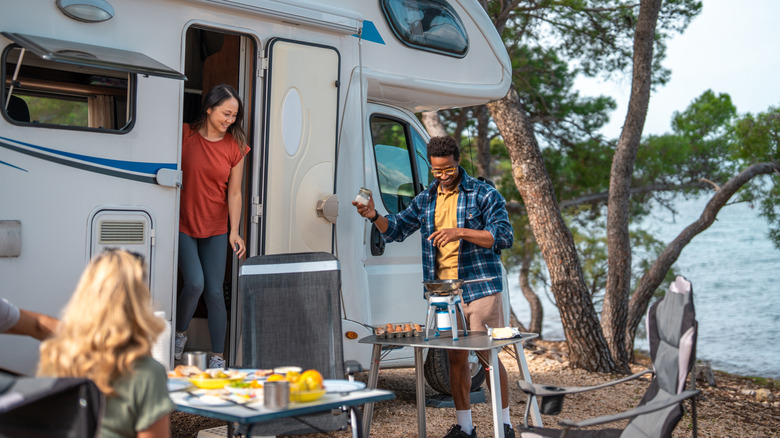
Let's say you manage to arrive at a reasonable hour, when a bit of clattering and noise pollution is to be expected. You'll still want to display common courtesy, and avoid blasting tunes, revving the engine, or excessively cranking your generator. It's easy to write off the sounds of settling in as necessary evils, but it's still important to respect the tranquility of other campers. For the most part, people will be very accepting of set-up noise, so long as it's happening in the daylight, but everyone has a limit on their patience. If you're haphazardly throwing tent poles on the ground, shouting instructions to your traveling partners, or letting the kids cut loose while you work, it won't be long before you rub somebody the wrong way.
The key is to remember that a campground isn't a collection of isolated backyards. Campsites are usually packed together, and sound carries remarkably well in the great outdoors. One of the best ways to minimize doing annoying things that other campers hate is to organize your gear mindfully before you arrive. Packing your trunk or RV with set-up in mind can help you establish your plot systematically, without rifling through a pile of equipment in the heat of the moment. You also don't need to access everything in the first 10 minutes: Kitchen supplies and other noisy accoutrement can remain boxed up until they're needed.
The same courtesy applies when you're gearing up to leave during your final morning. Packing a campsite can be just as chaotic as establishing one, so try to avoid slamming doors, yelling instructions, or starting engines unnecessarily early unless the circumstances absolutely necessitate it.
Crossing through another campsite
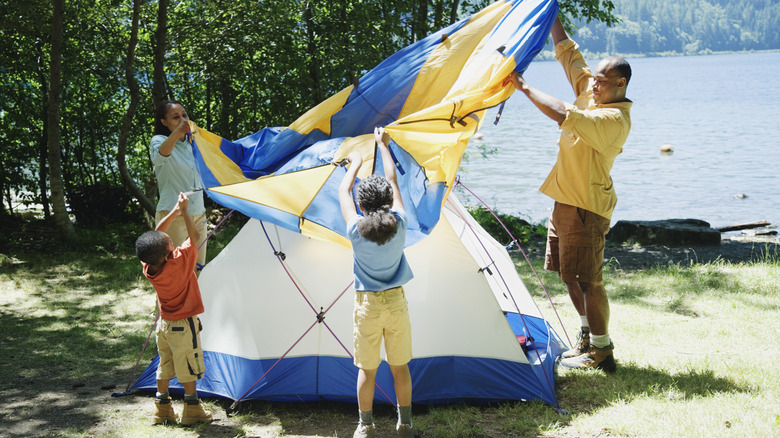
When it comes to unwritten campground etiquette, crossing through someone else's site is a major nonstarter. Though it can be tempting to take the path of least resistance as you venture out to playgrounds, bathroom facilities, and local fishing holes, using a neighboring campsite as a walkway is considered extremely rude. The reasoning behind this is simple: Once somebody occupies a campsite, it functions as their temporary private space. You wouldn't cut through somebody's hotel room on your way to the pool, or trample someone's flower garden to save a few seconds on your morning commute, so try to extend that same courtesy here.
Sometimes people make this mistake because a campground is generally a fairly relaxed environment, where people are open to a bit of social interaction. Even still, people may have children playing, dogs resting, meals cooking, or personal belongings spread across their site. Walking through it without permission can come off as surprisingly intrusive, even if you're only there for a few seconds.
Like most of the rules on this list, there are limited exceptions. If your child tosses a football into a neighboring site by accident, or you're interested in offering some extra s'mores to your neighbors, you don't need to behave as though an invisible wall is preventing you from crossing over. Still, it's important to use the same basic respect you'd offer to your neighbor if you need to run into their back yard at home. One easy trick many Scouts learned in their youth: Simply ask permission to enter. Most people will say sure, and you may even make new friends.
Leaving food unsecured

While the previous entries on this list can be viewed as guidelines, how you deal with your food stores is a genuine safety concern for all parties involved. When you first get to your campsite, it may be tempting to unpack a variety of snacks and leave it out on the picnic table. Don't: Anything with a noticeable scent can attract curious animals, including wasps, ants, squirrels, raccoons, and larger predators. Animals don't even need to physically steal your dinner to become a problem, as they can wreak havoc rooting around for the scent they're following. That's why many campgrounds have specific rules requiring campers to store food, trash, dog treats, and other scented items securely whenever they're not in active use.
Of course, secure can mean different things in different areas. When camping in bear country, a soft cooler sitting inside a tent isn't considered adequate protection, for instance. In fact, according to the National Park Service, food storage, prep, and cooking should happen at least 200 feet away from tents where bears are prevalent. Some campgrounds may require food to be kept inside a vehicle, a designated bear-resistant locker, or a communal animal-resistant container of some sort. In other areas, keeping food inside a hard cooler or small powered fridge might be all the security you need. In any case, edible items shouldn't be left out in the open for long — bears and other predators can smell things like trail mix and trash from miles away. Be especially vigilant if kids or dogs are part of your entourage, as both are notorious for trailing crumbs and setting half-finished meals in odd spots around the campground.
Letting pets off the leash
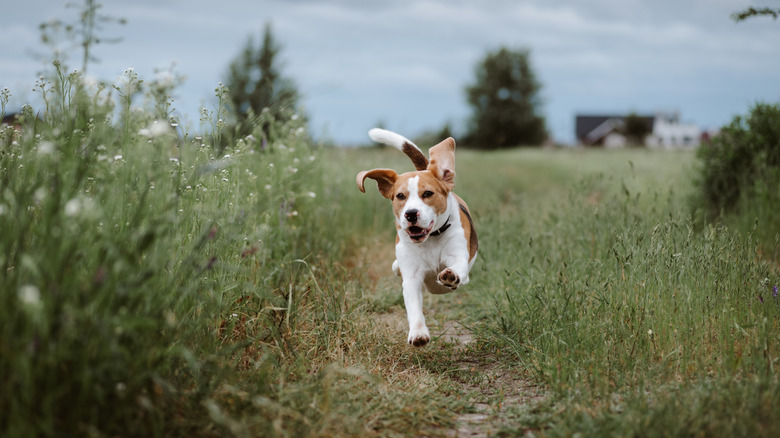
One of the biggest mistakes campers make as soon as they reach their campsite is letting dogs and other pets off the leash, allowing them to run around. After spending hours cramped in the car, your dog is probably itching to stretch its legs, so it can be tempting to acquiesce. Still, doing so can lead to a host of problems, especially while unpacking, leaving your attention split.
For starters, most campgrounds require dogs to remain on a leash outside designated off-leash areas, and those rules exist for a reason. Your dog may be friendly, but other campers could have allergies, sensitivities, or simply be unreceptive to a random, unfamiliar animal nosing around while you're busy pitching your tent. Much like the rule about leaving food out, there are also wildlife considerations. Campgrounds offer domestic animals a rare opportunity to be surprisingly close to their wild cousins, and a curious dog can chase rabbits, birds, or other animals before you have a chance to intervene. Depending on where you're camping, running into a rattlesnake or a porcupine can put your pet in danger. Keeping your dog leashed gives you much more control when something unexpected appears.
Leashing your dog is especially important during the first few minutes because you haven't properly assessed the area yet. You may not know where the nearest road is, whether another camper has a pet nearby, or if there are gaps beneath an RV or a fence through which a small animal could escape. There may be specific trails or parts of an RV park where pets aren't allowed in at all. Check if your campground has a designated dog park or off-leash area — that's the appropriate place to let your pet burn off some energy upon arrival.