

Deet Vs. Picaridin: What's The Difference?

Mosquitoes can be more than just a nuisance. That's because these little blood suckers not only inflict an itchy bite, but several types of dangerous mosquitoes spread life-threatening diseases. You don't even need to be deep in a remote rain forest: The invasive yellow fever mosquito has been spotted in the United States. Meanwhile, other mosquito-borne illnesses — such as dengue fever, West Nile, and Zika virus — have been reported in numerous states in recent years, according to the CDC (though it does note that of the 200 or so species of mosquitos in the U.S., only 12 are thought to transmit serious diseases). As a result, whether you are in your backyard or hiking a remote trail, it's important to protect yourself. With that in mind, how do you know which of the two most common repellents to choose — DEET or picaridin? Turns out, there are pros and cons to both.
DEET is the strong-smelling insect repellent most people have come to associate with mosquito spray. That's because it is a common synthetic ingredient in commercially produced insect repellents and has been since the 1960s. Although there have long been rumors of DEET's safety, comprehensive studies by the CDC, EPA, and others have found that it is not considered carcinogenic, and that proper use — avoid swallowing it or spraying it in your eyes — does not present significant health concerns. In fact, DEET has arguably the most researched safety record of any insect repellent.
Although DEET is effective and considered safe, it is not perfect. People with sensitive skin sometimes report being irritated by DEET. It has an oily feel which some people don't like, and strong concentrations of DEET can melt plastic. Given the plastic components found in outdoor gear, accessories, and synthetic clothing, this could be an important consideration.
Picaridin is the new kid on the mosquito block
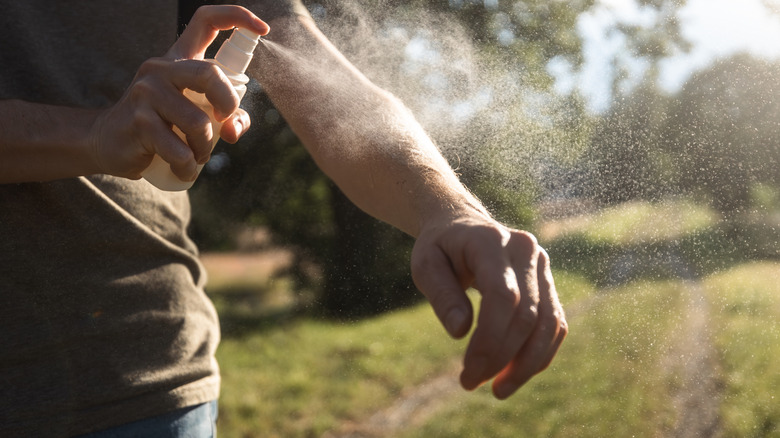
Like DEET, picaridin isn't a natural substance. However, this synthetic compound was created to mimic a chemical found in nature — piperine, an alkaloid in black pepper plants. Unlike DEET, which was first developed and used by the military in World War II, picaridin is relatively new: It was developed in the 1980s and wasn't fully approved for use in the U.S. until 2005.
By the time picaridin landed in stores, Americans had been using DEET for four decades. However, many were looking for a less irritating and possibly safer alternative. Users often claim it is less harsh, and it is a helpful option for those with allergies and skin sensitivities. It's also odor-free, non-greasy, and doesn't damage plastic products the way DEET can.
However, picaridin isn't necessarily the best choice for all people or situations. While it seems to be less irritating to many people, some do still have reactions. Additionally, although picaridin appears to be almost as effective as DEET in most situations and perhaps even slightly more effective, it doesn't have the proven track record in severe settings. So, picaridin can be a good option in mildly or moderately mosquito-infested areas, but DEET is still considered the go-to in places with heavy infestations or where disease-carrying species are common.