

Say Goodbye To Clogged Mower Decks: Use An Easy DIY Solution To Keep Grass Off
We may receive a commission on purchases made from links.
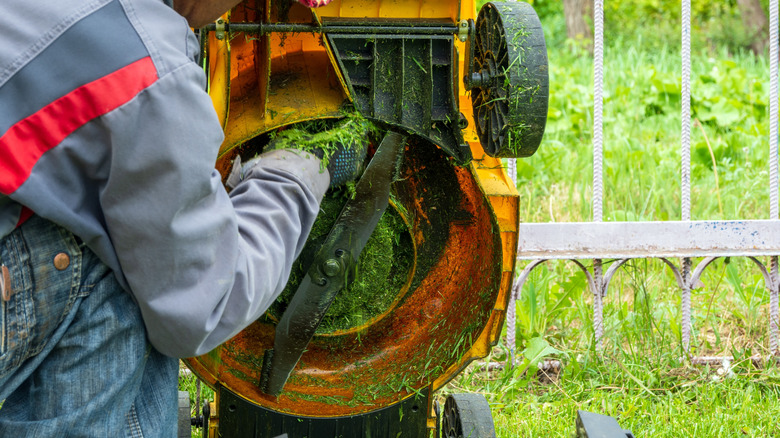
Mowing is an important part of lawn maintenance, but one complication that can become a pain in the backside is continuous clogging of the mower deck with grass clippings. Not only does stopping to clear clumps of stuck grass make the task less efficient, clogging can slow the blades, resulting in a ragged-looking cut. Luckily, there is an easy DIY solution that helps prevent clippings from coating and clumping on the underside of your mower — cooking spray. Spraying it in the mower deck and blades may make your job a whole lot easier.
A cooking spray, like Pam original non-stick canola oil spray, is largely designed for the kitchen, but it also has several outdoor applications. It is commonly used to keep meat from sticking to grills, for example. In colder areas, savvy folks coat their snow shovels with cooking spray to make snow removal easier. Those same non-stick properties can help prevent layers of grass clippings from sticking to your mower deck. The trick not only alleviates the need to continuously stop and clear your deck, it can also help extend the life of your mower. That is because in addition to overworking your engine, an accumulation of damp grass can also lead to rusting.
The beauty of this trick is that it's easy to do on your own. It's pretty much the same process as using WD-40 to keep grass off your lawn mower blade. One advantage is the price: Cooking spray runs a few dollars cheaper per bottle than WD-40, and significantly less than a dedicated product like Sten's Mo-Deck spray. It's worth noting, however, that spray oils are actually a combination of oil and water, while WD-40 actually displaces water, which could help prevent rust in the long run.
Thoroughly coat the underside of a clean mower to keep it grass free
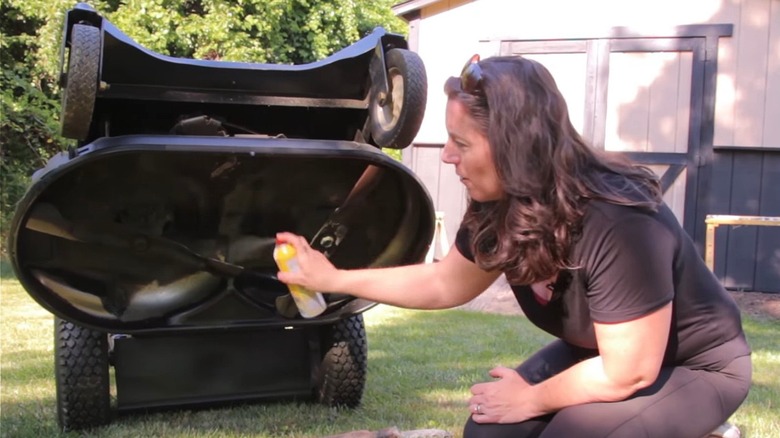
The key to making this trick work is to start with a clean deck. Before applying a nonstick spray, clear away any residual grass clippings from previous mowing sessions and clean the underside. First, remove the spark plug for safety, preventing the mower from accidentally starting. Then tilt a push or walk-behind mower on its side, or have someone tilt it back on the rear wheels. With riding mowers and zero-turns, lift the deck as high as possible before removing the spark plug. Then, clean the entire underside, blade, and every crevice. You can use a pressure washer on low, a hose, or just a stiff brush and plastic scraper. If the mower's wet, allow it to dry in the sun for a couple of hours.
Once everything is clean and dry, thoroughly spray the underside of your lawn mower deck and blade with a heavy coating of cooking spray. You may want to cover the blade's drive belt with paper towels to protect it from slipping during use. Use plain canola or vegetable oil for best results. Hold the can about six inches from the mower, paying special attention to areas where layers or coatings of grass build up.
Once the spray is applied, return your mower to its normal position, reinstall the spark plug, and you're good to go. This method won't stop all the fine cuttings from coating your deck, but what does stick will be easier to remove. If there is a downside, it's that the process should be repeated fairly regularly. Additionally, although it is non-stick, the spray itself can attract dirt, resulting in a gunky, gummy buildup. So, a regular cleaning schedule is still important.