

What Are Red Flashlights And Headlamps Used For?
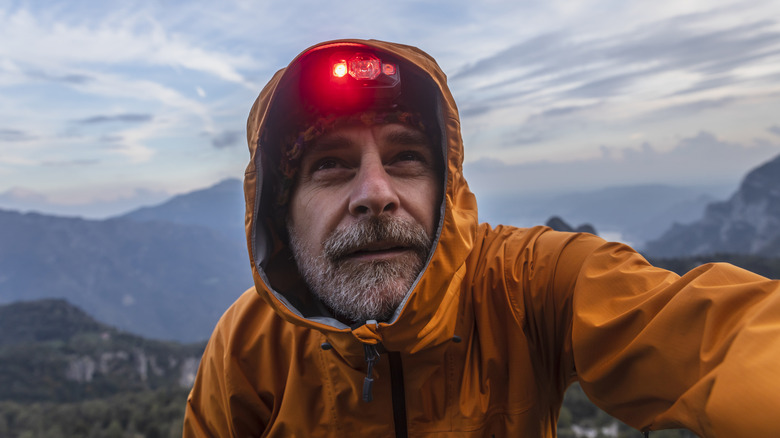
Anyone who spends time outdoors should have a flashlight or headlamp — or both — with them at all times. They're among the items considered essential emergency equipment for hikers and campers, making it easier and safer to move around at night. However, not all flashlights and headlamps project a bright white beam of light: There are models that emit red light or have a red light setting. If you've ever wondered why anyone would use a red flashlight, there are actually a number of reasons, ranging from preserving night vision to reducing light pollution, which is essential for proper campground etiquette. Bright white flashlights can be disruptive — even blinding — on the trail or in a campground, and red light flashlights help tackle the issue.
What makes red light distinctive is that it produces a single, long wavelength where white light is a combination of all the visible wavelengths. This creates light that's less bright. This might seem like a disadvantage, but it actually isn't. Since it is less intense, red light does not shock the rhodopsin in light receptor cells in the human eye (the protein that lets us see in very low light) to the same degree as white light. Because of this feature, your pupils remain dilated rather than suddenly constricting, allowing for better sustained vision in lower light conditions. Essentially, this means that red light, while dimmer, provides ample illumination to see what you're doing at night. Stargazers trying to get the best view of the night sky, along with hunters and nighttime beachcombers all benefit from these milder lighting options.
Red light has the advantage when night vision is a must
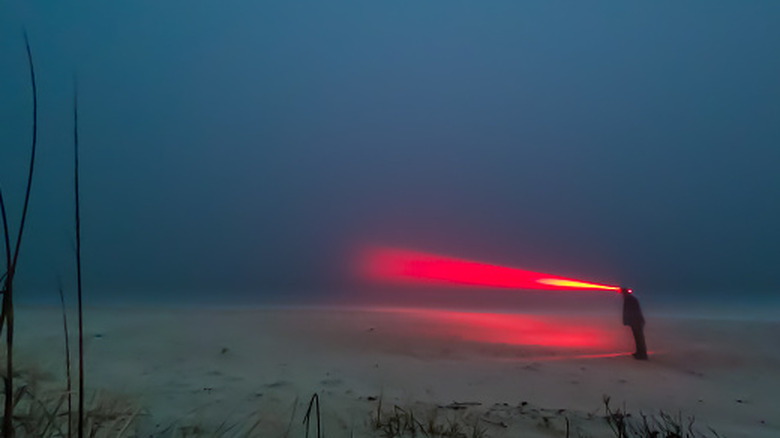
There are numerous situations where red flashlights or headlamps and their pupil-protecting nature offer an advantage over blinding white beams of light that require frequent recovery time. For example, navigating a tricky trail or tracking a deer, where momentary light blindness can make or break your next step. Protecting your night vision also helps when reading or referencing maps, sky charts, or a compass, though it's important to note that any red features on a map will be rendered invisible under red light.
If you are with a group or in a popular area, red light also protects their night vision, allowing others to navigate their way much more safely as well. So it's a courtesy you can extend when passing fellow campers or hikers. These headlamps are also preferred when on a wildlife watching expedition, because red light is harder for animals to detect and is less likely to spook them.
Because it lacks the brightness of white light, red light is also beneficial for helping avoid the critters you don't want to see, such as swarms of pesky insects. Bugs are less attracted to red light, meaning you will need less insect repellent and be able to enjoy a relatively bug-free outdoor experience. Don't have a red lens flashlight? Cover a regular flashlight with red cellophane, held in place with a rubber band, for a similar effect.