

The Common Backyard Tree You Might Not Realize Is Legally Protected
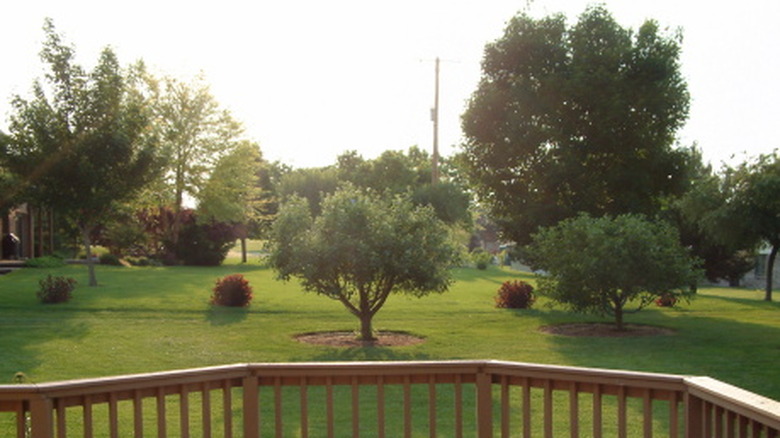
When it comes to backyard trees, oaks are among the more common. There are several reasons for their popularity. For one, oaks are great trees for providing privacy and shade. Secondly, oak trees are extremely long-lived. In fact, they don't even hit maturity until 75 years of age, often living twice that or more. Additionally, given there are 90 species of oak in the United States, there is a wide variety from which to choose. What you may not realize is that once you have an oak tree in your yard, you may not be able to remove it — at least not easily. That's because in many areas, oak trees are legally protected. In some cases, once an oak is planted and reaches a certain size (measured by diameter at breast height or DBH), you're going to need a good reason — and one or more permits — to have it removed.
Tree protection laws vary tremendously from state to state and city to city. In some cases, the focus is on a few species or certain size trees. That's the case in Austin, Texas, where live, Spanish, and Texas oaks with a DBH greater than 24 inches are protected. In other cases a law covers basically all trees that aren't diseased or creating a safety risk. Currently, 18 states in the U.S. have state-wide tree protection laws. Half of those list some sort of oak — such as white oak, red oak, or live oak — among the protected species. Additionally, a number of states which don't have specific tree legislation, like Washington, are home to counties and cities with municipal laws and ordinances in place to protect their trees. Where covered, the specific types of protected oak varies, as different species have various, sometimes overlapping, ranges throughout the country.
Legal protections of oak trees cover environmental and aesthetic concerns
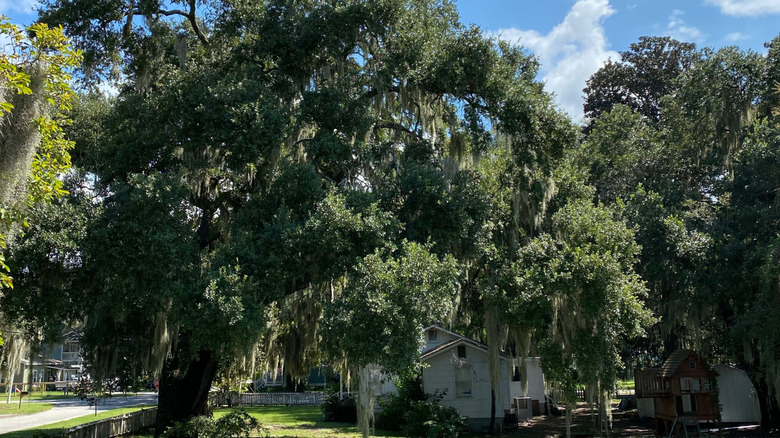
There are a number of reasons that federal, state, or municipal governments may choose to enact legal protections for trees. The U.S. Fish and Wildlife service has specific regulations for trees that provide habitat for various birds and other animals. They may also be protected when they are of historical or cultural significance to an area. Because oak trees are native and so long-lived, they fall under heritage tree protection laws in places like Austin, Texas and much of northern California. Other times it is because of the overall environmental impact trees offer. This is common at both the local and state level. Trees may also be legally protected simply to maintain the aesthetics of a city or neighborhood, as is the case with many municipal ordinances and HOA bylaws.
Just as the reasons for protection vary, so too does the level of protection. Depending on the particular law, it may be necessary to obtain a permit before removing, or even pruning, an oak tree. For example, oak trees cannot be trimmed in Helotes, Texas, between February and May unless done by a licensed contractor with a permit. Where they're so protected, it's yet another reason to prune or trim your trees in the fall. In some instances, it is illegal to remove any protected tree without a review or permit, even if your tree is dead or dying.
Punishment for violating these laws can range from fines to work stoppage on construction projects. In some instances, you may also be ordered to mitigate the damage by replacing any trees which were removed or harmed.