

Say Goodbye To Carpenter Bees By Planting A Fragrant Herb They Can't Stand
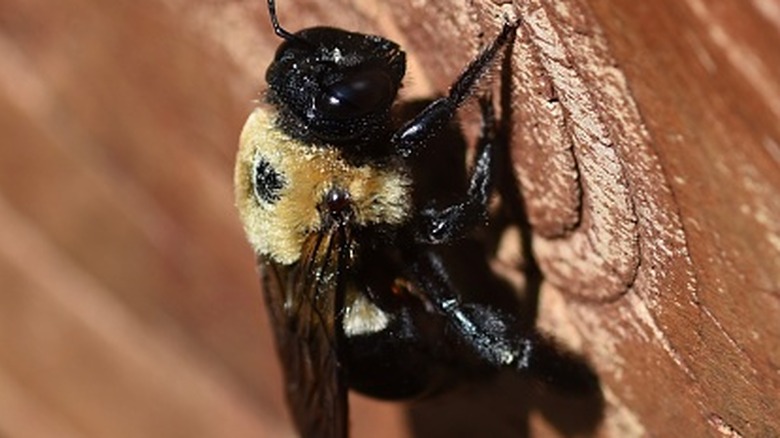
If you're a home gardener or just like spending time in your yard, you may find yourself frustrated by carpenter bees. On the one hand, they are valuable native pollinators that support local ecosystems. On the other, their tendency to bore holes into wood for their nests often puts them at odds with decks, fences, sheds, and porch railings. Over time, these nest holes encourage wood rot, invite additional damage from woodpeckers, and eventually lead to structural collapse. For homeowners looking to discourage those hovering carpenter bees seeking new nesting opportunities, there's one fragrant herb that some gardeners swear by: peppermint. Whether spritzing peppermint essential oil or growing the plant in containers, this herb is said to help repel carpenter bees naturally.
This allegedly works because of peppermint's aromatic compounds, especially menthol, which bees find deeply unpleasant. Laboratory studies on the effectiveness of peppermint oil are sparse, and some people say the plant does little to repel carpenter bees and may even attract them. But other gardeners swear by it, and it's a harmless first step for those looking to exhaust every option before resorting to chemical insecticides.
The most generous reading of this method suggests that peppermint and peppermint oil are best used as a preventative measure to keep scouting bees from establishing a nest location in the first place. If you're fending off an existing infestation, it does seem unlikely that a burrowing female will be evicted from her tunnel by aromatics alone. Peppermint oil is also said to banish snakes from your yard in a similar way, so it's best viewed as one part of a broader pest control strategy that includes sealing old nesting holes, painting or staining exposed wood, and repairing damaged boards that attract repeat visitors.
How to use peppermint to discourage carpenter bees
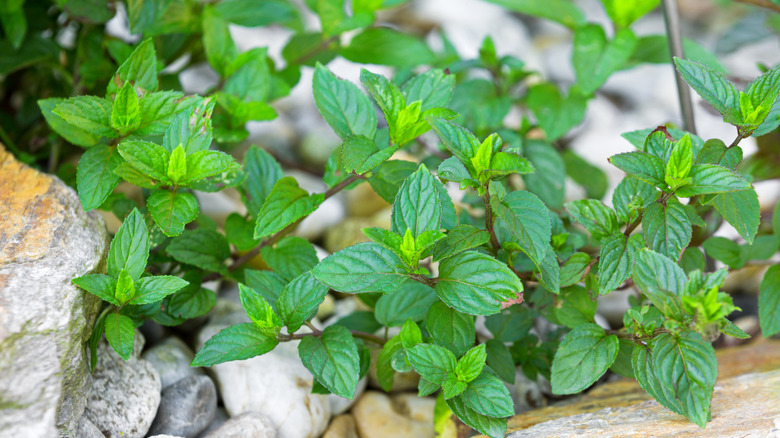
If you do decide to give peppermint the old college try, you'll find success is largely determined by two things: timing and placement. Since the scent appears to be most effective at discouraging bees searching for a place to nest, it's best to use peppermint before spring really gets underway, or as soon as you notice signs that carpenter bees are lurking around your home.
One option is to grow peppermint in containers and position the pots near areas that carpenter bees commonly target, such as decks, pergolas, porch railings, fences, or wooden outdoor furniture. Keeping the herbs in containers makes them easy to move while also preventing the aggressive plant from spreading. Peppermint releases its strongest fragrance when leaves are brushed or lightly crushed, so regular pruning can help to refresh their strong scent while enhancing your salads.
For more concentrated coverage, consider turning to peppermint essential oil. A few drops diluted in water can make for an easy spritz for wooden outdoor surfaces. Focus primarily on exposed, unfinished wood and areas where carpenter bees have drilled holes in the past, as females often return to familiar nesting sites. Because sunlight, wind, and especially rain can cause the fragrance to dissipate, essential oil treatments need to be refreshed regularly throughout the nesting season.
Whether you find major success with this method or not, it's important to note that carpenter bees are beneficial native pollinators. The goal isn't to eliminate them from your yard, but to gently steer them toward natural nesting sites instead of your deck or fence. By combining peppermint with thoughtful home maintenance, you can help protect your woodwork while still supporting the valuable role these bees play in the garden.