

The Common Backyard Bird You Might Not Realize Is Legally Protected
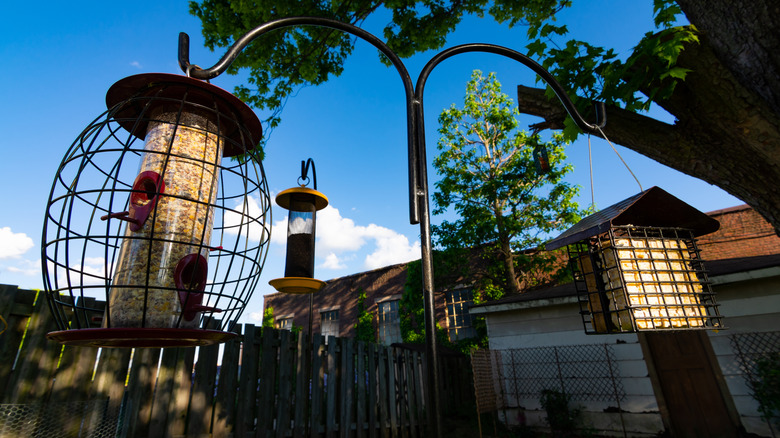
People across the United States spend a considerable amount of time and money attracting more birds to their yard, doing everything from hanging multiple feeders to growing plants that bring in a diverse variety of birds. It's common to treat an unusual or rare bird with care — giving it space, avoiding its young, keeping the cat inside. However, many people would be surprised to learn that one of the more common backyard bird species is actually protected by federal law — the dove. Or several specific dove species, to be more accurate.
All told, there are nine distinct species — eight native and one invasive — inhabiting some portion of the U.S. Wherever they are found, doves tend to be among the most common birds occupying backyards. Because they are so frequently sighted and mostly lack colorful flair — most doves are primarily brown, tan, or grey with perhaps an accent of white — they often go unnoticed. However, many dove species enjoy federal protection under the Migratory Bird Treaty Act of 1918.
Regardless of how common they are, all native dove species are protected under the act, which prohibits the "killing, capturing, selling, trading, and transport" of protected birds (and their eggs and nests) without authorization from the U.S. Fish and Wildlife Service (during regulated hunting seasons, for example). The invasive Eurasian collared dove is not protected, and neither is the urban pigeon (technically a rock dove), also considered invasive and specifically exempted from the act.
Native doves enjoy federal protection
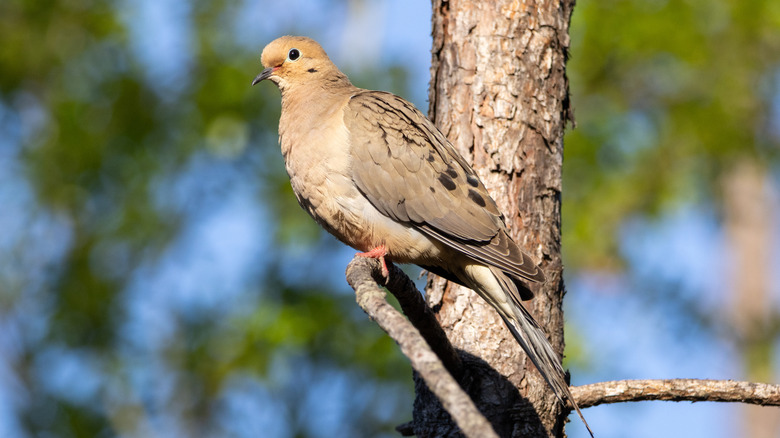
Many people may be surprised that doves are considered migratory since they seem to always be hanging around in the backyard. In some parts of the country, particularly southern states, there are doves year-round. However, most doves do migrate, although their movements may not always cover long distances, and they are thus protected by the Migratory Bird Treaty Act. These protections even include things like not disturbing or moving a bird's nest in your yard while it is actively being used.
While some species, like mourning and white-winged doves, are found throughout most of the U.S., others are narrowly distributed, migrating just within a small range. The Inca and common ground dove call much of the southern half of the country home, whereas the zenaida dove hangs out only in southern Florida, and the white-tipped dove comes up from northern Mexico into southern Texas. Some species actually aren't all that common: The ruddy ground dove is a colorful sighting, but rare in the U.S. — occasionally seen in portions of Texas and California. Although the Key West quail-dove is originally native to North America, today it no longer breeds in the U.S., but occasionally visits south Florida from the Caribbean islands.
Despite federal protection, some dove species are also popular game birds. In fact, mourning doves are hunted more than any other migratory bird species. White wing and white-tip doves are also hunted in areas they occur. However, even in these situations, the protected status applies. Hunters must follow strict seasons and limits set by individual states. Additionally, some baiting practices are not allowed when hunting legal species of doves. For example, although backyard birders can sprinkle seed or corn on the ground to attract doves, hunters cannot do the same.